The Indian government has often successfully prevented the internationalisation of the Kashmir conflict. Anyone who attempts to unearth some of the dirty secrets of the Indian government in the state is often reminded that they are venturing into very murky waters. Reproduced below is a press release from the International People's Tribunal whose members were recently harassed and intimidated while carrying out their investigations into the mass graves.
On June 20, the 'International Peoples Tribunal on Human Rights andJustice in Indian-administered Kashmir' visited the northern districtof Kupwara, a heavily militarized zone about 95 kms from Srinagar, toconduct its investigations in the area, as part of its ongoing work tobe conducted in 2008-2009.
The team comprised of Tribunal Conveners Dr. Angana Chatterji andAdvocate Parvez Imroz, with a Tribunal staff member and camera crew.They first visited a mass grave in Trehgam village and interacted withinhabitants of the area. After which the team reached Regipora around3pm and stopped at a hotel for lunch. After the team came out of thehotel two persons were sitting on the ladders, one in a blue checkshirt and another in a white shirt, introducing themselves as SpecialBranch Kashmir (SBK) and CounterIntelligence Kashmir (CIK) personnel. They questioned the Tribunalstaff member about the purpose of their visit. After responding,Tribunal members proceeded with the fact finding.
The Tribunal team then visited the martyrs' graveyard in Regipora,after which they stopped at a nearby tea stall to speak with localpeople about the graves. Four persons, including the previous two thatintroduced themselves as the SBK, CIK personnel again questioned themembers of the team: Who are you?, What are you doing here?, How manyvillages you visited from the morning?, Who are the persons whom youinterviewed from the morning? Are you a foreign national? (to Dr.Chatterji who is a citizen of India and resident of the US). The teamagain answered their questions without any argument.
After this episode ended another four persons establishing themselvesas SBK and CIK personnel came to the scene. The personnel asked themembers, how many foreigners are there in the team and are they carryingpassports with them? The personnel again asked, Who is the Lady? Whatis she? Which are the places you visited from the morning? And whomdid you talk and interviewed from the morning?
Three more persons, who were at different locations in the market, andseen making phone calls constantly, again questioned the Tribunalteam: 'Did you take any footage and pictures from the places youvisited?' The team again answered to their queries. In total, therewere 12 intelligence personnel. The questioning by the personnel tookaround one hour. Then the team proceeded towards Srinagar. While theteam rode back, a car started to follow the team. The team detouredfrom the highway and went to another mass grave in the area.
After the Tribunal team left the last site, they were stopped atShangargund, Sopore, at around 6:40 pm by three persons in civilianclothing. The personnel ordered the driver of car to get down and tookhim aside. The driver was asked, 'Which places you visited?' hereplied them and then the three persons without proving their identityforcibly boarded the Tribunal car, which was already filled tocapacity. These personnel without proving their credentials oroffering justification ordered the Tribunal team to Police Station inSopore. When the members asked for identification, they responded thatthey would introduce themselves at the police station.
Police Station Episode:At the police station Advocate Imroz, Dr. Chatterji, and thecamerapersons were asked to give details of their identity, thepurpose of their visit to Kupwara, and asked to hand over the tapeswhich the police alleged contained 'dangerous' and 'objectionable'material. Dr. Chatterji and Advocate Imroz stated that the Tribunal, apublicly announced process, ongoing since April 05, 2008, had beenundertaking its work peaceably, lawfully, with informed consent oflocal people and that they had not visited restricted areas, andstated that the police had no lawful reason to demand the seizure ofthe tapes. At the police station, where the Tribunal members weredetained for 16 minutes, the Tribunal team received calls frompresspersons and other concerned citizens. After several calls tosenior police persons, the police released the Tribunal team.
After the team left the police station a red colored Indica car, whichcame out from the Police Station Sopore, tailed the Tribunal teamagain up to Sangrama.
In addition, there are Intelligence personnel stationed at Dr.Chatterji's hotel. On June 21, she was followed from her hotel byIntelligence to the Tribunal's office in Lal Chowk, Srinagar, whereabout 8 personnel have been stationed the entire day questioning anyperson that leaves or enters the office.
The Tribunal is gravely concerned that team members are being singledout for intimidation and harassment by the government - Police,intelligence, and other agencies. As well, Dr. Chatterji was stoppedand intimidated at Immigration while leaving India for the US whereshe is a professor of anthropology, in April after announcing theTribunal, and again on her re-entry in June.
The Tribunal is extremely concerned at the harassment and intimidationdirected at the team and how some of its members are surveilled. Weare concerned that such intimidation and harassment makes furtherdangerous the work of the Tribunal which remains daunting under thebest of circumstances. We remain gravely concerned that suchinterventions stand in the way of the Tribunal carrying out itsresponsibilities to communities affected by the culture of violence in Kashmir.
We hope and expect that the Tribunal will not be harassed, intimidatedor threatened and that its members, as human rights defenders, cancontinue their work. We call on our colleagues and allies to supportus in this crucial process and request that they remain attentive tothe tactics of intimidation and violence in Kashmir.
Monday, June 23, 2008


Wednesday, June 18, 2008
'THE IDEA OF INDIA'
 Dr. Angana P. Chatterji makes her acceptance speech after receiving the IMC's 'Tipu Sultan award for courageously serving India.
 Robin Phillips and Omar Khalidi share a laugh before the panel discussion begins.
 The husband and wife team of Harpreet Kaur and Manmeet Singh. The duo made the film 'The Widow Colony on the Sikh widows of the 1984 pogrom.
“Raped, raped, raped, raped, raped, raped, raped.”
Film-maker Harpreet Kaur let the words echo through the room seven times even as the audience shifted uncomfortably.
She was driving home the horror of seven rapes experienced by one of the victims of the 1984 pogrom against the Sikhs in
The lack of justice in
Nearly 450 people gathered at Meadows Club outside
The keynote address was delivered late in the evening after 8.30 by Tarun Tejpal, CEO and editor-in-chief of the investigative magazine, Tehelka. He spoke of the need to move away from the “politics of difference and back to the politics of ideas.” He said, “
The conference, began at mid-day after namaaz with the screening of four short films. All four examined the violence visited upon different minority groups – ‘The Widow Colony’ about Sikh widows of the 1984 killings, a CBS documentary by CNN’s Christian Amanpour on Dalits in Tamil Nadu, ‘Encountered on Saffron Agenda’ a documentary on encounter killings in Gujarat under Narendra Modi and an NDTV documentary on the murderous attack on Christians in Orissa called ‘In the Name of God’.
The films set the tone for the day’s discussion – minority groups are increasingly threatened even as perpetrators of violence are going scot-free.
A panel discussion on “Impunity: A Roadblock to Justice” saw panelists raise several human rights abuses taking place in
Another panelist, Rahul Deepankar, a doctor and a peace activist, raised the issue of lack of development in
The audience was asked to write down their questions for the panelists which were then read to them by an IMC member. But there was such a flood of paper that most questions went unanswered. Manmeet Singh who co-produced ‘The Widows Colony’ with his wife Harpreet Kaur was asked if the Sikhs had received justice after Manmohan Singh became the Prime Minister. To nods of approval from other panelists he said, “Lets create social bonds. Lets not leave Christian issues to Christians, Muslim issues to Muslims and Dalit issues to Dalits.”
After a quick coffee break the second panel discussion began on the topic, ‘Strengthening India’s Secular Democracy.’ Dr. Angana P. Chatterji, a rights activist and professor of social and cultural anthropology at the California Institute of Integral Studies questioned the very basis of
Robin Phillips, executive director of the Advocates for Human Rights, explained the definition of human rights but also took it out of an academic context by asking, “How can we ensure that good people are not silent in the face of human rights violations?” Here she urged her audience to be more attentive in small everyday acts and conversations.
Dr. Omar Khalidi from MIT and
It was a long day at the conference but most people appeared to have found the speakers very engaging.
APNA GHAR WALKATHON
 Participants at the walkathon cool off in the grass at Lincoln Park.
 Kanta Khipple seated under the shade of a tree as the walkathon started. She is one of the early founders of Apna Ghar. Now in her mid-seventies, she recently started a programme at Apna Ghar for elderly women victims of abuse.
“I have a personal story. When I came to the
On a bright and typically windy morning in
There was a carnival-like atmosphere with lion dancers spicing things up before the walk. After a quick session of stretches the walkers set out at 9.30 on June 8th on a 5 kilometre route, to the sound of drum-beats around the
As the crowd took off, sitting on a chair, under the shade of a tree, Kanta Khipple smiled proudly. “In our culture we don’t speak about domestic violence. We tend to tolerate it,” she recalled. “But today we are preventing drastic abuse.”
Kanta Khipple and Prem Sharma, still with the organization, are part of the original founding five members of Apna Ghar. The idea was developed after Prem Sharma set up an Indo-Crisis hotline in 1984 to answer calls from women in distress. “At the time I had no idea how prevalent domestic violence was. But with our answering service we documented each and every call and found that it was very high,” said Prem Sharma.
They also found that women from
The walkathon has become an important event in the fundraising calendar of the organization. Apna Ghar’s development director, Sharmila Kana said, “I think we have managed to raise approximately 20,000 to 25,000 dollars from the walkathon.”
After the walk, participants sat around in the grass at
Close-by in the registration tent the impending rain was providing some clues as gusts of wind kept blowing papers and empty water bottles off the table. As the year’s second fund-raiser was drawing to a close, Rehmah Sufi, a development associate said, “The federal government is cutting social service funding and we are trying to figure out how best to respond to this.”
Apna Ghar offers a range of services to its clients who are distressed women victims of physical, mental, emotional and sexual violence at home. It operates a 24 hour helpline, a shelter home, transitional housing along with a range of rehabilitation services and legal services. It has recently even started taking in elderly women who are victims of neglect. The need for these services has not gone down. Munching a sandwich, Neelam Kacker, the Treasurer said, “It is a bottomless pit and we need help all the time.”
As the day drew to a close, dark clouds appeared over
Friday, June 06, 2008
A BLOG CAN CHANGE YOUR LIFE
“I think blogging is for jobless people,” declared a friend over lunch one day.
It is totally untrue.
I’ve been blogging for three years and have found the experience useful, educative, interesting and even therapeutic. My conclusion therefore is that blogging, quite simply, can be good for you and the world around you. Heres why.
First, it is truly democratizing communication. For instance, celebrity blogs like Aamir Khan’s and Amitabh Bachan’s allow people to directly listen to what they are saying. These actors in turn can be rid of the mainstream media (MSM) hounding them and then misquoting them or editing their words out of context.
Watching the harassment of Aarushi’s family by the media, I thought of how a blog could have solved a couple of things. The family could have communicated with the press, if they wanted to, through a blog and also removed the menace from their doorstep by giving the media the quotes they need to file stories.
Second, blogging has immense untapped potential as a political instrument. What happened in
One tiny voice can become a loud echo. Imagine if honest government servants begin to anonymously blog about their political bosses. They could name names which the MSM could investigate. The thought is delicious and it’s possible.
Third, blogging can challenge and complement the mainstream media. It challenges the media by acting as a watchdog of the watchdog. It was a blogger who exposed the touch up job of a Reuters photographer. The photographer had added a few extra plumes of smoke to a picture of an Israeli bombing of
Bloggers also exposed CBS and its anchor Dan Rather for failing to authenticate documents used in one of their stories. Quite obviously the media is fallible and here bloggers can complement it. The first pictures of the
Fourth, blogging is actually good for health! It’s not such a wild idea if you think about how sharing a painful experience can lighten your burden. A study published in the Oncologist reported that cancer patients who engaged in expressive writing just before treatment felt physically and mentally better compared with those who did not. That’s why some hospitals have even started hosting patient-authored blogs on their website.
The reason it’s different from keeping a diary under your pillow is that sympathetic or similar people can connect with you.
And for anyone who thinks it is technologically challenging let me say that if you’ve figured out email you can figure out blogging.
But while blogging can be rewarding its also true that too many people are blogging and too few are making any money off of it. There are 9 million blogs out there and 40,000 new ones are added everyday. Many of these talk about excruciatingly dull things like brushing of teeth and combing of hair.
The credibility of blogs is also a problem. After all anyone can write one and say what they please. The interactivity of blogs is also a double-edged sword. I was so rattled by anonymous hateful comments on my blog that I had to disable the feature.
Thursday, June 05, 2008
WHAT'S WRONG WITH INDIAN TV NEWS
Keep in mind an old Indian road safety sign while watching the latest Indian television news.
“Speed thrills but kills.”
Yes, speed is killing some of the most basic tenets of journalism on television, such as accuracy and challenging power. Being wrong is pardonable, but being late, absolutely not. Viewers have many choices today, so keeping it fresh draws more immediate benefits than keeping it honest. That’s why Indian television news has competed in one rapid race, but to the bottom. And viewers are insulted.
The double murders in Noida have become a lightning rod for viewer criticism of this trend. The media’s split personality is under scrutiny. It is a crusader, but also a moral leper. It is a watchdog, but also a vulture. It is high-minded, but also hypocritical. And competition, which is normally a good thing for the consumer, is driving such extreme behaviour. Competition has killed critical thinking, so, dear editors, do something about it.
For instance, 24-hour news places immense pressure on reporters and editors. So, if the police make a new statement theorizing about extra-marital affairs or honour killings, it is dutifully reported “as it happens”, since wall-to-wall coverage requires that things move forward. Newsrooms do not debate the merits of a police statement. That responsibility has been abdicated. Besides, there is no time to grapple with such professional and ethical niceties because the competition has already put it on air. It’s up to the viewer to think and evaluate.
But anyone who justifies this blind reporting is making a very self-serving argument. An editor of a Hindi channel recently defended his channel’s actions in the Noida murder coverage as merely “reporting what the police was saying”. Yet, the same channel has also started a parallel investigation by hiring private detectives. Clearly, it doesn’t believe the police, so why report it?
Also, take a closer look at the cast of characters who appear on the screen when there are such stories of investigations into murders, frauds, scams or controversies. Usually, the most vulnerable are on air as in this case — a grieving family and friends. Rarely will you see the policeman or politician involved turn up in a studio for the evening news, open to being grilled.
Jayalalithaa had nearly 44 corruption cases against her. But be sure you’ll never see her in a studio.
The bureaucratic and political establishment has learnt how to game the system by feeding the news machinery with a meaningless and quick sound byte while entering or exiting a building. Yet, you would imagine that if 25 reporters decided they weren’t going to budge till they got an interview, corrupt government servants would eventually have to answer some tough questions. They are duty-bound to. But that seemingly simple option doesn’t happen because of the pressure to produce. The 24-hour hungry beast waits for no one and people such as Jayalalithaa have figured it out. Dodge the media a couple of times and they give up. Grieving families and poor folks don’t know that and are made to believe they are obliged to talk to the press.
There is a sub-culture even among reporters. Better to sink together than stand alone. For instance, to avoid getting into trouble with each others’ editors, reporters may decide to collectively abandon a painful wait for a politician. Dodge-them-and-they-go-home works exceptionally well. Thus, competition has given us some variety but also more of the same.
Who will break this vicious cycle? Who will show the courage to construct a fiercely independent style? Who will endeavour to cultivate an intelligent audience? The decision has to be made at the top and the foot soldiers on the field will follow. Whoever decides that things need to change will show leadership, courage and critical thinking — qualities television news can profit from.
Published in Mint on June 5th 2008.
“Speed thrills but kills.”
Yes, speed is killing some of the most basic tenets of journalism on television, such as accuracy and challenging power. Being wrong is pardonable, but being late, absolutely not. Viewers have many choices today, so keeping it fresh draws more immediate benefits than keeping it honest. That’s why Indian television news has competed in one rapid race, but to the bottom. And viewers are insulted.
The double murders in Noida have become a lightning rod for viewer criticism of this trend. The media’s split personality is under scrutiny. It is a crusader, but also a moral leper. It is a watchdog, but also a vulture. It is high-minded, but also hypocritical. And competition, which is normally a good thing for the consumer, is driving such extreme behaviour. Competition has killed critical thinking, so, dear editors, do something about it.
For instance, 24-hour news places immense pressure on reporters and editors. So, if the police make a new statement theorizing about extra-marital affairs or honour killings, it is dutifully reported “as it happens”, since wall-to-wall coverage requires that things move forward. Newsrooms do not debate the merits of a police statement. That responsibility has been abdicated. Besides, there is no time to grapple with such professional and ethical niceties because the competition has already put it on air. It’s up to the viewer to think and evaluate.
But anyone who justifies this blind reporting is making a very self-serving argument. An editor of a Hindi channel recently defended his channel’s actions in the Noida murder coverage as merely “reporting what the police was saying”. Yet, the same channel has also started a parallel investigation by hiring private detectives. Clearly, it doesn’t believe the police, so why report it?
Also, take a closer look at the cast of characters who appear on the screen when there are such stories of investigations into murders, frauds, scams or controversies. Usually, the most vulnerable are on air as in this case — a grieving family and friends. Rarely will you see the policeman or politician involved turn up in a studio for the evening news, open to being grilled.
Jayalalithaa had nearly 44 corruption cases against her. But be sure you’ll never see her in a studio.
The bureaucratic and political establishment has learnt how to game the system by feeding the news machinery with a meaningless and quick sound byte while entering or exiting a building. Yet, you would imagine that if 25 reporters decided they weren’t going to budge till they got an interview, corrupt government servants would eventually have to answer some tough questions. They are duty-bound to. But that seemingly simple option doesn’t happen because of the pressure to produce. The 24-hour hungry beast waits for no one and people such as Jayalalithaa have figured it out. Dodge the media a couple of times and they give up. Grieving families and poor folks don’t know that and are made to believe they are obliged to talk to the press.
There is a sub-culture even among reporters. Better to sink together than stand alone. For instance, to avoid getting into trouble with each others’ editors, reporters may decide to collectively abandon a painful wait for a politician. Dodge-them-and-they-go-home works exceptionally well. Thus, competition has given us some variety but also more of the same.
Who will break this vicious cycle? Who will show the courage to construct a fiercely independent style? Who will endeavour to cultivate an intelligent audience? The decision has to be made at the top and the foot soldiers on the field will follow. Whoever decides that things need to change will show leadership, courage and critical thinking — qualities television news can profit from.
Published in Mint on June 5th 2008.
Saturday, May 31, 2008
ROLE OF CASTE IN CONTEMPORARY POLITICS

“A process has begun where caste might be losing its salience in Indian politics.” This was the core argument that Professor Suhas Palshikar made to a small group of research scholars and professors on South Asia at the University of Chicago.
He was invited to speak on the complex subject of ‘Making sense of caste-politics interaction in contemporary India’ and he did it crisply; gently hand-holding his audience for an hour through the different elements he wove into his talk. It was a well-distilled laying out, of all the things we actually don’t know about the great churning going on in Indian politics of 2008.
Professor Palshikar is also the co-director of Lokniti – a comparative democracy programme of the Centre for the Study of Developing Societies in New Delhi. The programme’s greatest contribution to political science has been their study of Indian elections since 1995-96. Believe it or not, between 1971 and 1996 there is hardly any data available to thrown light on social changes.
That’s perhaps why he says that the wrong questions are being asked by Indian political scientists. For instance, he says, “There are changes taking place in the experiential nature of caste due to urbanization.” He also draws attention to the changing Dalit image of the Bahujan Samaj Party (BSP). He points out, “The BSP these days talks about being a ‘sarvojan samaj’ party, which means a party for the whole society. They are no longer a party just for Dalits.” Professor Palshikar presented these ideas to underscore the as yet unexplored question, “Is caste influencing politics today in the traditional manner that it did in the 1960s and 70s?”
A rattling door that refused to shut tight didn’t seem to distract his audience. He held their interest throughout; making a point-by-point progression with pre-emptive clarifications to questions that might’ve popped up in the listener’s mind. Explaining why caste alone can’t be the framework within which Indian politics can be examined, he cites a small study conducted in his home base of Pune. He says, “Out study found that barring Dalits, in no other caste group are more than 40% practicing the same occupation as their father or grandfather.” He cites that as an extremely important statistic because it indicates that “the internal material interests of caste groups may be disintegrating” since the majority have experienced some form of upward mobility. The caveat he adds quickly is that this is true of Pune and could be different elsewhere which in turn shows how valuable a worms-eye view can be. “There has been an over-emphasis on creating macro-level data when what we might really need is constituency level information which we don’t have at the moment.”
In his analysis, political parties with national aspirations have had to evolve from appealing only to caste-identities because the politics of reservations and social justice eventually reach a dead-end. He says, “Now we are witnessing that caste-appeal becomes inadequate,” an assertion that is of a piece with BSP leader and Prime Ministerial aspirant Mayawati’s new inclusive “sarvojan samaj” message. He substantiates his claim by saying, “That’s why Mulayam Singh Yadav of the Samajwadi Party who appealed strongly to the Yadav community in Uttar Pradesh could not make much headway in Maharashtra because there are no Yadavs there. That’s why it is complicated for the two national parties, the Congress and Bharatiya Janata Party, to come up with any uniform caste-based strategy.”
But even as the national stage requires the de-emphasis of caste, Professor Palshikar points to a curious trend of the caste identity becoming more accentuated in cultural life with the formation of caste-based associations. He says, “Apart from acting as pressure groups demanding seats and reservations for their communities, they also act as gate-keepers, ensuring that young people marry within the community. Furthermore, they are demanding greater cultural space for their caste by demanding statues and renaming of libraries etc. after their caste heroes.” And interestingly enough they also perform some economic functions like a caste-based barbers association which fixes the amount that they will charge customers!
Overlaying the occupational and social changes taking place within Indian society and inside caste groups with the evolution of political parties themselves Professor Palshikar left his audience with a set of questions to frame their enquiry on Indian politics. “To what extent will caste be an effective unit of mobilization? And to what extent does caste constitute a unit that actually defines the interests of various groups in society?”
He says, “Region, religion, caste, material interests inter-weave in such a complex manner and at such different levels that we need to find out then where the contemporary moment in Indian politics lies?”
Rochana Majumdar, an associate professor at the University of Chicago and a historian says, “Palshikar offered new materials on the everyday operation of caste in contemporary India which opened up a whole new set of questions for researchers of Indian history, politics and anthropology.”
Unfortunately, scientific polling data on elections started only as late as 1996 leaving a bit of a gaping hole for researchers. What is clear though is that the notion that Indian politics begins and ends with caste needs to be discarded immediately.
He was invited to speak on the complex subject of ‘Making sense of caste-politics interaction in contemporary India’ and he did it crisply; gently hand-holding his audience for an hour through the different elements he wove into his talk. It was a well-distilled laying out, of all the things we actually don’t know about the great churning going on in Indian politics of 2008.
Professor Palshikar is also the co-director of Lokniti – a comparative democracy programme of the Centre for the Study of Developing Societies in New Delhi. The programme’s greatest contribution to political science has been their study of Indian elections since 1995-96. Believe it or not, between 1971 and 1996 there is hardly any data available to thrown light on social changes.
That’s perhaps why he says that the wrong questions are being asked by Indian political scientists. For instance, he says, “There are changes taking place in the experiential nature of caste due to urbanization.” He also draws attention to the changing Dalit image of the Bahujan Samaj Party (BSP). He points out, “The BSP these days talks about being a ‘sarvojan samaj’ party, which means a party for the whole society. They are no longer a party just for Dalits.” Professor Palshikar presented these ideas to underscore the as yet unexplored question, “Is caste influencing politics today in the traditional manner that it did in the 1960s and 70s?”
A rattling door that refused to shut tight didn’t seem to distract his audience. He held their interest throughout; making a point-by-point progression with pre-emptive clarifications to questions that might’ve popped up in the listener’s mind. Explaining why caste alone can’t be the framework within which Indian politics can be examined, he cites a small study conducted in his home base of Pune. He says, “Out study found that barring Dalits, in no other caste group are more than 40% practicing the same occupation as their father or grandfather.” He cites that as an extremely important statistic because it indicates that “the internal material interests of caste groups may be disintegrating” since the majority have experienced some form of upward mobility. The caveat he adds quickly is that this is true of Pune and could be different elsewhere which in turn shows how valuable a worms-eye view can be. “There has been an over-emphasis on creating macro-level data when what we might really need is constituency level information which we don’t have at the moment.”
In his analysis, political parties with national aspirations have had to evolve from appealing only to caste-identities because the politics of reservations and social justice eventually reach a dead-end. He says, “Now we are witnessing that caste-appeal becomes inadequate,” an assertion that is of a piece with BSP leader and Prime Ministerial aspirant Mayawati’s new inclusive “sarvojan samaj” message. He substantiates his claim by saying, “That’s why Mulayam Singh Yadav of the Samajwadi Party who appealed strongly to the Yadav community in Uttar Pradesh could not make much headway in Maharashtra because there are no Yadavs there. That’s why it is complicated for the two national parties, the Congress and Bharatiya Janata Party, to come up with any uniform caste-based strategy.”
But even as the national stage requires the de-emphasis of caste, Professor Palshikar points to a curious trend of the caste identity becoming more accentuated in cultural life with the formation of caste-based associations. He says, “Apart from acting as pressure groups demanding seats and reservations for their communities, they also act as gate-keepers, ensuring that young people marry within the community. Furthermore, they are demanding greater cultural space for their caste by demanding statues and renaming of libraries etc. after their caste heroes.” And interestingly enough they also perform some economic functions like a caste-based barbers association which fixes the amount that they will charge customers!
Overlaying the occupational and social changes taking place within Indian society and inside caste groups with the evolution of political parties themselves Professor Palshikar left his audience with a set of questions to frame their enquiry on Indian politics. “To what extent will caste be an effective unit of mobilization? And to what extent does caste constitute a unit that actually defines the interests of various groups in society?”
He says, “Region, religion, caste, material interests inter-weave in such a complex manner and at such different levels that we need to find out then where the contemporary moment in Indian politics lies?”
Rochana Majumdar, an associate professor at the University of Chicago and a historian says, “Palshikar offered new materials on the everyday operation of caste in contemporary India which opened up a whole new set of questions for researchers of Indian history, politics and anthropology.”
Unfortunately, scientific polling data on elections started only as late as 1996 leaving a bit of a gaping hole for researchers. What is clear though is that the notion that Indian politics begins and ends with caste needs to be discarded immediately.
Published in India Abroad in the May 30th, 2008 issue as well as on Rediff.com
Monday, May 26, 2008
INDIA: NO BRAGGING RIGHTS YET
India is so excited by the idea of becoming a major power that our new found confidence is changing into arrogance long before it happens. If it does…
‘If you’ve done it, it ain’t braggin,’ is an old Texan saying.
But if you attend a business conference abroad on India, like I did recently, you’d think it’s an old one out of New Delhi.
For almost 6 hours, it was a non-stop gush of staggering numbers and the possibilities for profit in India – a view we’re hearing a lot of nowadays in the media, at seminars and from the government of course. And thanks to an expanding economy Indians are fast shedding their diffidence about themselves and their country. My fear though is that confidence is changing too quickly into arrogance in some quarters - arrogance, that neither has any basis in reality nor advances the interests of ‘Brand India’ in any way. Our image of ourselves is somewhat distorted by this chorus of hallelujahs for India, producing a brash, new nationalism that comes from growing wealth. Fareed Zakaria writes in his new book, ‘The Post-American World’ about this phenomenon in India and China and says that it can morph into something uglier.
It’s already happening in two ways – an intolerance towards anyone who strikes a more skeptical note about rising India and a propaganda-style message about India that is disconnected from reality. Both need to change because we are creating a brand that is bigger than the product.
For instance, if you challenge the idea of a rising India with the dogged optimists by pointing out the Gujarat genocide, you are immediately reminded that Gujarat is also one of the most industrially advanced and administratively efficient states in India. If you point to the fact that most of our engineering graduates are not employable you are immediately reminded that India still produces the highest number of engineering graduates in the world. If you suggest that Indian democracy is so criminalized that it has killed good governance you are told that no other country sends a billion people to the ballot box. This is the new half-full approach to life but it tends to gloss over anything that points in the other direction and brands anyone who says so as a skeptic and a kill-joy. We are in love with the idea of rising India so much that we can immediately marshal the relevant facts to prove it. Remember the ‘India Shining’ campaign? No one knew it would be the lead zeppelin of 2004.
So, just as facts and numbers on India can be spun in a positive way, they can also break down just as easily. For example, India’s growing importance in the world is measured by the fact that we have nuclear weapons, a 9.4% GDP growth rate, the second largest army in the world, a massive geographical territory, a billion people, a politically stable climate and the current flavour of the season internationally, a democratic form of government. This is what the world sees and acknowledges as powerful and this is what fuels India’s aspirations. But a great power is fundamentally supposed to be able to positively influence events, something we can’t do even in our own backyard at the moment. Afghanistan is a mess, Pakistan is losing control over itself, Bangladesh can’t decide when to have elections, Nepal is in transition and Sri Lanka in civil war. India has little or no control over events in its own neighbourhood, let alone projecting its power around the world. Besides even when the chance arose India could not take a bold stand. It refused to condemn China on its actions in Tibet and it did business with the Burmese junta at the height of the crackdown on pro-democracy protests.
On the economy, I can’t interpret the numbers because I am not an economist. But I do know this. A vast majority, 700 million Indians are still on two dollars a day or less. Logically that can’t make us a powerful country in the near future even if more and more Indian billionaires are populating lists of the wealthiest people on the planet.
I’m sure I don’t have to expand on the law and order situation. Most of us have had our share of let-downs and shock defeats with the police. And externally, our nukes might deter China and Pakistan but our government can’t guarantee that bombs won’t kill our people in a bazaar.
My point here is not to say that we shouldn’t be optimistic about India or that India isn’t a rising power. Looking at where we came from, of course it is. But we need to see where we have to go before we acquire the bragging rights. Let’s get rid of the arrogance, and listen to the skeptics. The aspirations of a billion people demand it.
This is the first in a series of columns also available on the NDTV website.
‘If you’ve done it, it ain’t braggin,’ is an old Texan saying.
But if you attend a business conference abroad on India, like I did recently, you’d think it’s an old one out of New Delhi.
For almost 6 hours, it was a non-stop gush of staggering numbers and the possibilities for profit in India – a view we’re hearing a lot of nowadays in the media, at seminars and from the government of course. And thanks to an expanding economy Indians are fast shedding their diffidence about themselves and their country. My fear though is that confidence is changing too quickly into arrogance in some quarters - arrogance, that neither has any basis in reality nor advances the interests of ‘Brand India’ in any way. Our image of ourselves is somewhat distorted by this chorus of hallelujahs for India, producing a brash, new nationalism that comes from growing wealth. Fareed Zakaria writes in his new book, ‘The Post-American World’ about this phenomenon in India and China and says that it can morph into something uglier.
It’s already happening in two ways – an intolerance towards anyone who strikes a more skeptical note about rising India and a propaganda-style message about India that is disconnected from reality. Both need to change because we are creating a brand that is bigger than the product.
For instance, if you challenge the idea of a rising India with the dogged optimists by pointing out the Gujarat genocide, you are immediately reminded that Gujarat is also one of the most industrially advanced and administratively efficient states in India. If you point to the fact that most of our engineering graduates are not employable you are immediately reminded that India still produces the highest number of engineering graduates in the world. If you suggest that Indian democracy is so criminalized that it has killed good governance you are told that no other country sends a billion people to the ballot box. This is the new half-full approach to life but it tends to gloss over anything that points in the other direction and brands anyone who says so as a skeptic and a kill-joy. We are in love with the idea of rising India so much that we can immediately marshal the relevant facts to prove it. Remember the ‘India Shining’ campaign? No one knew it would be the lead zeppelin of 2004.
So, just as facts and numbers on India can be spun in a positive way, they can also break down just as easily. For example, India’s growing importance in the world is measured by the fact that we have nuclear weapons, a 9.4% GDP growth rate, the second largest army in the world, a massive geographical territory, a billion people, a politically stable climate and the current flavour of the season internationally, a democratic form of government. This is what the world sees and acknowledges as powerful and this is what fuels India’s aspirations. But a great power is fundamentally supposed to be able to positively influence events, something we can’t do even in our own backyard at the moment. Afghanistan is a mess, Pakistan is losing control over itself, Bangladesh can’t decide when to have elections, Nepal is in transition and Sri Lanka in civil war. India has little or no control over events in its own neighbourhood, let alone projecting its power around the world. Besides even when the chance arose India could not take a bold stand. It refused to condemn China on its actions in Tibet and it did business with the Burmese junta at the height of the crackdown on pro-democracy protests.
On the economy, I can’t interpret the numbers because I am not an economist. But I do know this. A vast majority, 700 million Indians are still on two dollars a day or less. Logically that can’t make us a powerful country in the near future even if more and more Indian billionaires are populating lists of the wealthiest people on the planet.
I’m sure I don’t have to expand on the law and order situation. Most of us have had our share of let-downs and shock defeats with the police. And externally, our nukes might deter China and Pakistan but our government can’t guarantee that bombs won’t kill our people in a bazaar.
My point here is not to say that we shouldn’t be optimistic about India or that India isn’t a rising power. Looking at where we came from, of course it is. But we need to see where we have to go before we acquire the bragging rights. Let’s get rid of the arrogance, and listen to the skeptics. The aspirations of a billion people demand it.
This is the first in a series of columns also available on the NDTV website.
Friday, May 23, 2008
A YOUNG AFGHAN 'GLOBAL LEADER'

Violence begets violence and Afghans know that better than anyone else. One whole generation has seen nothing but guns and war where the sight of a Kalashnikov is as common as that of a kite.
In that generation, just four years before the Soviet invasion in 1979, was born Ahmad Nader Nadery. Despite the lawless, “failed state” that Afghanistan has become through his lifetime, he has soldiered on in his mission to protect human rights. And that’s why he was recognized this year as a “Young Global Leader” by the World Economic Forum for his role as commissioner of the Afghanistan Independent Human Rights Commission (AIHRC).
Addressing human rights in a war zone sounds like an overwhelming task. And it is. Where does it begin? And is it a tiny clean drop in a surging dirty ocean of violations? What good has the U.S. invasion done - people are still dying and an insurgency rages in the south? But just as the mind starts to boggle at these questions, Nader presents a simple analysis to the outsider. “The fact that we are even talking about human rights today is a huge step forward,” he says. And as beginnings go, that is a good one.
Nadery’s ambition for a peaceful Afghanistan was sparked off during his days at the Kabul University where he studied law. “Students represent every section of society and Afghans trust them. So I thought that students should take over the role of maintaining security as the different militias and warlords fight.” He and a friend presented this idea to the UN’s special envoy in Pakistan. It didn’t work. The UN didn’t want to sponsor another armed group. Having tried and failed Nadery went back to Afghanistan to finish his law degree. But by then he had made a staunch enemy in the Taliban for being a meddlesome troublemaker who had the audacity to challenge them. He says, “I was jailed, beaten and tortured for three months by the Taliban but my family managed to bail me out. It was 1999 and I couldn’t go back to Kabul. My siblings had all left for Europe so I decided to join my parents in Pakistan.”
But Peshawar, far from feeling safe, only felt lonely and depressing. The future looked bleak and Nadery remembers that time as a metaphor. There was booming construction in Peshawar with the arrival of Afghan refugees. But back home in Kabul, there was only destruction. Peshawar was being built while Kabul was being destroyed. He couldn’t bear to sit there and do nothing. So while many Afghans were resigned to their fate, waiting for money from relatives abroad and waiting for peace, Nadery decided to do something crazy.
He decided to journey through dangerous Taliban controlled Afghanistan to ask people what they wanted and record their problems – a first step in deciding the future course of the country. He and a friend traveled from Nimroz in the south near the Iranian border ending their journey two months later in Jalalabad between Kabul and the Khyber Pass. They met two other friends to discuss what they had seen and heard from ordinary Afghans about the conflicts and their problems. “We discovered that there was a major ‘legitimacy of power’ crisis. People didn’t trust the government at all because there had been no democratic process after 1978 to legitimize power.” The Taliban had successfully turned Afghanistan into a dark, barren, lawless corner of the world where learning and freedom were completely wiped out. Nadery recalls, “You couldn’t tell whether you were looking at an old man or a young one.” The thick beards and the depression made everyone look old and sad. “There was not a single woman on the street. The Taliban were hated by ordinary people not just for their violence and barbaric forms of justice but also because they abused elders – a grave violation of Afghan culture. But even through this there was a narrow window of hope and I started working for the International Human Rights Law Group gathering information on human rights abuses.” Despite these efforts, under the Taliban the total state of suppression continued.
“So when 9/11 happened and the U.S bombing in Afghanistan began a month later ordinary Afghans welcomed foreign troops,” he says. He himself felt a new surge of hope. The Taliban would be gone and the aspirations of 32 million Afghans would finally be realized.
Nadery became a prominent voice when President Hamid Karzai appointed him the Human Rights Commissioner in the AIHRC in 2002. But six years on Nadery’s job is as tough as it was when he began. “Reconstruction efforts didn’t create job opportunities and people were frustrated.” The Taliban tapped into these frustrations and made their comeback. Renewed pledges on security, rule of law and human rights in London in 2006 have also largely remained unfulfilled. “The Afghan national Army has the confidence of the people but the police are a source of fear and insecurity,” says Nadery. Meanwhile the Taliban has evolved. “They use the media in a very sophisticated way and try to dominate public opinion. They’ve learnt a lot from Iraq, especially suicide bombing.”
The biggest violation of rights is evident in civilian casualties something for which the international forces are equally culpable. Nadery says, “More than 8000 civilians have been killed in the last two years during operations, air-strikes and Taliban suicide bombings. The international forces shoot indiscriminately and torture and abuse detainees.”
Today in Afghanistan the metaphor of his Peshawar experience is evident. Where reconstruction has failed the Taliban is strong or as Nadery says, “Where the road ends the Taliban begins.” Ahmad Nader Nadery is a “Young Global Leader” because he is steadfast in his commitment to push them back.
In that generation, just four years before the Soviet invasion in 1979, was born Ahmad Nader Nadery. Despite the lawless, “failed state” that Afghanistan has become through his lifetime, he has soldiered on in his mission to protect human rights. And that’s why he was recognized this year as a “Young Global Leader” by the World Economic Forum for his role as commissioner of the Afghanistan Independent Human Rights Commission (AIHRC).
Addressing human rights in a war zone sounds like an overwhelming task. And it is. Where does it begin? And is it a tiny clean drop in a surging dirty ocean of violations? What good has the U.S. invasion done - people are still dying and an insurgency rages in the south? But just as the mind starts to boggle at these questions, Nader presents a simple analysis to the outsider. “The fact that we are even talking about human rights today is a huge step forward,” he says. And as beginnings go, that is a good one.
Nadery’s ambition for a peaceful Afghanistan was sparked off during his days at the Kabul University where he studied law. “Students represent every section of society and Afghans trust them. So I thought that students should take over the role of maintaining security as the different militias and warlords fight.” He and a friend presented this idea to the UN’s special envoy in Pakistan. It didn’t work. The UN didn’t want to sponsor another armed group. Having tried and failed Nadery went back to Afghanistan to finish his law degree. But by then he had made a staunch enemy in the Taliban for being a meddlesome troublemaker who had the audacity to challenge them. He says, “I was jailed, beaten and tortured for three months by the Taliban but my family managed to bail me out. It was 1999 and I couldn’t go back to Kabul. My siblings had all left for Europe so I decided to join my parents in Pakistan.”
But Peshawar, far from feeling safe, only felt lonely and depressing. The future looked bleak and Nadery remembers that time as a metaphor. There was booming construction in Peshawar with the arrival of Afghan refugees. But back home in Kabul, there was only destruction. Peshawar was being built while Kabul was being destroyed. He couldn’t bear to sit there and do nothing. So while many Afghans were resigned to their fate, waiting for money from relatives abroad and waiting for peace, Nadery decided to do something crazy.
He decided to journey through dangerous Taliban controlled Afghanistan to ask people what they wanted and record their problems – a first step in deciding the future course of the country. He and a friend traveled from Nimroz in the south near the Iranian border ending their journey two months later in Jalalabad between Kabul and the Khyber Pass. They met two other friends to discuss what they had seen and heard from ordinary Afghans about the conflicts and their problems. “We discovered that there was a major ‘legitimacy of power’ crisis. People didn’t trust the government at all because there had been no democratic process after 1978 to legitimize power.” The Taliban had successfully turned Afghanistan into a dark, barren, lawless corner of the world where learning and freedom were completely wiped out. Nadery recalls, “You couldn’t tell whether you were looking at an old man or a young one.” The thick beards and the depression made everyone look old and sad. “There was not a single woman on the street. The Taliban were hated by ordinary people not just for their violence and barbaric forms of justice but also because they abused elders – a grave violation of Afghan culture. But even through this there was a narrow window of hope and I started working for the International Human Rights Law Group gathering information on human rights abuses.” Despite these efforts, under the Taliban the total state of suppression continued.
“So when 9/11 happened and the U.S bombing in Afghanistan began a month later ordinary Afghans welcomed foreign troops,” he says. He himself felt a new surge of hope. The Taliban would be gone and the aspirations of 32 million Afghans would finally be realized.
Nadery became a prominent voice when President Hamid Karzai appointed him the Human Rights Commissioner in the AIHRC in 2002. But six years on Nadery’s job is as tough as it was when he began. “Reconstruction efforts didn’t create job opportunities and people were frustrated.” The Taliban tapped into these frustrations and made their comeback. Renewed pledges on security, rule of law and human rights in London in 2006 have also largely remained unfulfilled. “The Afghan national Army has the confidence of the people but the police are a source of fear and insecurity,” says Nadery. Meanwhile the Taliban has evolved. “They use the media in a very sophisticated way and try to dominate public opinion. They’ve learnt a lot from Iraq, especially suicide bombing.”
The biggest violation of rights is evident in civilian casualties something for which the international forces are equally culpable. Nadery says, “More than 8000 civilians have been killed in the last two years during operations, air-strikes and Taliban suicide bombings. The international forces shoot indiscriminately and torture and abuse detainees.”
Today in Afghanistan the metaphor of his Peshawar experience is evident. Where reconstruction has failed the Taliban is strong or as Nadery says, “Where the road ends the Taliban begins.” Ahmad Nader Nadery is a “Young Global Leader” because he is steadfast in his commitment to push them back.
Published in The Hindu BusinessLine on May 23rd 2008.
Monday, May 19, 2008
RAJ THACKERAY'S SHORT-TERM THUGGERY

It was with a degree of consternation that most people watched Raj Thackeray’s young army of party-workers attacking Indian citizens from Bihar and UP inside Maharashtra. Was regionalism surfacing again as a new centrifugal force in India? How much traction would it find amongst Maharashtrians? Why have these tendencies not blunted with time? And, is this the start of more violent identity politics?
I discussed these questions with Professor Suhas Palshikar, a political scientist and professor at the Pune University and an expert on Maharashtrian politics. He says, “This is a very short-term strategy by Raj Thackeray because the Maharashtra elections are around the corner. Three years from now you may not hear him saying these things.” He adds, “This is part of the majoritarian brand of politics that does find traction even amongst moderate people.” Raj Thackeray keeps his message conveniently vague invoking a sense of hurt inflicted upon Maharashtrian culture and sentiments and towards the economic status of Maharashtrians. Professor Palshikar says, “He does not want to tie his hands and so his position is ambiguous. The message seems to be that outsiders will have to remain within bounds.” “Regional majoritarianism has good appeal and it is the easiest policy to adopt while entering politics. He wants to gain ground away from the Shiv Sena and there is a space for this kind of regional, identity politics. His strategy will be to be a spoiler in the coming elections.”
Founded only in 2006, Raj Thackeray’s Maharashtra Navnirman Sena will contest its first assembly elections next year.
I discussed these questions with Professor Suhas Palshikar, a political scientist and professor at the Pune University and an expert on Maharashtrian politics. He says, “This is a very short-term strategy by Raj Thackeray because the Maharashtra elections are around the corner. Three years from now you may not hear him saying these things.” He adds, “This is part of the majoritarian brand of politics that does find traction even amongst moderate people.” Raj Thackeray keeps his message conveniently vague invoking a sense of hurt inflicted upon Maharashtrian culture and sentiments and towards the economic status of Maharashtrians. Professor Palshikar says, “He does not want to tie his hands and so his position is ambiguous. The message seems to be that outsiders will have to remain within bounds.” “Regional majoritarianism has good appeal and it is the easiest policy to adopt while entering politics. He wants to gain ground away from the Shiv Sena and there is a space for this kind of regional, identity politics. His strategy will be to be a spoiler in the coming elections.”
Founded only in 2006, Raj Thackeray’s Maharashtra Navnirman Sena will contest its first assembly elections next year.
PS: How can a political party have the very militant word ‘Army’ in it? How can Maharashtra Navnirman Sena or Shiv Sena be allowed? (And just incidentally, both uncle and nephew, Raj and Bal Thackeray are admirers of Adolf Hitler.)
Thursday, May 08, 2008
A TSUNAMI MEMORY FROM CYCLONE NARGIS
 Every day the numbers rise.
Cyclone Nargis has extracted a deadly price in isolated Burma killing nearly 22,500 people as of May 7th with another 41,000 reported missing. But to the witless military junta this appears inconsequential as they are looking to go ahead with a referendum on a new constitution likely to cement their rule.
I’m not about to discuss the merits (of which there are few) and demerits of the Burmese rulers. Instead, their response, or lack of it, reminded me of India’s response to the Indian Ocean tsunami in December 2004.
I was at the Marina Beach in those early hours after the tsunami struck trying to make sense of what was happening because I was covering it for NDTV. I could only confirm 6 deaths in my first live phone interview at 10 am. By 5 pm the figure had jumped to 200 and across south east Asia the toll was 200,000 - quite like the situation in Burma which began with a toll of 351 and has risen alarmingly in the last 3 days.
The world is begging the Burmese junta to accept foreign aid because they need it. It will make the difference between survival and death for its citizens. India had also refused tsunami aid but for entirely different reasons. Keen to prove its dominance in the region and equally eager to keep the US out of its zone of influence, India said “thanks but no thanks.” We wanted to prove that not only could we manage our own affairs, we could help our neighbours too.
And in those early days after the tsunami, I’ll say we sure did. On the Indian mainland in worst hit Tamil Nadu, Jayalalithaa’s government did an outstanding job clearing bodies, cordoning off the beach, shifting people into temporary shelters, providing food and sanitizing the disaster zone. This doesn’t mean that things were working like clockwork, falling into place like a well-rehearsed drill. Quite the contrary because there was a fair degree of confusion and overlap in duties. The effort was outstanding because of the sudden injection of energy, commitment and creativity into the government machinery and its visible presence everywhere. No one could complain that the government didn’t care about them or wasn’t working for them. For someone whose default position is to be anti-establishment this was a refreshing revelation – when push comes to shove the government can deliver. Some of the smartest bureaucrats in Tamil Nadu were on the job leaving the western press a little incredulous that India remained disease free and the situation hadn’t descended into anarchy.
Of course there is an exception here too. Government response in the Andaman and Nicobar islands came late. This had as much to do with inefficiency as it had to do with the fact that island infrastructure was very badly battered. Ayesha Majid, a tribal leader gave an angry TV interview saying if the government didn’t want to help them that was fine but that it should stop lying to the world that everything was under control because her community was shattered and marooned.
But soon the exception became the norm. As people started sensing the opportunities in the midst of grief things changed. The zeal with which government officers had worked was later channeled towards siphoning off aid. The nationalist commitment slowly receded and the old demons of corruption and deceit surfaced once again. And I returned squarely to my default position.
However, it was wonderful, in those brief first few days, to see an Indian government that is capable of so much but alas, does so little.
Monday, May 05, 2008
IS THIS HISTORY?
Guilty until proven innocent. That seems to be the approach of law enforcement agencies towards a lot of Muslims in the lower socio-economic class in India. As the Sachar Committee Report of the Indian government points out, Muslims bear the twin burden of accusations of being “anti-national” and “appeased” at the same time.
What is often under-examined thanks to some of the noise the Hindutva brigade drums up about Muslim appeasement is that Muslims in fact face a lot of structural violence in India; something that has gone up in the Islamophobic environment created after 9/11.
A recent question that appeared in a history exam of the Ranchi University is of a piece with this structural violence. Apart from reflecting an utter and complete lack of academic rigour, it reflects the hardening stereotypes of Islam and Muslims, all happily fueled by the media, a distorted teaching of Indian history and of course the propaganda of the saffron agency.
The question in the university exam was, “Prophet Mohammed started his career as a trader and ended as a raider. Comment.”
There are so many prejudices and assumptions built into that statement that it is worrisome that the person who framed it was teaching. He or she has since been debarred.
What is often under-examined thanks to some of the noise the Hindutva brigade drums up about Muslim appeasement is that Muslims in fact face a lot of structural violence in India; something that has gone up in the Islamophobic environment created after 9/11.
A recent question that appeared in a history exam of the Ranchi University is of a piece with this structural violence. Apart from reflecting an utter and complete lack of academic rigour, it reflects the hardening stereotypes of Islam and Muslims, all happily fueled by the media, a distorted teaching of Indian history and of course the propaganda of the saffron agency.
The question in the university exam was, “Prophet Mohammed started his career as a trader and ended as a raider. Comment.”
There are so many prejudices and assumptions built into that statement that it is worrisome that the person who framed it was teaching. He or she has since been debarred.
Sunday, April 20, 2008
SAFER INDIA
This is some incredibly useful information that was forwarded to me on email. That most honourable of police officers, Kiran Bedi, has started an NGO called Safer India. You can visit the site http://www.saferindia.com/ to log a complaint about any crime if the police in your area does not record your complaint. The NGO will then mail your complaint to the DGP of your state.
That mail can be used as a legal document if you choose to go to court.
I've never used it so I can't vouch for it but if you do and find that it works do tell more people about it.
That mail can be used as a legal document if you choose to go to court.
I've never used it so I can't vouch for it but if you do and find that it works do tell more people about it.
Monday, April 14, 2008
THE SCARLETT CASE...
just got murkier. Small wonder that the Chief Minister of Goa wanted to deflect attention by investigating the mother for carelessness.
Thursday, April 03, 2008
WATCH BASRA CLOSELY
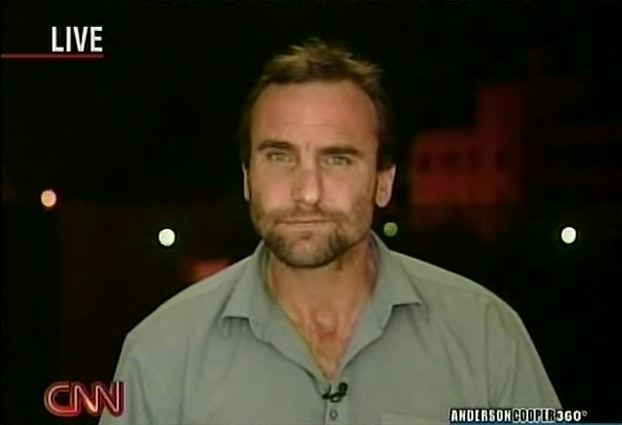 It’s always a great pleasure to attend a talk by a bold journalist like Michael Ware. Ware, in his wonderful unvarnished Australian accent, calls it like it is. In the fog of propaganda, lies and spin, his is the voice of pessimistic reason. He relocated to Iraq when plans of the invasion were underway and has therefore seen the entire gory war drama enfold from start to..... well what is not in sight... the finish. Although, Ware left Iraq on the day the Iraqi Army went into Basra, he told a small audience at the Middle East Institute in DC that Basra is not part of the regular violence that we have grown accustomed to hearing about from Iraq. This latest violence is a window to the world of Iraq if and when America leaves. According to Ware, the proxy battles between Iraq’s neighboring states and the battle for oil and territory will unfold with the ferocity that is being witnessed in Basra now. So all those who advocate troop withdrawal need to watch Basra closely.
Friday, March 14, 2008
STALIN, 'SHAKOTIS' AND SALSA IN LITHUANIA
 The Amber Museum in the seaside town of Palanga. The Museum is in a 19th century Palace set amidst these beautifully manicured gardens.
A view of the village of Neringa on the Curonian Spit.

(Photos by Kannan Narayanaswamy)
Suddenly in 1991, when the Berlin wall fell and the Iron Curtain parted, for the curious traveller all the roads less travelled were finally open. It’s precisely what makes a visit to Lithuania so rewarding. It lies on that road in East Europe that’s buzzing with new freedom and new money, but retains a distinctive stamp of the old communist era and teases the curious visitor to discover where the twain meet.
Landing in the capital Vilnius at midday in late-October, I was excited by the grey streets, the graffiti on bare walls next to Baroque churches, the steel and glass buildings, the old grim faces, the young, trendy girls and the modern cars. In every eyeful there was a slice of all the changes Lithuania has experienced since becoming independent of former USSR. Finally, I said to myself, some good old-fashioned history — not in boring, gigantic, disinfected museums but out in the streets and in peoples’ conversations. Lithuania was going to be exciting and edifying.
A week is a good time in this tiny country of 3.4 million people because it’s easy to crisscross by road if you’ve decided what you want to see (or haven’t). My ten-day agenda however was dictated entirely by my Lithuanian hosts which was fine with me because I couldn’t have planned it better myself. All I really wanted was to get a glimpse of the old, communist Lithuania and the new capitalist EU member. I got a lot more and wondered why this beautiful country was so under-reported.
But the good thing about not knowing anything about a place is that everything holds a surprise. And in the controversial Grutas Park, I walked around with my jaw open. Located 130 km from the Capital, this place is also referred to by the slightly ominous ‘Stalin’s world.’ You walk through the park under the cold gaze of the gigantic statues of Stalin, Lenin and several lesser-known leaders of Lithuania’s brutal 20th-century experience under Soviet rule. After Lithuania became independent it pulled down their statues of all these reviled men and dumped them in storehouses. Later, a Lithuanian millionaire bought them up to set up the park. Walking through it is an Orwellian experience as loudspeakers blare out commands from old wooden watchtowers and old train compartments remind you of the thousands of Lithuanians sent to their deaths in Siberia.
Walking around its many hectares can make you hungry and a local café completes the experience by offering a “nostalgia menu”, which of course goes with vodka shots. However, one guest at our table went too far when he raised a toast to Russia. Our Lithuanian hosts almost choked on their drinks.
The faux pas however was soon forgotten and we continued to drive around the country, stopping off at towns like Alytus, the impossibly named spa resort of Druskininkai, and the cities of Kaunas and Klaipeda. Walking tours with a local guide are the best way to discover these places because they’re very small, afford wonderful views and the local guide can narrate interesting stories of local resistance against the Soviets.
Sometimes, though, the nicest part of the day would be spent sitting around in the living room in the evening with my hosts, drinking coffee and eating the strange-looking, great-tasting Lithuanian cake called shakotis.
Regardless of what draws you to Lithuania, a visit to the ecological wonder called the Curonian Spit is an absolute must. It’s a challenge of nature kept habitable by human effort. The spit is a 98-km-long island of sand separated from the Lithuanian mainland by a lagoon.
We boarded our car onto a ferry to reach this UNESCO World Heritage Site and drove through its charming villages of cottages between pencil-straight lanes. But what makes the Curonian Spit so special is that half its landscape looks like the desert of Arabia while the other looks like the Black Forest of Germany. So, it is dull brown sand and dark green forest surrounded by deep blue sea. This erstwhile western edge of the communist empire is a place where you can get away from it all. Just don’t wander off too far on your Lithuanian visa though — half the island is still with Russia!
As the trip was winding down I was casting about for souvenirs, and one of the nicest things about shopping in Lithuania is that you don’t have to buy cheesy ‘I love Lithuania’ T-shirts and mugs. You should make the only sensible choice there is — amber. In the seaside town of Palanga we spent an afternoon gazing at the exhibits in the Amber museum, which was housed in a 19th-century palace set amidst vast botanical gardens. Of course, treat the amber in the museum store as an exhibit also because you’ll get it outside for half the price.
I headed back from the coast with lots of memories, a little amber and some litas (Lithuanian currency) to spare. My vacation was coming to an end and to stall the impending sorrow we headed out for a last evening on the town.
Vilnius nightlife was a fantastic surprise — it’s alive, it’s raucous and it’s wild. The people in the nightclub were from everywhere… it could’ve been a club in New York, Melbourne or Mumbai. But lovely Lithuania is special — where else will you get Stalin, shakotis and salsa on the same trip?
Published in 'The Hindu BusinessLine' on 14th March 2008.
Wednesday, March 12, 2008
SEXISM AND CORRUPTION IN THE KEELING CASE
 When the Indian police conducts an investigation under the glare of the media, it is only a matter of time before the cracks and the corruption are laid bare. To that extent, their probe into the rape and murder of a 15-year old British tourist is following a familiar script. The police's ineptitude and insensitivity were on full display when Scarlett Keeling’s dead body turned up on a beach in Goa. It was quickly dismissed as a case of drowning. Only when Scarlett’s mother Fiona MacKeown insisted on a second autopsy did the Goa police suddenly regain their vision to see that her body was actually covered all over with nearly 50 cuts and bruises. And incidentally, there was not enough salt water in her lungs either to corroborate the drowning story.
In the sordid history of failures of the Indian police, this is only the latest chapter.
But throwing an element of lunacy into the bungled probe is the Chief Minister of Goa Digamber Kamat. He wants to investigate the teenager’s mother for negligence!
In the days leading up to her murder, Scarlett was not with her family and was staying with 25-year old tour guide, Julio Lobo. The story gets a little strange here because Scarlett was allegedly in a sexual relationship with this man whom her mother describes as “very caring” as an uncle would be. You could argue that it was foolish of her mother to leave her teenage daughter alone but it was certainly not illegal if she thought the person she was leaving her with was responsible! In fact, this notion of charging the mother for negligence can be turned on its head because assuming Julio Lobo had had sex with Scarlett Keeling it would still be rape under Indian law because it involved a minor. Then Samson D'Souza, the current suspect under police custody could either be the wrong guy as the Keeling family alleges or is simply one of the suspects.
Someone needs to point that out to Digamber Kamat.
I also think this is typical of the sexist insinuations that fly in rape investigations. By wanting to investigate the mother, the Chief Minister is placing the onus on the victim’s family to prove that the girl wasn’t asking to be raped, insinuating, in other words, that it was but natural that she was raped because she was alone.
Shame on you Digamber Kamat.
If Fiona MacKeown intends to fight to the finish and teach Kamat and the police a few lessons she will have the support of millions of Indian women like me.
Friday, February 22, 2008
PUTIN'S ACID TONGUE

At a recent press conference on Valentine’s Day, Russian President Vladimir Putin was asked to react to a remark by Hillary Clinton who said that as a former K.G.B. officer, Putin “has no soul.”
His reponse?
“As a minimum, a state official must at least have a head.”
Mr. Putin was also asked about complaints from the Organization for Security and Cooperation in Europe (OSCE) which says that elections are routinely rigged in post-Soviet autocracies. They complained that Russia was making it impossible to assess the current campaign and election fully because of it’s various restrictions.
Putin seemed to have dipped his tongue in vinegar before the presser. His response again was that the OSCE needs to be overhauled and suggested that the monitors intended to teach Russia how to become democratic.
“Let them teach their wives to make shchi,” he said. Shchi is a popular Russian cabbage soup.
His reponse?
“As a minimum, a state official must at least have a head.”
Mr. Putin was also asked about complaints from the Organization for Security and Cooperation in Europe (OSCE) which says that elections are routinely rigged in post-Soviet autocracies. They complained that Russia was making it impossible to assess the current campaign and election fully because of it’s various restrictions.
Putin seemed to have dipped his tongue in vinegar before the presser. His response again was that the OSCE needs to be overhauled and suggested that the monitors intended to teach Russia how to become democratic.
“Let them teach their wives to make shchi,” he said. Shchi is a popular Russian cabbage soup.
(Quotes from Putin’s press conference as reported by the New York Times.)
Friday, February 15, 2008
BENAZIR BHUTTO'S STATEMENT

This is a reproduction of Benazir Bhutto’s hand-written will. As she left Dubai last year, she certainly seemed to know that her end was near. In this statement written two days before the first bomb attack on her convoy, she passes on the baton of the PPP and seems to be saying goodbye and good-luck. Full text below:
Pakistan Peoples Party
To the officials and members of Pakistan Peoples Party I say that I was honoured to lead you. No leader could be as proud of their party, their dedication, devotion and discipline to the mission of Quaid E Azam Zulfikar Ali Bhutto for a Federal, Democratic and Egalitarian Pakistan as I have been proud of you. I salute your courage and your sense of honour. I salute you for standing by your sister through two military dictatorships.
I fear for the future of Pakistan. Please continue the fight against extremism, dictatorship, poverty and ignorance.
I would like my husband Asif Ali Zardari to lead you in this interim period until you and he decide what is best. I say this because he is a man of courage and honour. He spent eleven-and-a-half years in prison without bending despite torture. He has the political stature to keep our party united.
I wish all of you success in fulfilling the manifesto of our party and in serving the downtrodden, discriminated and oppressed people of Pakistan. Dedicate yourself to freeing them from poverty and backwardness as you have done in the past.
Benazir Bhutto
October 16, 2007.
Pakistan Peoples Party
To the officials and members of Pakistan Peoples Party I say that I was honoured to lead you. No leader could be as proud of their party, their dedication, devotion and discipline to the mission of Quaid E Azam Zulfikar Ali Bhutto for a Federal, Democratic and Egalitarian Pakistan as I have been proud of you. I salute your courage and your sense of honour. I salute you for standing by your sister through two military dictatorships.
I fear for the future of Pakistan. Please continue the fight against extremism, dictatorship, poverty and ignorance.
I would like my husband Asif Ali Zardari to lead you in this interim period until you and he decide what is best. I say this because he is a man of courage and honour. He spent eleven-and-a-half years in prison without bending despite torture. He has the political stature to keep our party united.
I wish all of you success in fulfilling the manifesto of our party and in serving the downtrodden, discriminated and oppressed people of Pakistan. Dedicate yourself to freeing them from poverty and backwardness as you have done in the past.
Benazir Bhutto
October 16, 2007.
Thursday, January 31, 2008
SMILE PLEASE, IT'S DIPLOMATESE

Government propaganda isn’t as sophisticated in India as it is in the United States. Obfuscation has been elevated to art. But here are some less-than-intelligent and bizarre samples of American euphemisms.
The U.S. invasion of Grenada in 1983 began at five am with the descent of thousands of U.S Army Rangers in parachutes. It was codenamed Operation Urgent Fury. But quite contrary to the sound and fury of that codename, the U.S. described it as the “pre-dawn vertical insertion of personnel.”
Several instances of diplomatese can be found in the tomes produced by the State Department. In a Human Rights report on Zaire in the 1970s, when the U.S was friends with Mobutu, the language was kept soft enough to be palatable to him and yet not so diluted as to be a complete lie. Here is an example. “Generally speaking, non-political prisoners are not subject to repeated beating.”
That’s not an under-statement. It's an un-statement.
A similarly inspired U.S spokesman said last year on Iraq, “There are some parts of the Sunni Triangle where the security situation right now, quite frankly, is not that bad. In parts of the Diyala Province, some parts of the Salahuddin Province and some parts of Nineveh Province the situation is not all blood and fire and destruction in all places every day.”
So wait, what is it everyday? Come again?
Closer home, President Musharraf bowled a googly in 2002. In a referendum on his presidency, voters were asked the following question: ‘For the survival of the local government system, establishment of democracy, continuity of reforms, end to sectarianism and extremism, and to fulfill the vision of our nation’s glorious founder, would you like to elect President General Pervez Musharraf as President of Pakistan for five years?”
YesNo.
Sunday, December 09, 2007
COALITION OF THE UNWILLING?
The Washington Post today carried a story about the U.S’ shrinking ‘coalition of the willing’ in Iraq. As the war has dragged on since the invasion in mid-2003, six countries have left while the ranks of the remaining coalition soldiers have thinned. But I almost fell off my chair in disbelief this morning when I read the numbers contributed by some. Five countries have less than 10 people in Iraq. According to the Post, Latvia has three soldiers in Iraq, Slovakia two, and Singapore one! To borrow a joke from one of my professors, this definitely looks more like the coalition of the unwilling.
A FRIGHTENING SCENARIO IN SIDHPUR, GUJARAT
This is a piece written by my dad who has been researching the heritage and architecture of the Dawoodi Bohra community in Sidhpur in Gujarat. The beautiful family homes there are today in a perilous state of disrepair - victims of cultural disrespect and neglect and now perhaps even falling prey to the ill wind of communalism blowing through Gujarat.
If you'd like more information please leave a comment with your contact email address and we'll get back to you.
A frightening scenario emerging in Sidhpur
Any observant visitor to Sidhpur cannot but help noticing that a very massive tract of land abutting the railway station and the Inter-city bus stand belongs to the minority Dawoodi Bohra Community. Part of this land is occupied by Community facilities like Roza/Kabrasthan (mausoleum); Masjid (mosque); Musafar Khana (guest house) and Jamaat Khana (dining hall) and the bulk of it by the heritage houses of Najampura and Harariya. The general residential areas of other communities begin nearly 1.5 kms away from the station (on its eastern side).,
For a very long time there have been soft, benign murmurs among the majority community that one day all these fine heritage houses will belong to them.
Perhaps with the intention of moving closer to the station; perhaps due to a rising demand for space, the majority community had begun buying property in predominantly Bohra areas at reasonable and market prices. There was no force, no intimidation and no coercion. The trend was starting to assume torrential proportions when the local Jamaat decided that enough was enough. This encroachment needed to be stopped. An arzee (petition) was sent to Aqa Maula (spiritual head of the Dawoodi Bohra community) and a farmaan (decree) was received aiming to plug this glaring violation. "No Bohra house was to be sold to anybody outside the community, no matter what the offer."
For a brief period matters appeared to be under control. Then a new virulent equation cropped up. Selling a house – and there are many reasons for selling -at reasonable, market price had become difficult owing to a very limited demand. So the house owners (mostly with large family trees and little stake in the property) began seeking recourse in demolishing the building; recovering a fair bit of the value and retaining a nuisance-free vacant site. Here was a classic case of "having your cake and eating it too". At least 15 houses were pulled down in an indirect response to a well meant farmaan. The disease having run its course, all the weak players have dropped off one by one. And now a frightening pattern is emerging. Over the last one year there have been umpteen cases of impertinent and in-your-face burglaries; of breaking into locked houses; damaging and stealing at random and often staying within for a week. At times the thieves have left notes threatening action against anyone who dares to inform or retaliate. The police on the other hand wave a lethargic arm and make only token efforts to apprehend the culprits. Something fishy is in the air. Clearly the intention is to intimidate. The initial sleepy response from the victim was a myopic belief that lightning never strikes any spot twice. The thieves having done with their house would now leave them alone. Passive resignation was followed by a forced amnesia.
Here is a useful insight. A few years ago a Chennai Jamaat group had been on a mission to prepare estimates for hosting Aqa Maula's Ashara Vaaz (10 days of Moharram) at Sidhpur. A constant refrain that came up then, among the shopkeepers, was – "if only all these closed houses were to open up, how much more would the local economy benefit". But alas! That was not to be. But the events on the night of Sunday 1 Dec. 2007 have thrown a blinding light on a frightening pattern. After a gap of nearly eight hundred years, Sidhpur has witnessed an act of deliberate sacrilege.
Riots have come and gone; Tempers have flared and cooled; Animosity has ebbed and flowed. But never has a sacrosanct place been violated or its keepers assaulted.
The highly venerated Kazikhan Maula's Roza Mubarak (mausoleum) – the beacon of Sidhpuri Dawoodi Bohras – has come under the malfeasant glare of a bizarre and conspiratorial mind, throwing open a wide ranging set of questions.
Who are these people? What is their motive? Have we stirred up a hornet's nest by conducting an economic survey? Is the game plan about land and space? Is it a communal problem? Are the chickens coming home to roost?
The Dawoodi Bohras of Sidhpur need to do a lot of introspection.
If you'd like more information please leave a comment with your contact email address and we'll get back to you.
A frightening scenario emerging in Sidhpur
Any observant visitor to Sidhpur cannot but help noticing that a very massive tract of land abutting the railway station and the Inter-city bus stand belongs to the minority Dawoodi Bohra Community. Part of this land is occupied by Community facilities like Roza/Kabrasthan (mausoleum); Masjid (mosque); Musafar Khana (guest house) and Jamaat Khana (dining hall) and the bulk of it by the heritage houses of Najampura and Harariya. The general residential areas of other communities begin nearly 1.5 kms away from the station (on its eastern side).,
For a very long time there have been soft, benign murmurs among the majority community that one day all these fine heritage houses will belong to them.
Perhaps with the intention of moving closer to the station; perhaps due to a rising demand for space, the majority community had begun buying property in predominantly Bohra areas at reasonable and market prices. There was no force, no intimidation and no coercion. The trend was starting to assume torrential proportions when the local Jamaat decided that enough was enough. This encroachment needed to be stopped. An arzee (petition) was sent to Aqa Maula (spiritual head of the Dawoodi Bohra community) and a farmaan (decree) was received aiming to plug this glaring violation. "No Bohra house was to be sold to anybody outside the community, no matter what the offer."
For a brief period matters appeared to be under control. Then a new virulent equation cropped up. Selling a house – and there are many reasons for selling -at reasonable, market price had become difficult owing to a very limited demand. So the house owners (mostly with large family trees and little stake in the property) began seeking recourse in demolishing the building; recovering a fair bit of the value and retaining a nuisance-free vacant site. Here was a classic case of "having your cake and eating it too". At least 15 houses were pulled down in an indirect response to a well meant farmaan. The disease having run its course, all the weak players have dropped off one by one. And now a frightening pattern is emerging. Over the last one year there have been umpteen cases of impertinent and in-your-face burglaries; of breaking into locked houses; damaging and stealing at random and often staying within for a week. At times the thieves have left notes threatening action against anyone who dares to inform or retaliate. The police on the other hand wave a lethargic arm and make only token efforts to apprehend the culprits. Something fishy is in the air. Clearly the intention is to intimidate. The initial sleepy response from the victim was a myopic belief that lightning never strikes any spot twice. The thieves having done with their house would now leave them alone. Passive resignation was followed by a forced amnesia.
Here is a useful insight. A few years ago a Chennai Jamaat group had been on a mission to prepare estimates for hosting Aqa Maula's Ashara Vaaz (10 days of Moharram) at Sidhpur. A constant refrain that came up then, among the shopkeepers, was – "if only all these closed houses were to open up, how much more would the local economy benefit". But alas! That was not to be. But the events on the night of Sunday 1 Dec. 2007 have thrown a blinding light on a frightening pattern. After a gap of nearly eight hundred years, Sidhpur has witnessed an act of deliberate sacrilege.
Riots have come and gone; Tempers have flared and cooled; Animosity has ebbed and flowed. But never has a sacrosanct place been violated or its keepers assaulted.
The highly venerated Kazikhan Maula's Roza Mubarak (mausoleum) – the beacon of Sidhpuri Dawoodi Bohras – has come under the malfeasant glare of a bizarre and conspiratorial mind, throwing open a wide ranging set of questions.
Who are these people? What is their motive? Have we stirred up a hornet's nest by conducting an economic survey? Is the game plan about land and space? Is it a communal problem? Are the chickens coming home to roost?
The Dawoodi Bohras of Sidhpur need to do a lot of introspection.
Saturday, December 01, 2007
Thursday, November 29, 2007
I'm just learning how to fool around on Facebook and am frankly a bit stunned by two things.
First. It's so public! You can glean so much information about people you love, hate, love-to-hate, want-to-forget and every other variety in between.
And second. So many people have so much personal information on it! Aren't you scared?
First. It's so public! You can glean so much information about people you love, hate, love-to-hate, want-to-forget and every other variety in between.
And second. So many people have so much personal information on it! Aren't you scared?
Friday, October 19, 2007
FOOLING AROUND WITH BUSH
Last weekend, we smushed George Bush. In fact, we smushed him so badly, his head came off.
So what were we up to exactly?
I think we were celebrating freedom of speech and expression while playing with a rubber doll. I doubt there are too many countries in the world that sell little caricature rubber pieces of their President or Prime Minister at the national airport. And since they do in America, they went the whole hog and added the words ‘No Brainer’ at the back of his head.
I bought one and introduced him to my three year old niece. I told her he was ‘George Bush’ and that she could go ahead and ‘smush him.’ She did it in right earnest. In fact once when she dropped him she prophetically said, “George Bush went down.”
Of course, honey. He’s definitely headed that way.
By Sunday night she had been kneading little rubber Bush with such gusto that his head came off. We put it back on because we won’t be denied the joy of smushing Bush.
So what were we up to exactly?
I think we were celebrating freedom of speech and expression while playing with a rubber doll. I doubt there are too many countries in the world that sell little caricature rubber pieces of their President or Prime Minister at the national airport. And since they do in America, they went the whole hog and added the words ‘No Brainer’ at the back of his head.
I bought one and introduced him to my three year old niece. I told her he was ‘George Bush’ and that she could go ahead and ‘smush him.’ She did it in right earnest. In fact once when she dropped him she prophetically said, “George Bush went down.”
Of course, honey. He’s definitely headed that way.
By Sunday night she had been kneading little rubber Bush with such gusto that his head came off. We put it back on because we won’t be denied the joy of smushing Bush.
Monday, October 08, 2007
THE WORLD’S LARGEST DEMOCRACY – SHOULD STAND UP FOR IT

‘Don’t go for gas, go for democracy.’
As India’s petroleum minister drove to the New Delhi airport on his way to Burma (Myanmar), pro-democracy protesters lined the streets with this message. But even as blood flowed on the streets of Rangoon, India went with blinders on, just for the oil.
Last week in mysterious, isolated Burma, democracy was crushed once again. Buddhist monks spearheading a new pro-democracy struggle were rounded up, beaten, jailed, and even killed when they rose up against the repression of their military rulers. The desperate Burmese looked to India for help and moral support because none was forthcoming from China. But India’s response was frustratingly typical. Like an ostrich sensing trouble – India buried its head in the sand, calling the protests Burma’s “internal matter.”
The world’s largest democracy, India, must shed this timidity, and mark its presence on the international stage by wielding more influence in the region. This fence-sitting is terrible for its image.
Boasting an annual growth rate of more than 9%, India has significant energy interests that have overtaken principled foreign policy issues. But the return on investment thus far in Burma is so below par that even the two main issues of the politics of realism or realpolitik do not justify India’s silence.
First, energy hungry China and India are competing for Burma’s natural gas and oil reserves. To achieve this, India started wooing the military junta in 1994. But in the last 13 years India has received no gas from Burma. Indeed, a few weeks ago, two contracts were awarded to PetroChina.
Second, Burma shares a border with India’s volatile north-east, plagued by tribal insurgency. India believes it needs the Burmese military’s help to flush out insurgents setting up training camps on the Burmese side. But, of the many groups that operate there, the Burmese army has taken action against only one, with whom India had a ceasefire anyway. Burma even receives arms and ammunition from India for these so-called counter-insurgency operations.
It seems then that tiny, dictatorial Burma benefits more from this relationship with India than the other way around. That’s pathetic for a country that likes the title of ‘superpower’. Now is the time to enhance that reputation because India has gained little from Burma anyway.
Besides, India can’t wish away Burma’s struggle for democracy. Economists warn that the uprisings will keep returning to political centre-stage in Burma because of the fragile nature of its economy. The Army has made most Burmese hopelessly poor. This latest struggle began on August 15th when the junta recklessly withdrew fuel subsidies. The price of gas went through the roof, rising almost 500%. Most Burmese could not even afford a bus ride. The Generals are handling the economy so poorly, that unrest might become a permanent feature in Burma. Given this situation, India will have to deal with its eastern neighbour sooner or later. It simply can’t afford to look away every time.
India must support democracy in Burma. As the only stable democracy in the region, it has the moral authority to preach it. It can’t justify supporting the dictators because it has gained nothing yet from the relationship economically either.
The Burmese have faced grave injustice for more than four decades. They want democracy but it’s been snatched from them with guns and violence every time.
Ironically on 15th August, when unrest began, India was celebrating its 60th year of independence. It’s time then for the world’s largest democracy to speak up boldly and stand up for freedom in its own backyard.
Tuesday, October 02, 2007
FOR AMERICA - TIME TO RETURN SOME FAVOURS

On the empty street outside the U.S. Embassy in Baghdad, Ahmed would often find himself alone with his massive shadow. He feared the militias were waiting to kill him for working as an interpreter for the Americans.
When Ahmed requested his American bosses turn off the floodlights as he left, he was assured that somewhere in a watchtower American snipers were watching his back.
Months later, Ahmed went up there to thank them. The snipers didn’t know what he was talking about and then could only laugh. Ahmed felt betrayed. He realized no one was looking out for him. He had just been lucky. The Iraqis were on their own. As they are today.
Hundreds of loyal Iraqis are on the run from militias for helping America. They want asylum in the U.S. But America has yawned in their faces. Iraqis are dying while America’s refugee program remains riddled with red-tape.
America has a moral obligation in Iraq, and it should do more to help law-abiding Iraqis who supported its war efforts to get out of there.
Ahmed is part of the massive humanitarian crisis unfolding in Iraq. According to the U.N. High Commission for Refugees (UNHCR) 4.2 million people have been displaced. Jordan and Syria have each taken in more than a million Iraqis.
America had promised to provide refuge to 7000 Iraqis by the end of September. Only 829 have been admitted. Ryan Crocker, U.S. Ambassador in Iraq, says that at this rate Iraqis will have to wait anywhere between 10 months to two years to get a visa, if at all. Crocker articulated the asylum seekers desperation when he sent two damning cables to Washington. One was bluntly titled, ‘Iraqi Refugee Processing: Can We Speed it Up?’
There are legitimate security concerns for America. Could the U.S. be letting in disgruntled Iraqis who could turn against the country? It’s possible and that’s why the security screening should not be lenient. What Washington should do however is respond with the sense of urgency that Crocker is demanding.
When Ahmed requested his American bosses turn off the floodlights as he left, he was assured that somewhere in a watchtower American snipers were watching his back.
Months later, Ahmed went up there to thank them. The snipers didn’t know what he was talking about and then could only laugh. Ahmed felt betrayed. He realized no one was looking out for him. He had just been lucky. The Iraqis were on their own. As they are today.
Hundreds of loyal Iraqis are on the run from militias for helping America. They want asylum in the U.S. But America has yawned in their faces. Iraqis are dying while America’s refugee program remains riddled with red-tape.
America has a moral obligation in Iraq, and it should do more to help law-abiding Iraqis who supported its war efforts to get out of there.
Ahmed is part of the massive humanitarian crisis unfolding in Iraq. According to the U.N. High Commission for Refugees (UNHCR) 4.2 million people have been displaced. Jordan and Syria have each taken in more than a million Iraqis.
America had promised to provide refuge to 7000 Iraqis by the end of September. Only 829 have been admitted. Ryan Crocker, U.S. Ambassador in Iraq, says that at this rate Iraqis will have to wait anywhere between 10 months to two years to get a visa, if at all. Crocker articulated the asylum seekers desperation when he sent two damning cables to Washington. One was bluntly titled, ‘Iraqi Refugee Processing: Can We Speed it Up?’
There are legitimate security concerns for America. Could the U.S. be letting in disgruntled Iraqis who could turn against the country? It’s possible and that’s why the security screening should not be lenient. What Washington should do however is respond with the sense of urgency that Crocker is demanding.
America can begin by implementing a few of Crocker’s suggestions immediately - Put more people on the job at the embassy in Amman, allow at least Iraqi employees like Ahmed to apply for visas in Baghdad, and try interviewing Iraqis through video conferencing.
The whole process of for refugee status needs to be simpler. Iraqis can’t even apply for refugee status within their own country. The U.S. considers it too unsafe to let so many people into the Green Zone in Baghdad. So, Iraqis have to undertake a perilous journey to the U.S. Embassy in Amman to apply. The understaffed embassy there begins processing their papers while the Iraqis return to the minefield of home, to wait. But, as Crocker has pointed out, the much awaited call could come up to two years later. In Iraq’s tumultuous conditions, that is far too long.
Acknowledging Crocker’s missive however is at odds with the noises the Bush administration makes about the war. If we are told that the situation on the streets of Baghdad is improving, then how come there is a mass exodus of people fleeing to Jordan, Syria, Sweden, Norway, Germany and Denmark, and now clamoring to enter America?
The propaganda about this war lies at the heart of the problem plaguing America’s response to this massive displacement of people. Instead of responding to the refugee problem highlighted by its own ambassador in Baghdad, the Bush administration has started its usual round of finger-pointing. While the Department of Homeland Security and the State Department engage in the blame game, this crisis is costing lives in Iraq.
The refugee problem needs to go right on top of the Iraq agenda. Every humanitarian agency working in Iraq recognizes its explosive nature except America. The UNHCR has said that relocating within Iraq is not an option for asylum seekers from Southern and Central Iraq - they simply have to get out of there or they’ll get killed. It has also doubled its budget to $123 million to tackle the crisis.
America needs to help the refugees now to save the lives of loyal Iraqis like Ahmed. By speeding up the refugee intake, the U.S has a real opportunity to do something it hasn’t done in a long time – regain some moral support in the world by restoring the faith of old friends.
Friday, June 15, 2007
FIRST LADY, FIRST FAUX PAS
 The post of President is largely a ceremonial one. Fine suits, or sarees as might be the case soon, hosting, toasting, wining, dining and the right words in the right place are the demands of the job. But the potential first lady President of India, Pratibha Patil, has already committed her first faux pas. In her first press meeting after her candidature was announced, she said she was concerned about the disparities in wealth distribution in our country. She felt however that schemes like the NREGS (National Rural EMPLOYMENT guarantee Scheme) attempted to create more opportunities for the rural poor and congratulated the other first lady Sonia Gandhi for it. But what she really called it, before TV cameras, was Sonia Gandhi's "unemployment guarantee scheme!"
Monday, June 04, 2007
THE BUDDHA SAYS...
A wonderful quote borrowed from Neodawn's blog.
"Do not believe in anything simply because you have heard it. Do not believe in anything simply because it is spoken and rumored by many. Do not believe in anything simply because it is found written in your religious books. Do not believe in anything merely on the authority of your teachers and elders. Do not believe in traditions because they have been handed down for many generations. But after observation and analysis, when you find that anything agrees with reason and is conducive to the good and benefit of one and all, then accept it and live up to it."
The Buddha
"Do not believe in anything simply because you have heard it. Do not believe in anything simply because it is spoken and rumored by many. Do not believe in anything simply because it is found written in your religious books. Do not believe in anything merely on the authority of your teachers and elders. Do not believe in traditions because they have been handed down for many generations. But after observation and analysis, when you find that anything agrees with reason and is conducive to the good and benefit of one and all, then accept it and live up to it."
The Buddha
Sunday, June 03, 2007
PARTY POOPER'S MESSAGE
 For me driving around in Chennai over the last few weeks has been a nauseating experience. I just can’t understand how people can be such sycophants and plaster the city with unlicensed, illegal hoardings of one man and his family and treat him above God Almighty and surrender their conscience and soul to him.
M.Karunanidhi has done nothing publicly to rein in his delinquent son M.K.Azhagiri for the murderous violence his supporters perpetrated on the employees of the ‘Dinakaran’ newspaper. I have little sympathy, mind you, for the Maran brothers who have thus far ridden happily on the back of a political empire to become all-powerful in this state. But to return to the earlier point, the DMK rank and file, far from mourning the behaviour of their colleagues in Madurai, far from hanging their heads in shame for belonging to a party responsible for the death of three people, are instead going berserk displaying their 'love' and loyalty. From laser shows and talking images of Periyar and Anna singing MK’s praises to people turning up from all corners of the state to wish their leader on his birthday, this celebration smacks of vulgarity that has become too commonplace to make news.
Why is a private function so public? Why must we be subjected to having our already ugly cityscape made worse by pictures of corrupt, duplicitous politicians?
Why isn’t there any outrage?
What can we do?
Subscribe to:
Posts (Atom)