Showing posts with label Iraq. Show all posts

Monday, March 16, 2009

Book Review: Guests of the Sheik


On a dark rainy night in January, Robert Fernea broke open the padlock to a little mud home in El-Nahra, to introduce his bride to their new home. Birds chirped overhead from the thatched ceiling and the room was littered with books, papers, clothes, blankets and dishes. The year was 1956 and Elizabeth Fernea struggling to carry her luggage and keep her black cloak on (abayah) entered the threshold of her new life in Iraq. And here begins her book, ‘Guests of the Sheikh, An Ethnography of an Iraqi Village’.

For readers weary of the post-invasion American gaze on Iraq, this is a refreshing piece of work, written in 1965. Written with sincere humility and respect, it tells us of the lives and concerns of the people of this tiny village in southern Iraq where so much happens even if it appears stuck in a time warp.

Elizabeth accompanies her husband Bob, (known to the villagers as Mr. Bob) on his doctoral research studies in the village. Both diligently follow the rules of society to avoid becoming a hindrance in their own work of observation. They are the guests of the local Sheikh Haji Hamid and live in his guest house for almost two years, recording the lives of the tribal inhabitants of the village.

The discomfort of a little mud house in the middle of a conservative and traditional Iraqi village are all initially bewildering for Elizabeth – brought up in Canada and Portland, Oregon. But as she dedicates herself to the rule book that includes gender segregation and veiling and allows herself to be swept up in the lives of the local women, she starts to form bonds and eventually deep friendships.

This is not a long litany of a western woman’s woes in the midst of such a different society. Fernea writes with a warm and matter-of-fact tone, placing everything in the local context - ranging from the longing for boy babies to the curse of being unmarried.

Her education and western freedoms hardly make her the object of envy in El-Nahra. On the other hand she is pitied. She has no gold, lives far away from her mother, has no children and cannot even cook rice! The initial weeks and months are full of trepidation and emotional lows as she enters the world of the village women all by herself - a world full of playful and often seemingly cruel teasing.

But Fernea makes her way, slowly but surely into this world and in fact her finest touch is in the way she makes each of these heavily veiled village women – Laila, Sherifa, Selma, Aziza and several others, emerge as colourful characters. These women take Fernea under their wing, protecting her from Mr. Bob’s imaginary beatings (as they expect any normal Iraqi husband to do) teaching her how to cook rice and even keeping her away from the company of strange men (American friends who Fernea longs to share a beer with!).

The book brings alive the daily rhythms of this little Iraqi village going through the full annual cycle of highlights – Ramadan, Eid, Ashura (this is a Shia village), the pilgrimage to the holy city of Karbala, the harvests and the feasts. The reader is drawn into the womens inner gossip circle about who is to marry whom, who is pregnant and who will be the new school teacher.

The main preoccupation seems to be the impact of the salinity of the land. The Iraqi nationalism of the 1950s does not seem to touch the village except for the few central government employees such as the young irrigation officer – Jabbar who believes in the communist revolution and the young school teacher Aziza who desperately wants to learn English and goes unveiled when she is in Baghdad.

For the others, life is largely still about the old rules of tribal fealty and family honour although here too attitudes towards women’s education are changing. The young Basima is being sent to school in Diwaniya and the fact that she will live in a house with unmarried men invites a few sharp comments from the Sheikh’s wife Selma.

Fernea’s descriptive power is strong and the fact that she refrains from throwing in her own judgments every few paragraphs makes her work uncluttered and enjoyable to read.

She and her husband left Iraq in 1958, the year Abd al-Karim Qasim became Prime Minister overthrowing the monarchy. The revolution had come to Iraq although everything was soon to go horribly wrong under the Baathists and Shia society would experience a long period of repression.

Fernea died last year at the age of 81, after a long and productive career as professor of comparative literature and middle east studies at the University of Texas.

Her work is that much more valuable as it captures the beauty of a small Mesopotamian village ahead of its darkest days.

Thursday, April 03, 2008

WATCH BASRA CLOSELY

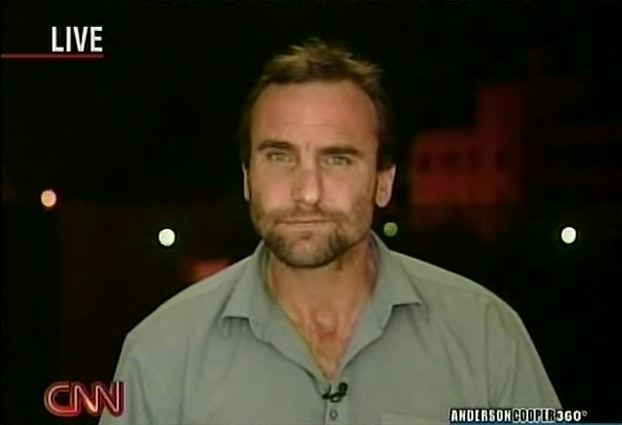
It’s always a great pleasure to attend a talk by a bold journalist like Michael Ware. Ware, in his wonderful unvarnished Australian accent, calls it like it is. In the fog of propaganda, lies and spin, his is the voice of pessimistic reason. He relocated to Iraq when plans of the invasion were underway and has therefore seen the entire gory war drama enfold from start to..... well what is not in sight... the finish. Although, Ware left Iraq on the day the Iraqi Army went into Basra, he told a small audience at the Middle East Institute in DC that Basra is not part of the regular violence that we have grown accustomed to hearing about from Iraq. This latest violence is a window to the world of Iraq if and when America leaves. According to Ware, the proxy battles between Iraq’s neighboring states and the battle for oil and territory will unfold with the ferocity that is being witnessed in Basra now. So all those who advocate troop withdrawal need to watch Basra closely.

Sunday, December 09, 2007

COALITION OF THE UNWILLING?

The Washington Post today carried a story about the U.S’ shrinking ‘coalition of the willing’ in Iraq. As the war has dragged on since the invasion in mid-2003, six countries have left while the ranks of the remaining coalition soldiers have thinned. But I almost fell off my chair in disbelief this morning when I read the numbers contributed by some. Five countries have less than 10 people in Iraq. According to the Post, Latvia has three soldiers in Iraq, Slovakia two, and Singapore one! To borrow a joke from one of my professors, this definitely looks more like the coalition of the unwilling.

Tuesday, October 02, 2007

FOR AMERICA - TIME TO RETURN SOME FAVOURS


On the empty street outside the U.S. Embassy in Baghdad, Ahmed would often find himself alone with his massive shadow. He feared the militias were waiting to kill him for working as an interpreter for the Americans.

When Ahmed requested his American bosses turn off the floodlights as he left, he was assured that somewhere in a watchtower American snipers were watching his back.

Months later, Ahmed went up there to thank them. The snipers didn’t know what he was talking about and then could only laugh. Ahmed felt betrayed. He realized no one was looking out for him. He had just been lucky. The Iraqis were on their own. As they are today.

Hundreds of loyal Iraqis are on the run from militias for helping America. They want asylum in the U.S. But America has yawned in their faces. Iraqis are dying while America’s refugee program remains riddled with red-tape.

America has a moral obligation in Iraq, and it should do more to help law-abiding Iraqis who supported its war efforts to get out of there.

Ahmed is part of the massive humanitarian crisis unfolding in Iraq. According to the U.N. High Commission for Refugees (UNHCR) 4.2 million people have been displaced. Jordan and Syria have each taken in more than a million Iraqis.

America had promised to provide refuge to 7000 Iraqis by the end of September. Only 829 have been admitted. Ryan Crocker, U.S. Ambassador in Iraq, says that at this rate Iraqis will have to wait anywhere between 10 months to two years to get a visa, if at all. Crocker articulated the asylum seekers desperation when he sent two damning cables to Washington. One was bluntly titled, ‘Iraqi Refugee Processing: Can We Speed it Up?’

There are legitimate security concerns for America. Could the U.S. be letting in disgruntled Iraqis who could turn against the country? It’s possible and that’s why the security screening should not be lenient. What Washington should do however is respond with the sense of urgency that Crocker is demanding.
America can begin by implementing a few of Crocker’s suggestions immediately - Put more people on the job at the embassy in Amman, allow at least Iraqi employees like Ahmed to apply for visas in Baghdad, and try interviewing Iraqis through video conferencing.

The whole process of for refugee status needs to be simpler. Iraqis can’t even apply for refugee status within their own country. The U.S. considers it too unsafe to let so many people into the Green Zone in Baghdad. So, Iraqis have to undertake a perilous journey to the U.S. Embassy in Amman to apply. The understaffed embassy there begins processing their papers while the Iraqis return to the minefield of home, to wait. But, as Crocker has pointed out, the much awaited call could come up to two years later. In Iraq’s tumultuous conditions, that is far too long.

Acknowledging Crocker’s missive however is at odds with the noises the Bush administration makes about the war. If we are told that the situation on the streets of Baghdad is improving, then how come there is a mass exodus of people fleeing to Jordan, Syria, Sweden, Norway, Germany and Denmark, and now clamoring to enter America?

The propaganda about this war lies at the heart of the problem plaguing America’s response to this massive displacement of people. Instead of responding to the refugee problem highlighted by its own ambassador in Baghdad, the Bush administration has started its usual round of finger-pointing. While the Department of Homeland Security and the State Department engage in the blame game, this crisis is costing lives in Iraq.

The refugee problem needs to go right on top of the Iraq agenda. Every humanitarian agency working in Iraq recognizes its explosive nature except America. The UNHCR has said that relocating within Iraq is not an option for asylum seekers from Southern and Central Iraq - they simply have to get out of there or they’ll get killed. It has also doubled its budget to $123 million to tackle the crisis.

America needs to help the refugees now to save the lives of loyal Iraqis like Ahmed. By speeding up the refugee intake, the U.S has a real opportunity to do something it hasn’t done in a long time – regain some moral support in the world by restoring the faith of old friends.