Friday, June 26, 2009

Souvenir Shopping in Alaska. Not.

A gift shop on the Homer Spit in Alaska. You don't see that much native art and craft in regular gift stores.

"If two or more people gather in one location, the state of Alaska has mandated that a gift shop should immediately be set up there," said Bobsky, the rafting guide. His sarcastic remark came at the end of a trip where I'd had the niggling feeling that Alaska had been heavily "souvenirised". I said to myself, "Moose crap! He might be right."

Don't get me wrong. I like buying souvenirs. But souvenirs have to have meaning or value or both. I stopped buying stuff with "L.A" and "London" emblazoned on shot glasses, plates, mugs, ash-trays, key chains and T-shirts, a long time ago. My eyes simply glaze over.

I had that glazed experience so often in Alaska's ubiquitous gift shops that I have come back with no souvenirs. Nothing. That is a real pity in a state with rich native arts and crafts. It is also one of the more unfortunate aspects to this "souvenirisation" - the same old silly stuffed toy makes it to the shelf but native crafts don't. This may just be a reflection also of the fact that the tourist industry seems run entirely by people from the lower 48 and more than half of Alaska's settlers are non-natives anyway.

Then there are also things that I couldn't decide were creative or stupid. For instance, in Valdez, where the devastating Exxon Valdez oil spill took place in 1989, one gift-store was selling oil from that spill in vials. A little floating black blob can be yours for $6. Is this creative marketing or is it squeezing a tragedy for commercial gain?

Then there are earrings made from moose droppings. Moose eject neat oblong pellets which are dried and painted over and sold as ornaments. Again, it's creative till you think about whether you want shit dangling from your earlobes or have it fertilize the earth instead - where it arguably belongs. I'm not really sure.

Alaskan native art is alive. It's just not "souvenirsed" like stuffed bears. So serves me right to return without anything because I didn't have the time to go find native crafts. But I hope next time it finds me.

Thursday, April 30, 2009

Fallen Philadelphia Officers Remembered

On a windy, grey afternoon in Washington D.C. on Wednesday, the names of four Philadelphia Police Officers were engraved on the marble walls of the National Law Enforcement Officers Memorial.

Sergeants
Stephen Liczbinski and Patrick McDonald were shot and killed by armed criminals while Sgt. Timothy Simpson and Officer Isabel Nazario died in vehicle crashes. "They join 247 other members of the Philadelphia Police Department who made the ultimate sacrifice throughout history as the 3rd highest total of any municipal police agency in the United States" said Craig W. Floyd, Chairman and CEO of the National Law Enforcement Officers Memorial Fund. The Philadelphia Police Department had the highest fatality figure in the United States in 2008.

Philadelphia Police Commissioner Charles H. Ramsey has been in Philadelphia for about 15 months during which time these fatalities took place. He said, "2008 was not a good year for us at the Philadelphia Police Department by any stretch of the imagination."

Nearly 45 Philadelphia police officers and commanders came down to the nation's capital for the ceremony. They stood in a row behind family members watching the names being engraved on the wall.

Kevin Hodges, the 4th commander of the 24th police district was in command when Sergeant Simpson was killed. He said "Unfortunately for these families in a 7 year period, we hadn't lost any officers. Unfortunately in the last 24 months we have lost 7 officers"

While 2008 was a bad year for the Philadelphia Police Department, according to research done by the National Law Enforcement Officers Memorial Fund, 2008 actually witnessed a sharp drop in overall gun-related deaths in the police. However for the 11th straight year, more officers died in traffic-related incidents.

Officer Isabel Nazario was killed instantly when a 16-year-old broadsided her police car on the passenger side. Her partner was critically injured. Her family wept as they etched her name on a piece of paper at the Memorial where more than 200 female police officers are remembered. Last year the number of female police officer deaths doubled from 6 in 2007 to 13 in 2008. It is one of the highest fatality figures amongst female officers in years.

The Philadelphia police officers arrived in buses and headed back the same afternoon after the ceremony. The National Law Enforcement Officers Memorial will continue to engrave the names of 254 others from around the country who died in previous years. All these names will be formally dedicated on the Memorial during the 21st Annual Candlelight Vigil on the evening of May 13th.

Meanwhile, the larger effort of recognizing the work done by policemen over the years is taking shape in the form of a permanent museum, right next to the memorial. It is likely to open in 2013.

This article and a slideshow are available on the WPVI-TV website.

Sunday, April 19, 2009

Why We Need Police Reform in India. Badly.

I argued all day. But in the end the assailant won.

He was a police officer.

In February 2006, my cameraman and I had been assaulted by a senior police officer and his henchmen (not policemen) while filming their brutality trying to put down a protest on an engineering college campus in Chennai.

In an irony of Indian bureaucracy, I had to plead with the same police officer to write a complaint against himself in his own police station!

Of course he didn’t.

Instead, I was given a useless piece of paper that said a Revenue Officer would investigate my claims because my allegation was against a Police Officer.

No action was taken. Nothing happened.

And that in fact is also the two-word summary of police reform in India.

Business leaders should join civil society groups to lobby the government to overhaul our police system. Thousands of Indians live below justice and a corrupt, ineffective police adversely affects us all. It affects the health of our democracy and also our economic growth.

Police reform is crucial in three main areas.

First, India’s basic police law needs to change. Commerce Minister Kamal Nath has triumphantly dedicated the 21st century to India. We seriously need to ask why then are we are still using 19th century laws?

The Indian Police Act in use today was written in 1861 by the British Empire whose primary use of the police was to protect their commercial interests against the rising tide of nationalism. Descendants of that Imperial Police, our policemen in 2009, continue to behave as though they need to tame the natives rather than maintain order for citizens.

Acting as a stooge of the ruling party, the Indian police is often brutish and insensitive, siding largely with the powerful rather than protecting the weak. After Independence, several states introduced their own laws governing the police but many of these laws are modeled after the 1861 law and some in fact are even worse, requiring little police accountability. That’s why India needs a new law structured around democratic policing and human rights. This imperial, 19th century law belongs in a history text book.

Second, policing needs to be depoliticized.

It would be unfair to lay the entire blame for the abysmal law and order situation on the Indian Police Service (IPS). The police is crippled in large part because of its bosses – the parliamentarians and legislators – many of whom are corrupt to the core. Any honest police officer who stands up to them is promptly transferred. The threat of transfers hangs over every policeman’s head and for officers with families, constant transfers takes a huge personal toll. Avoiding transfers in turn breeds a culture of conformity and corruption.

According to Transparency International’s 2005 report, the value of petty corruption in the police is estimated at Rs.3,899 crores (approximately 800 million dollars). The report also found that 80% of people who had contacted the police had paid a bribe. That percentage should set off alarm bells but there is absolutely no political will to change the status quo.

Politicians have resisted legislation to make the police more independent because it threatens their power directly. After Indira Gandhi’s infamous Emergency ended in 1977, the government set up a National Police Commission which made several important recommendations to shield the police from political interference. Over 30 years later, many of those recommendations are still in cold storage.

As governments come and go, police officers go through a merry-go-round of transfers. This practice has become so entrenched that there are reports of corrupt police officers in turn, bribing politicians for powerful positions. The whole thing stinks.

Third, the Indian police needs to be sensitized to human rights, gender rights and constitutional guarantees of equality. People constantly talk about how we need tough terror laws. I think, in fact, what we need is a kinder police. Statistics on police brutality quite naturally don’t reflect the scale of the problem. But there is plenty of anecdotal and video evidence to show that police officers at best stand by silently during mob attacks and at worst, participate in violence themselves.

In a rapidly changing rural landscape, the traditional forums of justice like the Panchayats (local village councils) are fast vanishing and the police are required to step in to solve disputes. But the police, with their own caste and communal baggage, act in partisan ways. In a milieu where people have a higher consciousness of their civic rights this creates further turmoil because traditional forums don’t always work and the police take sides further inflaming the problem.

Economic and social changes are placing a much heavier burden on the police and the threats of terrorism and insurgency are only too real. Of India’s 611 districts, 172 are said to face tribal and Maoist insurgencies and urban India is still recovering from the latest shock of the Mumbai attacks. Our police forces are hopelessly unprepared to meet the challenges of policing modern India.

After the Mumbai attacks many angry protesters carried posters saying they would not pay their taxes. Disengaging is unfortunately not the solution if we want a robust democracy and a stable political and economic climate. Indian business has a strong stake in this and should use its leverage in government to push for police reform.

For the business community, this is a great way to help India while helping itself.

This op-ed was published in a Kellogg School of Management publication, brought out during the 'India Business Conference.'

Monday, March 16, 2009

Book Review: Guests of the Sheik


On a dark rainy night in January, Robert Fernea broke open the padlock to a little mud home in El-Nahra, to introduce his bride to their new home. Birds chirped overhead from the thatched ceiling and the room was littered with books, papers, clothes, blankets and dishes. The year was 1956 and Elizabeth Fernea struggling to carry her luggage and keep her black cloak on (abayah) entered the threshold of her new life in Iraq. And here begins her book, ‘Guests of the Sheikh, An Ethnography of an Iraqi Village’.

For readers weary of the post-invasion American gaze on Iraq, this is a refreshing piece of work, written in 1965. Written with sincere humility and respect, it tells us of the lives and concerns of the people of this tiny village in southern Iraq where so much happens even if it appears stuck in a time warp.

Elizabeth accompanies her husband Bob, (known to the villagers as Mr. Bob) on his doctoral research studies in the village. Both diligently follow the rules of society to avoid becoming a hindrance in their own work of observation. They are the guests of the local Sheikh Haji Hamid and live in his guest house for almost two years, recording the lives of the tribal inhabitants of the village.

The discomfort of a little mud house in the middle of a conservative and traditional Iraqi village are all initially bewildering for Elizabeth – brought up in Canada and Portland, Oregon. But as she dedicates herself to the rule book that includes gender segregation and veiling and allows herself to be swept up in the lives of the local women, she starts to form bonds and eventually deep friendships.

This is not a long litany of a western woman’s woes in the midst of such a different society. Fernea writes with a warm and matter-of-fact tone, placing everything in the local context - ranging from the longing for boy babies to the curse of being unmarried.

Her education and western freedoms hardly make her the object of envy in El-Nahra. On the other hand she is pitied. She has no gold, lives far away from her mother, has no children and cannot even cook rice! The initial weeks and months are full of trepidation and emotional lows as she enters the world of the village women all by herself - a world full of playful and often seemingly cruel teasing.

But Fernea makes her way, slowly but surely into this world and in fact her finest touch is in the way she makes each of these heavily veiled village women – Laila, Sherifa, Selma, Aziza and several others, emerge as colourful characters. These women take Fernea under their wing, protecting her from Mr. Bob’s imaginary beatings (as they expect any normal Iraqi husband to do) teaching her how to cook rice and even keeping her away from the company of strange men (American friends who Fernea longs to share a beer with!).

The book brings alive the daily rhythms of this little Iraqi village going through the full annual cycle of highlights – Ramadan, Eid, Ashura (this is a Shia village), the pilgrimage to the holy city of Karbala, the harvests and the feasts. The reader is drawn into the womens inner gossip circle about who is to marry whom, who is pregnant and who will be the new school teacher.

The main preoccupation seems to be the impact of the salinity of the land. The Iraqi nationalism of the 1950s does not seem to touch the village except for the few central government employees such as the young irrigation officer – Jabbar who believes in the communist revolution and the young school teacher Aziza who desperately wants to learn English and goes unveiled when she is in Baghdad.

For the others, life is largely still about the old rules of tribal fealty and family honour although here too attitudes towards women’s education are changing. The young Basima is being sent to school in Diwaniya and the fact that she will live in a house with unmarried men invites a few sharp comments from the Sheikh’s wife Selma.

Fernea’s descriptive power is strong and the fact that she refrains from throwing in her own judgments every few paragraphs makes her work uncluttered and enjoyable to read.

She and her husband left Iraq in 1958, the year Abd al-Karim Qasim became Prime Minister overthrowing the monarchy. The revolution had come to Iraq although everything was soon to go horribly wrong under the Baathists and Shia society would experience a long period of repression.

Fernea died last year at the age of 81, after a long and productive career as professor of comparative literature and middle east studies at the University of Texas.

Her work is that much more valuable as it captures the beauty of a small Mesopotamian village ahead of its darkest days.

Sunday, March 15, 2009

How Not To Conduct a Press Conference

Cliff Kincaid speaking at the National Press Club at a press conference held by 'The Campaign for Justice for Victims of Weather Underground'.


Retired police officer James Pera.

Larry Grathwohl who said he infiltrated the Weather Underground while working for the FBI.


On March 12th, the ‘Campaign for Justice for Victims of Weather Underground Terrorism’ held a press conference at the National Press Club in DC. It was held, in hindsight rather inappropriately, at the First Amendment Lounge. Part of the conference was used to rant against Rupert Murdoch’s publishing company Harper Collins for promoting former Weatherman, Mark Ruud’s book. Cliff Kincaid, journalist and editor of Accuracy in Media (AIM) demanded, “Kill this book, a despicable terrorist memoir.” (He later clarified that he didn’t want the book banned, he just wanted Harper Collins to drop it.)

The group called the conference to highlight their call for justice for Sgt. Brian V. McDonnell who was killed in 1970 when a bomb went off at the Golden Gate Park Police Station in San Francisco. They want the Justice Department to redouble efforts in helping solve the case by providing all evidence it has. Furthermore, one of the speakers, Larry Grathwohl, a former FBI agent who infiltrated the Weather Underground claims Bill Ayers, the group’s founder told him that his wife Bernadine Dohrne planted the bomb at the police station.

The group wants Ayers and Dohrne to testify under oath before a grand jury if they really are innocent as Bill Ayers has claimed in media interviews.
All perfectly reasonable so far.

But heres why this post is titled 'How not to Conduct a Press Conference'.

Things started to sound really strange when words such as ‘Marxism’ and ‘Communism’ were bandied about as though it was the height of the Cold war and Sputnik had just been lobbed into the outer atmosphere. The speakers' clocks seemed to be set to 1959 instead of the current year.

At the end of the five speeches after everyone had collectively dreamed up the insidious phantasm of radical leftist ideas raging wildly across college campuses, it was time for q and a with the media, even the gangrenous liberal one.

The first question came from an African-American reporter from Free Speech Radio. The reporter’s long-winded question was about why none of the speakers had addressed the question of police brutality and the tumultuous backdrop of the 1970s. He was silenced rudely by Cliff Kincaid and another speaker, James Pera, a retired police officer who accused the reporter, of being an “ignoramus who only reads books” and listens to radical preachers, among other things. Then they accused him of rationalizing violence and terrorism and finally threatened to call security. The reporter shot back saying, “I’ll leave on my own. Would you like me to?” Kincaid replied, “I want you to be quiet and let us talk.”

Moral of the story is this: There are some basic mistakes that should be avoided to ensure that you will be taken seriously by the media. Or anybody. Do not threaten to throw out reporters from the room because you don’t like their questions. Do not provide information 20 years late (such as the threat of Communism) and if you can help it, do not use the words “ignoramus” and “books” in the same sentence.


Wednesday, March 11, 2009

Worst One Yet


In the explosion of useless Obama merchandise, these drinking water bottles have to be the worst I've seen. But if you must buy the bottle make sure to display the part of the wrapper that says "I was there" as you chug down its contents. I highly doubt however that if you preserve the sticker wrapper for your grandkids they will get much for it.

Thursday, February 19, 2009

Cosco Buson Oil Spill

Members of the National Transportation Safety Board (NTSB)
Barry Strauch, one of NTSB's staff investigators

Members of the investigating team presented their findings to the Board


Whose mistakes caused the freight ship Cosco Busan to collide with the San-Francisco Oakland Bay Bridge spilling 53,000 gallons of oil into the Bay? Nearly 15 months after the spill, The National Transportation and Safety Board (NTSB) held a day-long hearing on this question on Wednesday.

NTSB member, Debbie Hersman, was the “member on scene” in San Francisco overseeing the investigation. The case has involved plenty of finger-pointing with the pilot of the freighter blaming the Coast Guard and the ship operating company, Fleet Management Ltd blaming the pilot. Criticizing the narrow focus on pilot error, Hersmsan said, “I believe the pilot bears the lion’s share of the blame for the collision with the Bay Bridge but there are other people who are involved. While the pilot lined up the Cosco Busan on a collision course with the Bay Bridge, the VTS (Coast Guard’s Vessel Traffic Service) watch standers watched it happen.”

She said the NTSB investigation itself was hampered by the delay caused by the Coast Guard’s failure to assess the magnitude of the spill. “It failed to correct that gross inaccuracy throughout that first day even in the face of overwhelming evidence of a much larger spill.”

Examining the performance of the pilot and the master of the ship, Rob Jones an NTSB staff investigator, from the office of Marine Safety concluded that poor communication led to the accident. Another investigator Barry Strauch focused on the cultural differences between pilot and master that added to the poor communication.

Hersman reset the clock on the investigator’s conclusions calling into question the Coast Guard’s role once again. She said, “I think this accident happened when they left the dock. They should never have left the dock under those conditions.” There was dense fog in the bay that morning and four other ships had delayed passage and moved to anchorage instead to sit out the bad weather.

Various issues such as the pilot’s medical condition at the time of the accident, the role of the VTS and the environmental response that followed the spill were discussed at the hearing. The NTSB is expected to release a final report with its findings and recommendations later on Wednesday.

This piece is also available on the KGO-TV website.

Tuesday, February 17, 2009

CANYONS FROM THE TOP

My husband and I had planned a road trip to the Canyons in December last year. It's not the best time of year but we figured that since we were in Vegas we may as well go see the Canyons. We were tracking the notorious winter weather closely to make sure we weren't headed into any snow storms. Sure enough, a day before our planned departure from Vegas to Arizona, the road to the Canyons was closed because of a huge pile up of snow. Bummer. We would simply have to come back another time. Or so we thought.

Later that evening everything changed.

We have a cousin in Vegas who is a Captain in the US Air Force. He was planning to fly his parents and his wife over the Canyons the following day but his wife and mom (who fly frequently) changed their mind. So with two empty seats in the four seater, would we care to join?

When you can't drive, you fly??!! Our reply was obviously, "Hell Yeah!"

What follows is a photo essay of our flight.

Our cousin, Abizer Tyabji is a member of a flying club in Vegas from whom he rents his planes. We took off in the afternoon from the North Las Vegas Airfield. This is a view of the hangar. If you have a pilot's license its almost as easy as renting a car.


That day we flew a DA-40 - made by Diamond Aircraft Company. It is a four-seater and flies at about 140 mph ground speed. Abzi was flying this plane for the first time and really enjoyed it.

The best part was the wide glass paneling which afforded some wonderful panoramic views.

Abzi (left) preparing for the flight. Pulling out the gear such as headphones etc. I don't really know what else was in there.

Captain Abizer Tyabji

All aboard. Our only instructions were to keep quiet if ATC was talking to Abzi. We were first going to fly over the Hoover Dam and then onto the Canyons.

Thats the Hoover Dam down there. We just couldn't get over how Plan B and Plan A became Plan A +.


This is the source from where Vegas gets its water supply. The first picture is a close up of the sides of the reservoir. The sharp colour difference on the rim of the rock tells you how much the water has depleted.

Finally we are over the west rim of the Canyons. This is a landing strip for other commercial tours that fly over.

Captain Abizer Tyabji hanging out in his plane. He said it was easier to fly this baby than navigate in Vegas traffic.


It was a gorgeous day to fly - cold with a clear blue sky. The cold made it very comfortable inside the plane while the clear blue sky meant our plane was gliding like a happy bird.

After flying over the Canyons we flew over Abzi's Air Force Base on the way back. The little mounds that you can see in this photograph is where ammunition is stored - mostly dumb bombs for training and practice.

If you didn't guess already, yes those are F-16s sitting on the base.

We also had the pleasure of flying over the Vegas prison where O.J. Simpson is being held. Simpson has been sentenced to a maximum of 33 years with the possibility of parole after 9 years. He was involved in an armed confrontation with sports memorabilia dealers in a Las Vegas Hotel in 2007.

A view of the Strip. Abzi didn't get permission to fly right over it but this was also a good view.

We were in the air for about two hours flying over the Hoover Dam, Grand Canyon West, the US Air Force Base, O.J. Simpson's prison (!), Abzi's house, the Strip and finally touched down again at the North Las Vegas Airfield.

Like you do with a rental car, Abzi had to refuel the plane before returning it to a hangar. We used about 18 gallons for the flight.

This plane is so light, he could single-handedly lift it and turn it to get this wing near enough to the fuel station.

Pushing it though is a little bit tougher but three strong men can do the job.

The flight ends, Abzi clears it out and locks it down. Abzi and his wife fly all the time but for us it was a wonderful, thrilling ride.

Saturday, February 14, 2009

THE SITUATION IN SRI LANKA

The tiny island of Sri Lanka has been ravaged by an on-again, off-again civil war since 1983. The militant, Liberation Tigers of Tamil Eelam (LTTE) has been battling the Sri Lankan government, for a separate Tamil homeland, Eelam, in the north and east of the island but without much success. In the process, nearly 70,000 civilians have died. The present government under President Mahinda Rajapakse has re-launched a military offensive to finish off the LTTE militarily. To make sense of the latest conflict, I interviewed Associate Editor of Indian newspaper, Deccan Herald, Sundararajan Murari.

Murari has toured Sri Lanka extensively and has covered the conflict for the last 25 years and has met several LTTE leaders, including Prabhakaran twice. He responded to questions over email from his hometown in Chennai, India.

Murari is both a friend and former colleague when I was working in Chennai. He is an excellent source for all things Dravidian and Lankan. You can read his interview on the website of the International Affairs Review.

Saturday, February 07, 2009

PRESIDENT OBAMA MEETS WITH 9/11 AND COLE FAMILIES

John Clodfeller, father of Kenneth Clodfeller who died in the attack against the USS Cole in 2000.

The White House press waiting for the 9/11 and Cole families.

For all the Republican talk about supporting the troops, it was with some surprise that I learnt that George Bush hadn’t once met the victims of the bombing of the USS Cole in which 17 American servicemen died.

On February 6th, President Obama met the Cole families along with families of the victims of 9/11.The meeting was meant to allay some of their fears about the closure of Guantanamo Bay and the 120 day suspension in legal proceedings against terror suspects detained there.

The press staked out outside the West wing of the White House for a few hours waiting for the families after the meeting. The 9/11 families left without speaking to the media but the parents of Kenneth Clodfeller, who passed away in the Cole attack stayed to speak to the press. Accompanying them was the retired Cmdr. of the USS Cole, Kirk Lippold.

Cmdr. Lippold had criticized President Obama’s decision to close Guantanamo Bay and while he emerged from the meeting “pleased with what the President said”, he still had strong reservations about the decision. He said, “It (Guantanamo Bay) served as a symbol of the war on terror that was affecting our national interests worldwide and overall the only issue that I still have with it was that he closed it on a one year date and still has to articulate procedures and policies for what hes going to do. So until those procedures and policies are actually laid out I think there is still a lot of concern as to what effect it’s going to have on our nation’s security.”

I asked him if that meant that he agreed in principle now with the closure decision to which he said, “I think that in principle the reasons that he gave may be good. Its well intentioned. But the problem I have remains that we still don’t have any procedures. There’s no process. He hasn’t articulated the specifics as to what hes going to do which means that they haven’t thought through the second and third order of impacts of that decision and we cannot afford to be arbitrarily setting deadlines without having to explain what the impact is going to be. We must have that.”

The families have been somewhat taken aback by the pace at which policy reversals have happened and Cmdr. Lippold strongly felt that President Obama should have met the families before making the decision to close Guantanamo and not after. That said, Cmdr. Lippold was also pleased that the White House had attempted to start a dialogue with military families. He said, “When it was all said and done he offered somethings that previously has never been done and for the first time, military families and families of 9/11 are going to have a seat at the table to be able to help this administration and have an open door as we articulate the policies that are going to keep our nation safe. I’m looking forward to working and seeing how they do.”

FAMILIES HAVE WAITED 8 YEARS

Most of the families came to the meeting with the impression that President Obama was going to release all the detainees of Guantanamo Bay – a fear that was allayed atleast for one USS Cole victim’s family – the Clodfellers from Mechanicsville, VA.

John Clodfeller’s son Kenneth’s body was the last to be found after the Cole bombing in Yemen. The former Air Force Officer became extremely emotional while talking to the media. It was clear that being remembered by the highest authority in the land meant a lot to him and in fact, the new young, President seemed to have had a remarkable influence on him.

Describing the meeting he said, “He (President Obama) really wants our help in trying to resolve this detainee issue. I did not vote for the man but the way he conducts himself, the way he talks to you, you can’t help but believe him. This President has a good possibility of being one of our best Presidents just because of the way he is as a human being.”

Abd-al-Rahim al-Nashiri has been accused of masterminding the USS Cole attack in which Kenneth Clodfeller died. But al-Nashiri has said that he was tortured to extract such a confession. The CIA has admitted that it “waterboarded” him but the interrogation tapes have since been destroyed.

Referring to the status of al-Nashiri Clodfeller said, “I can’t imagine an American that’s in one of our prisons for eight years without anything being done for him. It is just unconscionable that it’s taken eight years. They had him locked up and incommunicado. I asked CIA once, “Where is he?” and they refused to tell me," he said.

Clodfeller had tried to meet with President Bush through his representative in Congress but in vain. He said Bush’s refusal to meet with the Cole families led him to believe that “there’s something that they don’t want us to know about.”

His wife Gloria Clodfeller who was also at the meeting with Obama said that she agreed with President Obama’s policy of closing Guantanamo because it was “putting a black eye on America.” She said, “Hes trying to build up the way people feel about America again. To get our respect back which we have lost. I agree with that. Hes not closing it to let the prisoners be released. Hes just establishing a whole new mission so that way they can make the process move like its supposed to be so that by the end of the year everybody should know whats going on and they should be able to get the place cleared. And that the legal process should be exactly what it should be.”

“I just don’t believe in torturing or hurting people or anything like that. That’s my faith. Prisons should be able to rehabilitate people and no they’re not doing that. They’re just leaving them there to sit and stew and think and come up with more ideas about what they can do once they get off.”

Of the meeting with the President she said, “I feel like at least we’re getting an answer. At least somebody is talking to us. Somebody is letting us know after 8 years, no you’re not forgotten…”

I’m not entirely sure how other victims’ families felt after the meeting with President Obama. The Clodfellers are just one of the nearly 40 who attended.

Thursday, January 22, 2009

BOHRA HOUSES OF SIDHPUR


This is the cover of my dad's book 'Sidhpur and its Dawoodi Bohra Houses'.


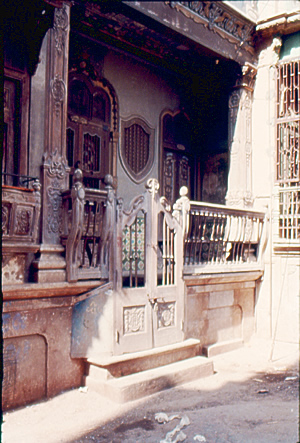
The entrance to a Dawoodi Bohra house in Gujarat.

My dad is an architect and writer who has done some extensive work on the architecture of the Dawoodi Bohra houses of Sidhpur in Gujarat. He was recently quoted in Mint in an article on the subject. You can read it here.

Saturday, December 06, 2008

CRIMINALISING HUMANITARIAN AID IN ETHIOPIA

David Kramer, Assistant Secretary of State in the Bureau of Democracy who visited Ethiopia.


“I didn’t go there wagging my finger intending to lecture. I went because we want to see Ethiopia succeed.” David Kramer, Assistant Secretary of State in the Bureau of Democracy, Human Rights and Labor said at the Center for Strategic and International Studies last month. The comment followed Kramer’s meeting with Prime Minister Meles Zenawi in Addis Ababa, Ethiopia. He was there to discuss the controversial law that would severely threaten civil society organizations (CSOs), non-governmental organizations (NGOs) and US government aid projects in Ethiopia..

If passed, the CSO law will severely limit organizations like Yoseph Mulugeta’s Ethiopia Human Rights Council. NGOs will have to get the state’s permission before spending money on public relations. Their judicial freedoms will be restricted. They will have to surrender confidential testimonies of abused victims. And even Ethiopians living outside the country will not be able to donate to NGOs.

“The overall effect of all these restrictions is in many ways the extinction of NGOs, particularly those that are engaged in advocacy and the promotion of peace and democracy,” Mulugeta said. He ruled out surviving on domestic funds saying, “Ethiopia is one of the poorest countries in the world and individual contributions are not much. So we will have to abandon our activities and close down.”

But the CSO law is only the latest in a series of measures taken by the Ethiopian government that shrink political space and freedom. This was the consensus amongst a panel of experts brought together to discuss “Human Rights and Governance in Ethiopia.” The speakers included, Yoseph Mulugeta Badwaza, from the Ethiopian Human Rights Council (EHCRO), Chris Albin-Lackey, Special Initiatives Researcher in the Africa Division at Human Rights Watch and Terrence Lyons, Associate Professor of Conflict, Institute of Conflict Analysis and Resolution at the George Mason University. Lasting well over two hours, the discussion was moderated by Jennifer Cooke, Director of the Africa Program at CSIS.

The US has raised many concerns over the proposed CSO legislation because of its restrictions on foreign funding and the debilitating effect it could have on most NGOs in Ethiopia. Many are unable to raise money without access to foreign funding. David Kramer said, “We raised concerns with things like the 10% threshold of foreign financing that would raise lots of questions about organizations given the dearth of funding domestically for many operations.”

The draft law also proposes a cap on administrative overheads for NGOs. Kramer said, “I quite simply don’t understand why the government is legislating how much an NGO can spend on overhead.”

Kramer raised these issues the Ethiopian government as a “friend” and “ally”. The US wants to maintain a close relationship with Ethiopia and ensure the country prospers. The US wants to see in Ethiopia a “democratic, prosperous member of the international community, fully integrated so it represents a real stable anchor in the region,” Kramer said.

Ethiopia is a key US ally in an extremely unstable region and the relationship between the two countries hinges largely on cooperation in counter-terrorism. But the US government also provides significant humanitarian assistance to the country. Then why does Washington have such little leverage with the government in Addis Ababa to make it reconsider this legislation?

Kramer replied, “We don’t want to politicize humanitarian assistance; we don’t want to politicize HIV/AIDS assistance. Those are programs we need to continue and support because life and death is at stake…[but],” he continued, “I think what we can do and need to do more of is co-ordination with the donors. Speaking collectively, we do perhaps add onto more leverage than might otherwise be the case if it’s simply the United States voicing concerns.”
Not everyone participating in the discussion agreed with Kramer.

The US foreign assistance package offers limited room for leverage, according to Lyons. Citing statistics from last year, he said, “In 2007, US assistance to Ethiopia was – 50% for HIV/AIDS, 30% for emergency food aid, 7% for child survival and malaria prevention, 1.5% for agriculture, 1.5% for economic growth, 1.5% for education and 1% for democracy and governance, said Terrance Lyons.

“You don’t get leverage that way! You can’t say “Just pass the CSO law and I’m going to throw the AIDS victims onto the street!”

Chris-Albin Lackey from Human Rights Watch, also warned that the CSO law was “a bellwether and an alarming signal about the overall direction that Ethiopia is moving in.”
He connected the trend towards a shrinking political space with some of the undemocratic, ruthless counter-terrorism measures employed by the Ethiopian government. He said the government had escaped all accountability for the major abuses and crimes committed against ordinary civilians and the trade blockade imposed in the name of counter-terrorism efforts against the Ogaden National Liberation Front (ONLF). He said, “Many believe this is just an extension of the old Ethiopian counter-insurgency strategy of draining the sea to kill the fish, as the same strategy was called during the 1980s.”

There is little or no credible information coming out of the Ogaden. The Ethiopian government denies access to most human rights groups. Lackey said the absence of information “will only be aggravated by the CSO law.” He added, “There is also an increasing tendency particularly at the local level of the state to view any and all critics as enemies and traitors.”

Listing out a pattern of abuses committed by the Ethiopian military against civilians, Lackey said the official response has been that “every single allegation is a lie. There has been no investigation and no attempt at meaningful accountability.”

He ended by rebuking the US government for not doing anything about allegations of torture, detention and murder. He said, “The very clear signal coming out of Washington has been that none of these abuses matter. Until that changes there will not be any meaningful international leverage possible around these issues.”

This article is also available on the website of the International Affairs Review, a publication of the Elliott School of International Affairs at the George Washington University.

Tuesday, November 25, 2008

EAST OR WEST, FAIR AND INNOCENT IS BEST

I was looking at the matrimonial page in a leading NRI (non-resident Indian) newspaper and couldn’t help noticing a few unusual new additions to the sales vocabulary for young Indians of “marriageable age”. Or maybe these are not new around here although I certainly haven’t seen these terms before.

The parents of the girls describe their daughters' in usual glowing language. These girls are always “slim”, “fair”, “gorgeous” and one even said “exceptionally beautiful”. What they seek for their daughters is someone from the same religion and caste of course, but also someone who has a good “East West blend.” Haven’t seen that one before. . .


US citizens and green card holders are handed a clear advantage and if they are “into fitness” - even better.

Many of the boys’ parents also describe their sons with generous adjectives such as “fair”, “handsome” and one said, "charismatic". The son's wealth is nakedly mentioned
with the promise of even greater riches because he is invariably from an Ivy League school. But curiously, most of these wonderful sons are in the market to re-marry. Nothing wrong with that except that he is described almost as a victim since advertising a divorce raises a hundred red flags for most Indian parents. So, the new invention in the wedding vocab is “innocently divorced”! Have you heard that one before? I haven't.

The poor, helpless handsome, fair, wealthy son was innocently divorced by some wicked witch of the east-west. But thankfully, the parents can guarantee that the affair ended “issueless.”

Sunday, October 26, 2008

KAZUO KAWASAKI AND FOREIGN POLICY

I was on the phone, walking absent-mindedly towards the Metro when I saw this window display at a spectacle store on Connecticut Avenue in DC. The frames being advertised of course are the now famous Kazuo Kawasaki, model 704, 34 gray. They look incredibly good but if you want a crash course in foreign policy, a real school is still better.

Friday, October 24, 2008

DEMOCRACY SHOULD BE ON THE AIR AND IN THE PAPERS

Indian journalism hit a new low when covering the Aarushi murder case earlier this year. Journalists appeared to have lost all sense of decency; hounding a grieving family, based on the sketchy, sordid details provided by the police.

I don’t want to dwell on the distasteful coverage again. I have written about it here before.

But the questions that remain are: What lessons has the Indian media learnt from the episode? Has it evolved a standard for the future? Will it self-regulate or will wait for a national outcry again, before learning to behave?

I’m sure there are internal codes of conduct for every organization but this needs to happen at an industry-wide level. In neighbouring Pakistan, the media has understood its influence as a player in politics and in fact even its power to make and break governments. And while the country is not exactly the beacon of democracy, Pakistani journalism is taking a few very democratic steps, worthy of emulation.

Speaking at the Woodrow Wilson Center in Washington D.C., Zaffar Abbas, the resident editor of ‘Dawn’ in Islamabad said last month, “We handled the previous government; a new government has come in but it’s now time to have a self-assessment of our own performance.”

According to Abbas, “The role of the vernacular newspapers has become very important with 3 to 5 million newspaper readers and 50 to 60 million viewers of 24/7 news channels. It has suddenly changed Pakistan – changed Pakistan to an extent and with a speed that now people have started to say – what are these TV channels telling us? Is that the real politics in this country? Should there be some kind of control over the way issues are being raised? People are raising questions about anchors and reporters - have they become real players in making and breaking governments? Should that be allowed?”

To temper this new found power and influence the Pakistan Federal Union of Journalists has evolved its own code of conduct, part of which involves the setting up of a Media Complaints Commission.

Abbas explains, “We need to have a commission largely because some newspapers and TV channels in this country have started on the notion that since we are independent we can broadcast anything that we think is right. The difference between what is right and what we think is right is huge! And that is why the whole debate has come in. Do TV channels have the right to intrude upon anyone’s privacy? Can they cross the line of objectivity? What should be reported and what should not be reported?”

“So the whole concept is to go for self-regulation and to allow the members of the public to approach the complaints commission with their own views and their own complaints.”

A panel of retired judges and professors will look into the complaints and decide whether a particular newspaper or TV channel has violated the self-made code of conduct.

It sounds like a fairer, more democratic way of doing things although it is still in its nascent stage and has not yet been tested. And of course, being open will bring with it attendant problems. For starters, it will probably require tremendous effort and paper work to keep such an operation going.

It is however still worth trying in India because in a democracy why should power be concentrated so heavily with the media? Why should the media go unchallenged if it destroys reputations and careers without evidence? Why shouldn’t people be able to contest the way they are represented? If a free press is a crucial pillar of democracy, shouldn’t the media also be more democratic?

In the spirit of fairness, that most basic of journalistic tenets, this is worth trying.

Monday, October 13, 2008

SOME THOUGHTS ON ORISSA


Houses and churches were vandalised even in the first round of violence that hit Kandhamal district over Christmas 2007. Nearly 11 people were killed. Photo credit: Dr. Angana P. Chatterji


The Indian media devoted significant chunks of time and space to the Indo-US nuclear deal. But in the US, its coverage was conspicuous by its absence. The 700 billion dollar bail-out package and the shenanigans of the legislators on the Hill overtook everything else. Bush’s rare foreign policy ‘success’ went largely unnoticed.

So, given that a huge story involving India, of tremendous national and international importance got the royal ignore, how did the communal conflagration in Orissa make it to the front page? In the New York Times this morning was a colour photograph with a story headlined – ‘Hindu Threat to Christians: Convert or Flee.’

I am surprised not because it made the front page. I am surprised because there is enough and more happening on the campaign and in the American economy to dominate the front page. This is not to say that I am disappointed. I think such awareness forces India to be more accountable for its actions and that is a very, very, good thing.

What intrigues me is why this particular story received such prominent status.

The obvious answer is of course that several western Christian nations, the Vatican included, have questioned India on what it is doing to protect its co-religionists.

But a somewhat deeper and more convoluted answer is that the concern of the west is itself part of a long tradition of Christendom. For instance, before the 20th century, humanitarian intervention in military form, to protect people other than the intervening nation’s own nationals was largely done to protect only Christians from the Ottomans. In fact, “human” in the word 'humanitarian' two centuries ago usually meant being Christian. Persecuted Jews and Turks were ruthlessly massacred with nary a word of concern from anyone.

And interestingly, the discussion in India over the Orissa story has involved the damage to India’s image because it is the powerful west for the first time seeing one of its interests threatened inside India and raising questions on its conduct. Contrast this concern over the dent to the Indian image with the outrage over the US denying Modi a visa over Muslim killings in Gujarat. There was plenty of nationalistic anger over Indian sovereignty being undermined. With the Orissa story it is almost entirely about ‘image’.

Isn’t the contrast interesting?

Sunday, October 05, 2008

OBAMA GETS IT


Father: You need to learn how to drive because I can't afford to have you wreck my car again.

Son: But if I hadn't, your car wouldn't be shining with this new coat of red paint. Why can't you appreciate the makeover?

Father: Because it cost me money and if you don't learn how to drive you'll wreck my car again!

Now replace the frustrated father with Barack Obama and the cocky son with John McCain. If the logic of the two candidates on Iraq can be reduced to a simple analogy then this serves the purpose.

John McCain doesn't get it. He glorifies a tactic – the 'surge' in Iraq – but stubbornly refuses to acknowledge the failure of the strategy – the invasion of Iraq. Unfortunately, this is just one of several things that reveal the 72-year old McCain to be a relic from the last century. America needs some fresh, 21st century ideas - Obama has them and he is the man for the job.

The ideas are simple. Obama advocates diplomacy and dialogue over dire declarations and threats. His message echoes what many scholars and practitioners have been saying for some time now, among them, five influential former secretaries of state – Henry Kissinger, Warren Christopher, Madeleine Albright, James Baker and Colin Powell.

Obama promises this fundamental shift in approach because it is pretty obvious by now that refusing to talk to 'enemies' doesn't make them improve their behavior.

However, Obama was heavily criticized by McCain for publicly saying that he would sit down without pre-conditions with the leaders of Iran, North Korea and Cuba. But that is a more responsible statement than John McCain's silly and muscular song, "Bomb…bomb … bomb… Bomb… bomb … Iran." (A modification of the Beach Boys' lyrics "Ba..ba..ba..ba..Barbara Ann".)

McCain's bullish strategy is also out of sync with American voters. In a recent poll conducted by the Chicago Council on Global Affairs (CCGA), a nonpartisan organization founded in 1922 to influence global issues, 65% of Americans voted in favour of talks with Iran. 68% favoured talks with North Korea and 70% with Cuba. Bombing is not on people's minds. Talking is.

On the question of the Iraq invasion, Obama has been against it from the start. He points out that this is a problem America created for itself. Every 'victory' since then has been too fragile and only attempted to cope with a strategic blunder while massively draining resources. Saddam Hussein had nothing to do with 9/11, there were no weapons of mass destruction, Iraq and Iran kept each other in check and 'Al-Qaeda in Iraq' didn't exist. McCain chooses to be blind to all of the above. He insists you look at the new coat of red paint. He also wrongly paints Obama's withdrawal strategy as "defeat" when Obama's approach is simple – the US has to be careful getting out as it was careless getting in. 67% of Americans according to the CCGA poll support a time-table for withdrawal from Iraq. Again McCain is out of touch.

Obama also makes the argument that the central front on terror has been and still is Afghanistan. He wants a troop surge there. Here too he shows better judgment because today it is pretty clear that the Federally Administered Tribal Area (FATA) in the north-western corner of Pakistan is a safe sanctuary for every bandit and aspiring terrorist in the world.

During the first Presidential debate debate Obama rightfully also criticized Bush's one-man Musharraf policy in Pakistan saying, "Musharraf was a dictator but he was our (America's) dictator." McCain shot back in defense of Musharraf, that Pakistan was a failed state when the general took over. Frankly, it looks much worse today. Lastly, to be effective in Afghanistan, America first needs to improve its relationship with NATO allies and the rest of the world.

By invading Iraq and ignoring Afghanistan things there have gone from bad to worse. Now countries like Norway and Germany don't want to shoulder the burden of a botched war. They refuse to send troops to the south where the insurgency rages.
George Bush's ramrod style has alienated allies and few people today share the sympathy epitomized in the French newspaper Le Monde's headline after 9/11 stating "We are all Americans."

83% in the CCGA poll, voted overwhelmingly to have America's standing restored. John McCain with his bluster and tough talk about 'victory' and 'defeat' in war has really not endeared himself to anyone abroad. Obama on the other hand has almost rock-star status in Europe. His race, youth and idealistic message of 'Change' have been electrifying.

But the substantive reasons that Obama trumps McCain on foreign policy are his intelligence, foresight and conciliatory tone. This will better serve America and the world where war-mongering and dire threats have failed.

Published on NDTV.com on October 4th 2008.

Friday, October 03, 2008

DENMARK - WHY SO HAPPY?

The ubiquitous Danish flag - Dannebrog - stuck in some incredible Danish dessert.


A view of the flat landscape of south Denmark from Skamlingsbanken.

When a Danish acquaintance asked me where Baghdad was, I had to quickly return my mandible from the depths of disbelief. Demark is not exactly at the edge of the world but some of its small towns can feel incredibly disconnected. Life here is regimented and everything happens at the appointed hour. How boring? Guess what? The Danes love it. In fact they are so pleased, they keep turning up in different surveys as the happiest people on Earth.

These findings have surprised many Danes themselves but after a 30 day vacation, I can see why they have plenty to cheer about. Steering clear of Copenhagen, I looked in three Viking nooks - the small towns of Haderslev, GrĂ¥sten and Odense. No trampling hordes of San Marco or Champs Elysees here and perfect for a ‘smell the roses’ kind of stay.

My investigations into Danish happiness yielded clues everywhere. To begin with, the Danes have done an excellent housekeeping job in their country. It is very clean and environmentally progressive. As if for proof, we packed a picnic basket of sandwiches and soda and drove to Skamlingsbanken - the second highest point in Denmark - from where you get a sweeping view of the flat landscape of the south. It is green and dotted with gigantic wind turbines that supply nearly a quarter of Denmark’s electricity needs. The Danes were thinking about global warming long before Al Gore.

The towns are equally well-planned and structured. A cathedral or church usually forms the centre of the town around which commerce begins with little shops and offices lining the streets and beyond that the houses start.

In Denmark it is as important to see the indoors as it is to see the outdoors because everything in the Danish home is geared towards creating the warm, fuzzy, ‘snug-as-a-bug’ feeling. They even have a word for it called - hygge (Hoo-ga). I understood what exactly hygge is when Niels and Kirsten Kvist invited me to their home for dinner. Like most hosts here, the Kvists directed the small group to their appointed place at the table and laid out a vast array of breads, salads and meats. However, the course to wait for, is always the last one. The desserts are worth all of Solomon’s gold. After dinner, the lights were dimmed and candles were lit. There was cognac, wine, laughter and singing. Kirsten took her place at the piano and everyone joined in for the Danish folk songs. It was hygge.

Back in the outdoors, walking and cycling are the best ways to explore. Even the queen does it. The Danish royals have a summer home in the town of GrĂ¥sten and Margrethe II, the queen regnant, is often seen bicycling around town. Some people even claimed to have run into her at the local grocery store! There are few monarchs on two wheels buying broccoli today, reflecting Denmark’s strong egalitarian tradition and in turn, a strong sense of collective identity. A University of Leicester study listed it as one of the primary causes of the country’s high happiness quotient.

This collective identity finds several expressions. For example, the national flag, the Dannebrog is used extensively and in various ways. Little Dannebrogs are stuck on birthday cakes, souvenir stores are full of Dannebrog pens, magnets and stickers and of course the Dannebrog is hoisted on a pole outside every home and especially so on a birthday or wedding anniversary. Protocol however dictates that it must be brought down before sunset and this is taken very seriously, almost as seriously as the Danes take their fairy-tales.

In Denmark, Hans Christian Andersen is adored. At Odense, on the island of Funen, scores of pilgrims beat the path to the home of the man who changed childhood forever with his tales of the ugly duckling who became a swan and the princess who despite many mattresses could detect a pea.

The Lego creations in Billund, the statues across Odense and, of course, the Little Mermaid, regularly vandalized in Copenhagen, all bear witness to Hans Christian Andersen’s continuing hold on public imagination.

Towards the end of my 30 days I was beginning to see why Danes can make legitimate claims to being so happy. With this collective identity, bung in free health care, free education, a green country and Carlsberg beer and you can see why the Danes are up there on the Happiness Index.

All is not perfect of course. Xenophobia and divorce rates are going up and some young people feel the welfare state and high taxes suffocate creativity and entrepreneurship.

In fact, if an old Viking ancestor were to suddenly pop around in the 21st century he might even nod gravely and tut-tut at the contentment of his descendents. While he may have been out on the wild and choppy sea exploring the world beyond, today’s Danes have eaten dinner at 6 and are in bed by 10. If the intrepid Viking looked restlessly outwards about 1000 years ago, today’s small-town life moves at a steady, predictable trot and is very inward-looking.

But apparently, as various surveys show, the Danes are perfectly happy with this arrangement. Writing just after the Great Depression, a visitor to Denmark observed, “There are few countries in the world which give the foreigner the impression, if not of actual wealth, at any rate of universal happiness and content.”

It sounds true even 70 years later. Baghdad may as well belong on another planet.

Published in the Hindu BusinessLine on 3rd October 2008.