Friday, August 13, 2010

A scare and a scowl on the Tube


I sat down in the only empty seat in the middle of the compartment, dropped my tote bag near my feet and settled down to read the newspaper on the tube ride home.

I had the paper open, directly in front of my face and was reading quite attentively, when I felt a tap on my left shoulder. It was the guy next to me asking in a concerned tone, “Excuse me, is that your bag?”

I was convinced he was referring to my black tote bag on the floor but I folded the paper to have a look anyway. I became mildly anxious when I found that he was referring instead to a white plastic bag, inside which I could see the top of a black shoe box. Beside it, outside the bag, was another blue shoe box.

Since it wasn’t mine, we asked the two women seated across from us and they both said it wasn’t theirs either. One looked calm while the others face betrayed her nervousness. But at that point, we were all in a state of paralysis, unsure what to do next. The train was barreling through the tunnel, the white bag didn't belong to anyone and we were the four closest to it.

I think we may have all gotten off the train at the next stop if the guy next to me, the one who tapped my shoulder to begin with, hadn’t done a brave and stupid thing. He stuck his hand into the white plastic bag and fully opened the partially open black cardboard box. It was empty. Then he did the same with the blue box and thankfully that too was empty. We all heaved a huge collective sigh of relief and in our heads, cursed out the person who had thoughtlessly left the skeletons of their shopping behind.

With the passing of the crisis, I went back to my newspaper. But this time I found myself reading and re-reading whole paragraphs before they made any sense because my mind was terribly jumpy after the earlier jangling of the nerves. Even so, I persevered, trying to focus and read very consciously. But as if one scare wasn’t enough for one evening, I suddenly experienced, what felt like an someone angrily and violently punching my newspaper, making it fall out of my grasp, to lie crumpled on my lap.

I looked up to find a woman trying to squeeze out of the compartment even while apologizing to me, because it was probably her hand or her bag that hit my paper by mistake. But the suddenness of it, compounded with the earlier scare, had caused my heart to shoot straight into my mouth. I was in no mood to be mollified and gave her the coldest narrow eyes and a deep scowl.

Thursday, August 12, 2010

Travel update from the Cumbrian coast


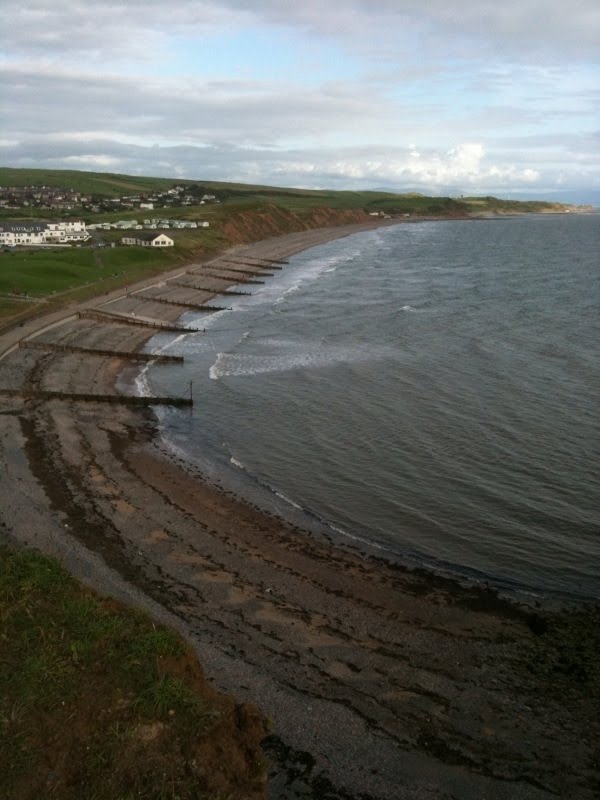
Went to the Lake District recently and on an impulse drove to the Cumbrian coast, to the little village of St.Bees. It was a brief but memorable stop of about two hours. Met two very busy old ladies and also stumbled upon a very moving sight on a promontory on the red sandstone cliffs of St. Bees. Read about it here.

Wednesday, August 11, 2010

Release adivasi leader Lado Sikaka


Sana Sikaka, a leader of the Dongria Kondh indigenous communities who was abducted by gunmen on 9 August, has been released. Another leader is still being held.

Sana Sikaka, one of the Dongria Kondh indigenous community leaders in the eastern Indian state of Orissa who was abducted on the evening on 9 August, was released yesterday evening. 

He has informed journalists that he and Lado Sikaka, (in picture), were stopped at Izrupa at the foothills of Niyamgiri as they were leaving with a group of activists in a van to catch a train to Delhi. About fifteen men in plain clothes, armed with automatic weapons, had parked their two vans nearby and were hiding in a forest. They surrounded Lado and Sana and said they were taking them. They intimidated the other activists, snatching their mobile phones and the van key and forced them to walk towards Lanjigarh, the nearest town. Then the plainclothesmen, along with Lado and Sana, walked to the vans and then made a long drive towards the neighbouring district of Rayagada, stopping at a few places en route. Yesterday evening, when they reached Bijepur town, they pushed Sana Sikaka out of the vehicle, forcing him to commence a long journey back to Niyamgiri. They appear to have taken Lado Sikaka to Rayagada town and detained him there. 

Lado Sikaka and Sana Sikaka are both campaigning against a proposed bauxite mine in the Niyamgiri Hills in the eastern Indian state of Orissa. Research by Amnesty International indicates that the Niyamgiri bauxite mining project, which would be located on the Dongria Kondh's sacred sites, traditional lands and habitats, is likely to result in violations of their rights to water, food, health, work and other rights to protection of their culture and identity. The project is currently awaiting clearance from India's Ministry of Environment and Forests. 

Please write to the Governments of India and Orissa to take all necessary measures to ensure his safe return. Also appeal to them to launch an investigation into the complaint over the abduction of the two Dongria Kondh leaders, in full compliance with the country's obligations under international human rights law. 

You can write to or email the Chief Minister of Orissa - Naveen Patnaik at the following address:

State Secretariat
Sachiyalaya Marg,
Bhubaneshwar,
Orissa 750 001, India
Tel: +91 674 2536682
Fax: +91 674 2390562

Email: cmo@nic.in (or) cmo@ori.nic.in
Salutation: Dear Chief Minister

You can also write to or email the Minister of Home Affairs - P. Chidambaram at the following address:

104, North Block, 
New Delhi 110 001, India
Tel: +91 11 2309 2462
Tel: +91 11 2301 7256
Fax: +91 11 2301 7256

Email: hm@nic.in
Salutation: Dear Home Minister

(Photo and text courtesy Amnesty International)


Thursday, July 15, 2010

Travel blog update from Derbyshire

Hello all! I've just updated the travel blog with a piece on a most haunting story about how a village in Derbyshire lived through the plague. Read about Eyam here.

Monday, June 14, 2010

The thrill of the long-list


Delighted! My piece on police brutality in India made the long-list in the Guardian International Development Journalism Contest. You can read ‘Killing India’s Poor With Impunity’ here.

Thursday, June 10, 2010

Birthday wishes to a blogger in prison


On her 26th birthday, Shiva Nazar Ahari, is in Tehran’s notorious Evin prison. Her birthday celebration happened thousands of miles away in London, outside the Amnesty International headquarters. At 1 pm on June 10th, Amnesty staff came together with cakes and candles to sing her a birthday song. At the end of it they yelled into the camera, with a message meant for the Iranian regime, “Release Shiva, NOW!”

 
Shiva is a journalist and blogger and a member of the Committee of Human Rights Reporters (CHRR). She was first arrested in June last year for three months before being released on bail.

But she was re-arrested in December 2009 and has been in jail ever since. When her family spoke to her on the phone in February 2010 she told them that she had been transferred to a “cage-like” solitary confinement cell where she ‘couldn’t move her arms and legs.’

The charges against her are in keeping with the worst traditions of lunacy and insecurity that this Iranian regime displays. They include, “causing unease in the public mind through writing on the CHRR’s website and other sites” and the more predictable “acting against national security by participating in anti-government demonstrations” on 4th November and 7th December last year. Shiva says she was at work on both those days.

So today, from one female blogger to another – Happy Birthday! And more power to you in this fight.

Tuesday, June 08, 2010

Eavesdropping on marriage counsellors in the Tube


Its rare to overhear an interesting conversation on the tube. Most people either look preoccupied with the days business ahead or glum at the days business behind them. Or, of course, they read.

I wasn’t paying attention to the two women seated opposite me on the tube till they started saying something about marriage and babies. This sounded interesting. With my curiosity thus piqued, I fixed my eyes on the bottom half of page 92 in ‘The Age of Kali’ and began listening really hard.

The woman speaking, did so with tremendous authority; almost as if she was a marriage counsellor, operating a mobile service on the London Underground, dispensing little gems of advise to anyone in distress. The woman listening seemed to hang on to every word.

The marriage counsellor, and we'll just call her that, was a trim older woman in a printed skirt, red blouse and big black beads around her neck. She said, “Too many people live entirely for their children.”

(This was when, I stopped reading and started shamelessly eavesdropping.)

“Yes… yes…..”, said the younger one, a little uncertain but in agreement nonetheless.

“The women start living for the children and ignore their relationship with their husbands. The kids… they grow up and leave home and then the parents find that their relationship has a big gaping hole. Its suffered because they stopped paying attention to each other when in fact that is the most important relationship in your life!”

“Yes!”, said the younger woman, much more certain now.

“Don’t get me wrong. You obviously love your kids, but you actually spend most of your life with your husband.”

“And the kids are watching your relationship. They can see when it is strong and secure…. that you have your own life. And they take it forward into their relationships,” she continued.

“Children are a gift. You bring them into this world but you shouldn’t stop living your life.”

With that, unfortunately, we reached the last stop and the two walked off with the marriage counsellor still going strong.


* * *

Sunday, June 06, 2010

Travel Blog Launched!

Dear Readers,

I've just launched a separate travel blog because I felt this space was getting rather confused. One day I was writing about international affairs, the next day about my fear of birds and on the third about a trip to the Czech Republic. All very muddled. Thats how the idea of a separate travel blog was born.

Besides, I've been wanting to switch to Wordpress for a long time... well ever since I heard it works much better than Blogger. Initial impressions confirm the same. This blog will continue to remain active and everytime I post to the travel blog, I'll be sure to direct you there. For now, hurry on to http://alaphia.wordpress.com!

Friday, June 04, 2010

Guilty

I've been feeling terribly guilty about not updating my blog more often. I will be back.

Monday, May 17, 2010

"For weeks my kids did not talk, they were so scared."


 (Photo Courtesy: AP)

Amnesty International interviewed a survivor of the conflict in Sri Lanka between the LTTE and the Sri Lankan government’s armed forces. Vasuki (name changed) gives us a brief snapshot of what it was like living in the war zone trying to stay alive with 2 small children.

“In December 2008 I was living in Kilinochchi when my home came under aerial attack. We were displaced to Viswamadhu in Mullaitivu. The early days of displacement were not too difficult as Viswamadhu is an agricultural area. It was when we moved to PTK that we started to feel the pinch. We lived in a tent over a bunker. When there was no attack or shelling we could cook outside but when shelling was heavy we had to stay in the bunker for hours cooking and living there. For weeks my kids did not talk, they were so scared. They had to witness people dying from shell attacks and the memory of dead bodies lying all around will probably never vanish.

In March we had to move to Matalan in Mullivaikkal – this was crammed with tens of thousands of people. By now people had finished their supplies and eaten all they had, even their cattle. I had to fast so that I could feed my children and just drank the water I cooked the rice in. Elderly people collapsed around us or slipped into comas. I have to admit I tried to kill myself because I was so depressed but my daughters begged me not to give up. What kept us going was a belief that the UN would intervene to stop the terrible human suffering.

Shelling got steadily worse. Then on 15 May a huge explosion forced us to move towards Vella Mullivaikkal. I can’t describe the horror around us - we had to fight our way across a carpet of dead bodies. We finally made our way to Vatavahal bridge. Along the way the Army fired at us. 

I find it hard to talk about this time.... people were also not happy with the LTTE as they forcibly recruited from families. What I know is that people want to live in peace but we cannot forget all those we left behind. You can’t give us back what we lost but you can give us justice”.

If Vasuki’s story moves you please take action by signing a petition to call on the UN to open an independent investigation into war crimes committed by both sides.


Friday, May 14, 2010

Punishing the Victims Saves Precious Public Resources.

In India we punish the victims of crime. Yeah, I know many countries punish the perpetrator but that approach assumes we don’t have a choice. Of course we do! Besides, its also easier to punish the victim because you often know who they are, unlike the more cumbersome approach of finding perpetrators. It is a waste of public resources.

Also, if victims weren’t so foolishly vulnerable, would people go about victimising them? The answer is a clear negative. For instance, if you didn’t ride a bicycle on the main road, you wouldn’t get run over by a bus. Or if you weren’t old and diabetic, you wouldn’t get overpowered by your burglars. Or if you weren’t a female, you wouldn’t get raped. Its all so obvious and yet people don’t get it! They continue to fall into all sorts of traps instead of just getting under the covers and staying there so that no harm may come to them.

Recently in Orissa, “boyfriends” were caught filming their girlfriends naked and selling the stuff on the market. One girl killed herself when she found her naked images on a CD. Now authorities in Orissa want to warn all girls against rushing into physical relationships. Combining moral science with law is such a superb idea.

But that’s not enough because there may be some rotten wenches who will still disobey despite knowing these dangers. So just to make doubly sure that this campaign is successful, the Orissa State Women’s Commission chairperson, a free thinker by the name of Jyoti Panigrahi, has told parents to ‘monitor the movements of their daughters and keep an eye on their activities.’ It’s a good suggestion but doesn’t go far enough. Locking women up would be so much easier. But sometimes it is hard to make such suggestions without avoiding charges of sexism.

Some lawyers in Kamakshanagar have held a protest rally demanding the immediate arrest of the “boyfriends” involved. This is outrageous. Now every man in Cuttack will be looked at suspiciously. How will the police prove that the guys were in a relationship? Are the police supposed to drop VIP duty to chase after boys in the street now? Is this what its come to? Mad.

Monday, May 10, 2010

Top 10 Things To Know About Post-conflict Situation in Sri Lanka


May 18th, marks the first anniversary of the end of the war in Sri Lanka when the government concluded its campaign against the Liberation Tigers of Tamil Eelam (LTTE).

The LTTE’s dreaded leader V. Prabhakaran is dead, as are all his senior colleagues and for now the banned terrorist group has been destroyed.

But there needs to be a serious and independent investigation into the war crimes said to be committed by both sides during the final months of the war between January and May 2009. The SL government estimates that about 3,000 to 5,000 civilians were killed but unofficial estimates by UN personnel present in SL during that time say that the real figure could be closer to 20,000 if not more.

I know some people argue that war is dirty business; that you can’t have a war where everyone comes out smelling of roses. True. But there are rules even for the conduct of war and if the Sri Lankan government has observed those rules, it should not be afraid of an independent investigation. But it won’t allow one. And countries like China, Russia and India are helping it cover up its crimes.

Even the manner in which the Sri Lankan government has handled the post-conflict situation and the terrible, terrible punishment that the Tamils are being made to pay for this collectively is shameful.

Amnesty International put together this list of ‘Top 10 Things to Know’ about the post-conflict situation in Sri Lanka. The next time you hear the argument, “But war is dirty business…..” remember to quote one of these 10 points.


  1. Despite reports of torture, rape and killings in detention and IDP (Internally Displaced Persons) camps since spring 2009, the SL government has not allowed impartial observers to investigate the validity of the claims and monitor the situation.  
  2. Despite the government’s promise that all would be released from the post-war camps for the displaced in Menik Farm and elsewhere by the end of January 2010, 70,000 people are still in camps.
  3. Atleast 10,000 ppl (incl. appx. 500 children) have been detained because of alleged ties to the Tamil Tigers. We don’t know exactly who, how many or even where they are being held.
  4. Red Cross has been denied access to detention camps for child ex-combatants since July 2009. Even UNICEF has had very limited access.
  5. Despite government promises, a vast majority of the returnees from IDP camps do not have adequate housing, potable water and sewerage.
  6. The UNHCR has had to stop its shelter grant of US$220 to all future returnees from IDP camps due to a lack of funds. The shelter grant is crucial assistance to help people rebuild their homes.
  7. SL has become one of the most dangerous places in the world to freely express an opinion. Attacks against journalists and civil society activists have risen in the last 4 yrs and dozens of journalists have fled.
  8. Sri Lanka has the second largest number of enforced disappearances and extra-judicial killings after Iraq according to the UN.
  9. After the war against the Tamil Tigers ended in May 2009, SL President Rajapakse promised UN Sec. Gen. Ban Ki-Moon that his govt. would look into claims of human rights abuse and possible war crimes committed during the war. There are claims that anywhere from 10,000 to 40,000 people were killed in the final weeks alone. But the govt. has taken no serious action so far.
  10. Despite the tens of thousands of crimes committed over the last 30 yrs only a handful of perpetrators have ever been convicted. There is little hope for victims’ families to find justice inside SL.

Tuesday, May 04, 2010

Britons Well-Read, Even When Not Well-Fed


Bill Bryson writes in ‘Notes From A Small Island’ that the average person in Great Britain is very well-read. Visitors to London also notice that Londoners will board the tube and routinely pull out a book or atleast a newspaper. You could do a little naked jig in your coach for a full 30 seconds but people may not have noticed, absorbed as they are in ‘The Moonstone’ or ‘The Time Traveler’s Wife’ or whatever.

I thought of all this when my husband alerted me to a homeless person sitting on the pavement of the very posh King’s Road in Chelsea, totally engrossed in a book. My caption for the photograph below would be, "Britons well-read, even when not well-fed."


Tuesday, April 20, 2010

Medieval Wander in the Czech Republic


 A view of the Vltava river with the Cesky Krumlov castle on the right.
The town down below
The Cesky Krumlov tower rising out of the rock on the side of the river Vltava.
Restaurants line the sides of the river. 
The coat of arms of the German Schwarzenberg family. On the right quarter is the head of a Turk, having his eye put out by an offending raven.
A street in Latran, where the staff that serviced the castle once lived.


I was ready to chuck the GPS into the river in frustration.

We had driven south from Prague to the medieval town of Český Krumlov to see the Czech Republic’s second largest castle complex and the freakish bend of the river Vltava around it. We couldn’t figure out how to enter the town to get to our hotel in the medieval quarter of Latran. The GPS stubbornly kept sending us into a haphazard little car park on the side of a hill, to declare with finality, “You have arrived at your destination,” when we were nowhere near it.

Calling the hotel for directions was no good either. I simply couldn’t pronounce the name of the road we were on - “Objizdkova”. I tried twice and started giggling the third time. It was the equivalent of a foreigner in India trying to say “Thirukalukundram.”.

Finally, we flagged down a trio of Czech youngsters and literally begged them to tell us how to get to “Hotel Bellvue at the base of the Český Krumlov castle.

The group went into a little huddle discussing the possibilities. Then one of them said, “Turn around, take a left, go down the hill, then make a right, after the U-turn go left again, cross the bridge, turn right, then park your car, turn right and walk up the hill and finally turn left.”

“Wha…??”


Understanding that we had gone into shock, one of the guys simplified it for us. "Just look for signs to P2," he said, which turned out to be a parking lot just near the entrance to the town. Suddenly the fog had lifted. It was like being able to figure out a labyrinth by looking at it from above. Within minutes we were in our hotel, gasping agitatedly to the receptionist about our travails. "Car access is limited because this is a UNESCO World heritage site," he informed us. But it still didn't explain the absence of good signposts to the entrance to the town.

The following day however, we found that Český Krumlov, can generously reward those who persevere in trying to find it. The river Vltava twists and bends mischievously around town looping in the shape of three capital S’s. And, walking the network of cobblestone streets will both engage the eager window shopper and warm the historians heart.

The one must do thing in town though is to take a tour of the Český Krumlov castle which towers over the little town. It is a massive complex, opening up into one courtyard after another, extending all along the side of the bend in the river Vltava, at an elevation which gives the beholder the impression that the castle has somehow organically risen out of the rock.

The castle has belonged to three prominent Bohemian noble families over the last 8 centuries and each family has extended it to suit its needs. So the castle has grown longer and longer along the rim of the river like a train engine getting more and more coaches attached to it.

The oldest part of the castle was built by the Vitek family. Then the House of Rozmberk inherited it and owned it for the next 300 years upto 1602. Their stay in Český Krumlov, gave the town a big cultural, economic and political boost. The medieval quarter, Latran, at the base of the castle that draws tourists today, sprang up in large part, to service the needs of the castle. Servants, merchants, craftsmen all crowded down below while the lords lived it up, quite literally.

But even noble families have financial troubles and the castle had to be sold which is how it passed from the Rozmberks to the Eggenbergs. Almost as if their name was mocking them, the Eggenbergs, ran out of male heirs. Their abiding contribution to the guided tour of the castle is a massive and gauche chariot coated with 2 kilos of real gold, sent on a diplomatic mission to the Vatican, carrying gifts for the Pope. It was used but once. Such are the ways of the wealthy.

But our tour guide robbed this medieval version of “Lifestyles of the rich and famous” of all colour by speaking in a monotone that was flatter than a tava. She had also repeated the same information so many times that she had acquired robotic precision. The only time she looked remotely like a real person was when she blushed faintly while calling a noblewoman’s bedroom the dining room by mistake.

Meanwhile with noone to inherit the Český Krumlov castle, the Eggenbergs then sold it to the German Shwarzenberg family who held it till 1947 after which it was nationalized. The Schwarzenberg family had a most interesting coat of arms with the head of a poor Turk in the bottom right having his eye poked by the beak of an offending raven. “How can Turkey ever join the EU?”, I thought to myself.

The castle has a baroque theatre which every guide book promises is a feast for the senses but it was unfortunately closed when we went. So were all the rafting tour operators for trips down the twisting Vltava.

We sat down to a late lunch at the base of the castle, in one of the many restaurants that line the river and consoled ourselves. It was the price we had paid for beating the tourist traffic. And after the tourist throngs of Prague, it had been nice to walk through the Český Krumlov castle gardens as though we were a couple of Schwarzenbergs enjoying a walk in our private woods.

This article was published in The Indian Express on 18th April 2010.

Travel:
You cannot fly directly into Český Krumlov. You could either fly to Vienna or to Prague to get to Český Krumlov since the Schengen visa is valid in both Austria and the Czech Republic.

Aeroflot offers the cheapest rates into Prague via Moscow starting at Rs. 33,000 appx.

Air India operates a direct flight to Vienna from New Delhi starting at Rs. 36,000.

Don’t drive to Český Krumlov like we did. Just go by bus. It is cheaper than going by train and there are several operators who can bus you in. A popular option is the  ‘Student Agency’ service which operates many trips during the day from Prague. Tickets can be booked at http://www.studentagencybus.com/.

You can travel from Vienna to Cesky Krumlov in a shuttle bus service. Tickets can be booked at http://www.shuttlebus.cz/.

A lot of restaurants and shops in the Czech Republic don’t take cards. So best to carry Czech Koruna. Best months to go to Cesky Krumlov are May through August when there are lots of activities planned in town, including an International Music festival. It is best to book ahead for the rafts if you’re interested in taking to the waters of the Vltava. To book try the following website http://en.malecek.cz/Boat_rental/Kontakt/.

Hotel: We stayed at Hotel Bellvue which is very close to the Cesky Krumlov castle. It has small rooms but serves a really good breakfast to give the energy boost you will need to walk the length of the castle.

And whatever you do, don’t take heels. Only a pair of good walking shoes will see off the challenge from the cobblestones. Its not a medieval town for nothing.


Wednesday, April 07, 2010

Can An 8-Year Old Be a "Failure"?


My experience in secondary school in India makes me particularly sympathetic to victims of torture and arbitrary detention. I was in Rosary Matriculation School, on Santhome High Road, in Chennai, from UKG to 4th standard and even if someone had launched a national search for the ‘Most Miserable Child’ in the land, they’d have been hard-pressed to find one worse-off than me.

In the post below, I will rant about the humiliation heaped upon my 8 year old self and if such a thing still happens, it’s got to stop.

Like most Indian schools Rosary loved ranks to grade kids at the end of exam results. 1st, 2nd, 3rd, 4th and on and on it went reaching the bottom of the class to about 58th. Least fun way to practice numbers. However, there was a category worse than those bottom ranks. If you didn’t get the requisite 40 marks to pass, you were, rather too easily in my opinion, labeled a “Failure”. You have to love the lack of nuance.

I was in 4th standard and my fear of numbers had just set in. In the high-speed rush to go through the syllabus the teachers only kept pace with the sharpest kids in class. If you stumbled you’d be trod on by a fast-moving little regiment of nerds who like the teacher had little patience. Basically, you could get left quite far behind, dazed and confused, which is precisely what happened to me.

So far behind that for the first time in my life, at the wee little age of 8, I failed Maths. FAILED.

And immediately, I was pushed into the category of “Failures” with the speed of Alice going down the rabbit-hole.

But that wasn’t all. As if the semantics weren’t bad enough, this whole business of ‘failing’ was visually represented as well.

Rosary had a tradition where the school Principal, invariably a stern nun, went to every classroom to individually hand over each student’s report card to them. It was always a tense interaction where the class teacher nervously shifted her weight from one foot to the other and the Principal smiled a pained smile to the pupil while handing her the report card. To make this affair orderly, we had to sit along the benches according to rank with the highest rank holders starting from the first bench and flowing downward from there.

The last rows were reserved for the “failures”. With feet that weighed a million tones, I dragged my little self to the back and arranged me in the midst of the ‘Failed’. I now recall that many of the girls at the back were invariably from less privileged backgrounds – their blue uniforms having faded and shrunk, streaked with lines of white - a remnant of excess starching because their uniforms were long past their sell-by date. It was a sad, little lot.

Sister Teresita, a goggle-eyed terror, was the Principal that year. It has just occurred to me that she should have spelt her name “Terrorsita”. Hyuk Hyuk. Anyway, she came in and distributed the report cards, while maintaining a stiff smile throughout. I may now be imagining this, but I thought I received the cold stare of a dead cod. Nehru would have cried.

For this humiliation and also simply because I wasn’t as good as the other kids, I went through all my years in school setting the bar very low. I only wanted to pass Maths. I didn’t want to sit at the back again and I didn’t want nosey uncles and aunties asking me how much I had got in “Max”. I just wanted to pass. So I took the focus away from wanting to do well to figuring out how I could pass.

Improving the school system will require an overhaul of gargantuan proportions. But we can begin by getting rid of labels such as "Failure" and other discriminatory practices which sometimes parade as discipline. If this nonsense is still on at Rosary, its got to stop.

Monday, March 29, 2010

Interview With Director of 'Afghanistan: On the Dollar Trail'

 Paul Moreira in Monte Carlo in 2007 receiving an award for his documentary on Iraq - "Agony of a Nation".
  
 Introduction:
680. That was the number that set investigative journalist Paul Moreira on the road to Kabul. At the 2008 Donors Conference in Paris, USAID made the claim that they had built 680 schools in Afghanistan. But it didn’t sound like the truth to Paul Moreira and he decided to check it out himself.

Moreira’s documentary, ‘Afghanistan: On the Dollar Trail’ is the result of his investigation into whether these schools were ever built. The film also contrasts the misery of ordinary Afghans, with the corrupt political class when Moreira stumbles upon the Walt Disney end of Kabul where people are building Cinderella-castle style homes.

Paul Moreira has built a career out of his investigative skills. In 1999 he launched an investigative show on Canal Plus TV and in 2006 he set up his own TV company - Premières Lignes based in Paris. His first investigative documentary about Iraq, ‘Agony of a Nation’, was awarded ‘Best Documentary’ at Festival International de Télévision de Monte-Carlo’ and ‘Best Investigative Documentary’ at Festival International du Grand Reportage d’Actualité.’ 

I interviewed him via email.
Q1. Why did you choose as the starting point of your film, the Donors Conference held in Paris in 2008 where nearly 21 billion USD was pledged to rebuild Afghanistan’s infrastructure and institutions? Did the claims made at the conference strike you as hollow?

I did not know exactly if I would use anything from the Donors conference in Paris. But I still went with a camera, just in case... I knew I wanted to go to the root of why the insurgency was gaining such momentum and support among the population. I knew money was definitely an issue. I suspected there would be a lot of spin going on too. I was right. Beyond what I could imagine. 

There were 300 journalists, all separated from the conference by a security apparatus and a wall. We were all following the conference on an internal TV network. Every one was there, agencies, TVs, papers... frustrated! No access. Then Hamid Karzai (Afghan President) and Bernard Kouchner (Foreign Minister of France) came out to announce a new injection of funds in the Aga Khan Hospital in Kabul (by the way, one of the only donor created institutions that works fine...). After the announcement, all the journalists were literally rushing towards Karzai, asking the question every one wanted to ask -Corruption, where is the money going? I remember Karzai was elbowing his way back to the other side of the wall. Due to the crowd of reporters around him he couldn’t and had to answer some of these questions before security guys reset a safety zone between him and the press.

Then there was the communication of USAID. The man responsible for Afghanistan was there, Mr Yates -  soft spoken, good manners, very friendly. I did an interview with him and the only figures he gave me were on the number of schools USAID had help build anew or refurbish: 680 schools. I just told him I would do a reality check on that. "Vous êtes le bienvenu" (“You’re welcome”), he answered in a perfect French. But I never saw him again and I couldn’t get him in front of a camera once on the field - Especially after I discovered the schools were not easy to find.

You can read the entire interview on the International Affairs Review website where it was published on 28th March 2010.
 

Thursday, March 11, 2010

When Its Israel-Palestine – Everything is Political

A few days ago I attended a panel discussion at the London School of Economics on the Goldstone Report – a fact-finding mission established by the UN Human Rights Council to investigate the Gaza War.

I got to the Sheikh Zayed Theatre early and was squeezed behind a long table with people on all sides. The event was obviously so keenly awaited that LSE wasn’t giving anyone the luxury of spreading out wherever they liked. It was a packed house.

Interestingly, this meant that people on opposite ends of the political spectrum were sitting uncomfortably close to each other. And engaging though the panelists’ speeches were the responses from different corners of the audience were equally interesting.

The speakers included Professor Christine Chinkin who was part of the mission headed by Judge Richard Goldstone and Colonel Desmond Travers, retired from the Irish Armed Forces and also part of the mission. The Israeli side was represented by Ami Ayalon – former head of the Shin Bet, Israel’s Secret Service, former commander-in-chief of the Navy and former member of the Knesset. Ayalon incidentally, faced the threat of arrest under universal jurisdiction if pro-Palestinian groups had sought an arrest warrant. Representing the Palestinian view-point was Karma Nabulsi – a lecturer at Oxford University and Director of Civitas– a project that establishes civic structures for Palestinian refugees and exile communities. It was moderated by Lakhdar Brahimi, veteran UN envoy and advisor.

My aim is not to give you a full account of who said what but to tell you something about the attitudes in the room and how this conflict from thousands of miles away can enter a room anywhere and poison the air.

However, to explain this, I have to tell you about the fabulously hypocritical assertions made by Ami Ayalon. He began with the solemn assertion that ‘War is horrible. If we don’t understand it, we understand nothing. There is no ideal war.’ He made it clear that he had been against Operation Cast Lead in Gaza.

With that opening he switched to the subject of the Goldstone report. Rather, having accepted the invitation to a panel called specifically to discuss this report, he arrogantly asserted that in fact, he didn’t want to talk about it. He said, “We have to take a decision in this room – discuss Goldstone or discuss peace. We can’t do both.” Huh?? Why not?

Mocking the work of people who use civil rights and international law in their arguments (all the other panellists), he dismissed them saying they used the language of “blame and guilt.” So, he said there was no need to talk about the report because he wanted to introduce a new dictionary, by using the language of “responsibility”. That’s what the Goldstone report does by the way. Places responsibility and on both sides.

But more insensitivity followed. He declared, “We should not look for justice. We have to look for fairness and honesty.” Difference please? Then he said that we can’t look at the past but “jump far ahead into the future and imagine peace.” What??? Wasn’t Israel created because it was in the very distant past a homeland of the Jews???

He then began his favourite chapter when he said he knew nothing about international law but he knew Hamas and Muslim fundamentalism and proceeded to tell the room how the Palestinian idea of victory was now reduced to seeing Jewish blood spilt on the streets.

It is no ones argument that Hamas is peace-loving. It has proved to be as ruthless in its use of Palestinians as human shields and suicide bombers. But. BUT, what is really depressing listening to men like Ayalon and seeing his supporters clap vigorously after his dumb speech is that they have taken the position of being blind to the ruthlessness, brutality, hypocrisy and racism of their own side. Question it and you’ll be accused of everything from naivety to anti-semitism and terrorism. None dare question the right of Israel to kill, maim, bomb, burn, destroy, block, steal, grab and annex.

But I digress. Returning to the politics of the room…. So while Ami Ayalon was banging on about all this, Karma Nabulsi initially responded with smirks, then allowed herself to laugh and occasionally shook her head in a way that suggested she was thinking, “Oh…. you cruel, cruel fool.”

Nabulsi came on and made an elegant speech about why we need international law and that Israel was clearly not achieving peace by force so it should try achieving it by obeying the law for a change. That international law is not international politics is a very hard argument to make anyway, and in front of that crowd, it was obviously met with much scoffing and skepticism.

Then during the Q and A, Ayalon rudely looked at his watch when Brahimi asked a long question. Nabulsi at one point bodily turned away from the whole panel because she found (I presume) Ayalon’s comments ludicrous. Then the moderator who was reading out written questions from the audience couldn’t pronounce one writer’s name correctly. She stumbled saying, “umm…I think it a kaidi…al-kader..” And someone in the audience laughed and said, “Al-Qaeda.” Would such an inappropriate “joke” about a Jewish name be accepted? Certainly not. But it was boldly and shamefully made by someone in the crowd. Also most of the written questions were pro-Israeli. Was it a smart strategy to crowd out negative discussion of Israel, I wondered?

At the end of the discussion a white woman with frizzy hair wearing a badge which said, “Free Palestine” stood up and started shouting at the top of her voice that Ami Ayalon had blood on his hands. I couldn’t catch what she said because she was outshouted by others in the room. One staunch Israeli supporter yelled, “Go get your head tonsured.”

I walked out with the skin on my face feeling hot. I reckon both sides left feeling more entrenched in their positions which unfortunately defeats the purpose of discussions. But such is the intractability of the Israel-Palestine conflict. You can’t even discuss it neutrally in a nice comfortable theatre thousands of miles away.