Thursday, March 03, 2011

Net-savvy granny blogs about life in a long-forgotten India

Lalitha Ramakrishnan at her daughter's house in Chennai
A young Indian man working in the Home Ministry in Delhi received an urgent telegram in 1945 from his parents in south India. It said, “Start immediately. Marriage fixed.” Even as he dutifully began preparing for his travels to marry a woman he had never met or spoken to he received another telegram. “Don’t come. Marriage cancelled.”

Blogging about this story six decades later is Lalitha Ramakrishnan, the woman who did eventually marry him. At 83 and as a great grand-mother, Lalitha is a unique member of India’s crowded blogosphere. She is a good bit older than most others and the subjects she writes on – everyday life during pre and post-independence India are a time young Indians know little about.

She started blogging in 2006 after years of writing down her thoughts on paper. Being on the web suddenly generated interest in several quarters and research scholars, the media, friends and family from different continents started contacting her. “I’m really surprised. I never thought when I started that my writing would bring me to this day talking to you.”

Her blog gained instant popularity because her simple, evocative style is reminiscent of India’s earliest Indian writers of fiction – R.K. Narayan. Except in her case the anecdotes are real. There are fascinating stories about how cataclysmic movements such as the Quit India Movement, the Partition and Indian independence were experienced by ordinary people.

For example she witnessed a lot of killing in Delhi in the run up to Independence and while the men were at work, housewives like her had only themselves to rely on. With a home telephone being a luxury in the 1940s she says, “Most of the women used to be inside the house with red chilli powder and their vegetable cutter by the front door. We could attack intruders with that.”

Lalitha was born in 1927 in the erstwhile princely state of Travancore in south India and moved to Delhi after marriage. She also briefly lived in Pondicherry for six years. After her husband passed away in 1987 she has lived with her children in different parts of India. Many Indians her age have never used a computer let alone blogged. But on many mornings Lalitha can be found bent over her laptop emailing or typing up a post about the long-forgotten past. 

She blogs here.

Thursday, January 20, 2011

10 things to know about the injusitce done to Dr.Binayak Sen


Dr.Binayak Sen's appeal hearing is coming up on Monday, 24th January. Any reporter will tell you that covering a legal battle involves so many twists and turns that audiences and readers end up getting overwhelmed and bogged down in the detail killing their interest. To simplify things, here is a brief background and some key things to know about Dr. Binayak Sen.

Introduction: Dr. Binayak Sen is a pediatrician from Kolkata. He has lived in the central-Indian state of Chhattisgarh since 1991 where he founded an NGO that provides medical care to 20 adivasi villages through a network of community health workers. He has also set up a hospital funded and run by mineworkers. He is the vice-president of one of India's leading human rights organisations - the People's Union for Civil Liberties (PUCL).

In Chhattisgarh where he works, a violent armed conflict between the banned Communist Party of India (Maoist), the Central Reserve Police Force (CRPF) and a militia group Salwa Judum, which is allegedly supported by the state government, has led to widespread human rights violations and abuses against members of local communities. Dr Sen has been a vocal critic of the conflict, drawing attention to these abuses and calling for the protection of the rights of local communities. 

Here are 10 things to know about Dr. Binayak Sen’s case:

1) Dr.Binayak Sen has lived in Chhattisgarh since 1991 where he has been heavily involved in running rural community health projects.

2) Dr. Sen was arrested in May 2007 shortly after he publicly criticised the Chhattisgarh police for killing local adivasis & not armed Maoists as the police claimed. 

3) He had also publicly criticized the Chhattisgarh authorities for enacting state security legislation which put excessive restrictions on human rights.

4) The lower courts repeatedly refused Dr. Sen bail until May 2009 when the Supreme Court finally ordered his release. 

5) Then again on 24 Dec.2010 Dr. Sen was sentenced to life imprisonment after being convicted of sedition and conspiracy after an unfair trial. 

6) Dr Sen has been convicted of sedition (Sec. 121A of the IPC) and conspiracy (Section 124A) and under various sections of the Chhattisgarh Special Public Security Act 2005 (CSPSA), and the Unlawful Activities (Prevention) Act, 1967 (UAPA). His trial commenced on 30 April 2008.

7) On 5 Jan. 2011 Dr. Sen challenged his conviction and life sentence by filing an appeal in the Bilaspur High Court.

8) The vaguely worded provisions of the security legislation used to charge Dr Sen – the CSPSA which is only in force in the state of Chhattisgarh and the UAPA – are so broad that they may be abused to restrict and criminalize the peaceful exercise of rights and freedoms.

9) The shockingly severe life sentence handed down to Dr Sen will set a dangerous precedent, leaving open the possibility that state level authorities will seek to impose harsher sentences against outspoken human rights defenders across India. 

10)  Demand Dr. Binayak Sen’s immediate release and tell the Indian government to drop all charges against him. Click here to take action.

Monday, January 17, 2011

Travel blog updates

Apologies for the drought here in recent months. I've been working, worrying, traveling, thinking etc. etc. There have been a few updates on the travel blog so let me direct you there while I think of something sensational to say here.


Wednesday, October 13, 2010

Howard Jacobson thinks Indians really get his humour

Howard Jacobson, author of The Finkler Question signs copies of his book at the Royal Festival Hall in London . His book has been short-listed for the Man Booker Prize 2010.
I recently suggested to my friends that we all read the Man Booker prize-winner of 2010 and get together to discuss the book.


One of the recipients of my email wrote back saying we should also place bets on which of the short-listed authors was likely to win. Since I haven’t read any of the six short-listed books, I decided to place bets based on which book I would like to read rather than which book I think will win.


I became most interested in The Finkler Question because I want to read something funny while also getting a taste of British-Jewish identity. So a few days ago I bought a copy of The Finkler Question and went to the Royal Festival Hall to get it signed by its author Howard Jacobson. While waiting in line for my turn I decided that I would like to ask him two questions. Heres how it went. (Please note that I wasn’t making notes when we were talking so I’m quoting from memory. Its obviously not accurate word for word but this is more or less what he said.)


When I reached his table I smiled at Jacobson and said, “I have two questions for you. First, what is your writing regimen like?”


He answered, “I start my day early ...I wake up at 7.30 and start writing.”


“What do you do to take a break?”


“I don’t take breaks… well except to eat but I get back to it. When I’m writing well I just keep going and going. My next book is also ready. It means I’m very unfit right now…”


“My second question for you is about writing comedy. How do you improve the comic element in your writing?”


“Writing comedy is like creating music…you have to get the beat right. You have to listen and you have to keep re-working it till you get the beat just right.”


“I know I said I have two questions but now I have another one. Do you think your humour translates across cultures? Do Americans, Australians or Indians find it just as funny?”


He had been taking a sip of red wine from his glass and put it down in a hurry because this question seemed to excite him.


“Indians really get my humour. They just really get it! I got a good review in the Hindustan Times and yesterday someone else from another paper called.”


“Why do you think Indians enjoy it so much?”, I interjected.


“I think its because they are removed from it….they are outside….its different. I would love to go to the Jaipur literary festival.”


“Will you go next year?”


“No I can’t go to the coming one but hopefully in 2012.”


At this point I thought he was tired of my questions and would sign my copy and send me along. Instead he said, “Now, I have a question for you.”


“Go ahead..”, I said, looking surprised.


“You have the nicest set of teeth I have seen. How did you manage that?”


I was so flustered by the compliment that of course I said something stupid.


“Uh…umm… I think my mother took me to the dentist a lot.”


(Curse the flight of wit!)


This time he smiled and signed my copy and I spun around and left thinking to myself, “I’m so going to look after these teeth of mine…..”


PS: In about an hour from now we’ll know who won the Man Booker for 2010!

Update: Yay! Its 10:33 pm and he just won!

Monday, October 04, 2010

Starfish Enterprise

Keeping me company on the Tube these days is "Half the Sky", a book about the horrors of trafficking in women, written by the American journalist couple Nicholas Kristof and Sheryl WuDunn. At the end of a chapter called "Rescuing girls is the easy part", where the authors narrate their experience rescuing two Cambodian girls from the clutches of pimps, there is a beautiful old Hawaiian parable. It is worth keeping in mind because it takes the dispiriting hopelessness out of the statistics on human misery. Here goes:

A man goes out on the beach and sees that it is covered with starfish that have washed up in the tide. A little boy is walking along, picking them up and throwing them back into the water.
     
"What are you doing, son?" the man asks. "You see how many starfish there are? You'll never make a difference."


The boy paused thoughtfully, and picked up another starfish and threw it into the ocean.

"It sure made a difference to that one," he said.

Saturday, September 25, 2010

Intro to Alaska in the Guardian

Seward Highway leading out of Anchorage into the Kenai Peninsula. One of the most beautiful roads I have ever driven on. It is flanked by the waters of the Cook Inlet and the Chugach Mountains.

Wrote an introduction on Alaska for the Guardian travel website. You can read it here. http://www.ivebeenthere.co.uk/places/united-states/alaska/profile.jsp

Sunday, September 12, 2010

A fond memory of America

The Washington Monument with a ring of American flags around its base.

I remember a scene from the summer of 2009 quite distinctly. The annual Cherry Blossom festival was on in Washington DC and the area around the Tidal Basin was packed with visitors enjoying a warm spring day in the US capital. There were clearly people from everywhere in the world. This wonderful microcosm of the United Nations was on its feet admiring the wispy blossoms of the cherry trees and their reflection in the waters of the basin. In the green areas around the basin, families sat around on picnic blankets eating ice-cream, playing games, chatting and laughing.

At one end of the basin sat the stately Jefferson Memorial while at the other end stood the iconic symbol of DC – the Washington Monument.


Sitting 200 feet from the base of the Monument, I observed a Muslim family, amongst the hundreds of other people. The adults in the group were sitting around talking while just outside their circle, a little girl in a head scarf was saying her prayers on a prayer mat spread out on the lawns. From where I stood, the ring of American flags at the base of the Monument served as a fine backdrop to the little figure. Although I am personally uncomfortable with religion in the public sphere, this scene was heart-warming and I felt like capturing it in a photograph.


To me, it spoke of the freedom and openness that Americans enjoy and the promise of liberty and the “golden door” that so many from my family have benefited from. It also reinforced my own uniformly amazing experience living, studying and working there.


More than a year after that day, I’m on the other side of the ocean, with the wonderful chatter of different languages and accents of that spring morning replaced by the ugly noises of hatred from politicians and ordinary people. I want this silly season to end soon.


Friday, August 13, 2010

A scare and a scowl on the Tube


I sat down in the only empty seat in the middle of the compartment, dropped my tote bag near my feet and settled down to read the newspaper on the tube ride home.

I had the paper open, directly in front of my face and was reading quite attentively, when I felt a tap on my left shoulder. It was the guy next to me asking in a concerned tone, “Excuse me, is that your bag?”

I was convinced he was referring to my black tote bag on the floor but I folded the paper to have a look anyway. I became mildly anxious when I found that he was referring instead to a white plastic bag, inside which I could see the top of a black shoe box. Beside it, outside the bag, was another blue shoe box.

Since it wasn’t mine, we asked the two women seated across from us and they both said it wasn’t theirs either. One looked calm while the others face betrayed her nervousness. But at that point, we were all in a state of paralysis, unsure what to do next. The train was barreling through the tunnel, the white bag didn't belong to anyone and we were the four closest to it.

I think we may have all gotten off the train at the next stop if the guy next to me, the one who tapped my shoulder to begin with, hadn’t done a brave and stupid thing. He stuck his hand into the white plastic bag and fully opened the partially open black cardboard box. It was empty. Then he did the same with the blue box and thankfully that too was empty. We all heaved a huge collective sigh of relief and in our heads, cursed out the person who had thoughtlessly left the skeletons of their shopping behind.

With the passing of the crisis, I went back to my newspaper. But this time I found myself reading and re-reading whole paragraphs before they made any sense because my mind was terribly jumpy after the earlier jangling of the nerves. Even so, I persevered, trying to focus and read very consciously. But as if one scare wasn’t enough for one evening, I suddenly experienced, what felt like an someone angrily and violently punching my newspaper, making it fall out of my grasp, to lie crumpled on my lap.

I looked up to find a woman trying to squeeze out of the compartment even while apologizing to me, because it was probably her hand or her bag that hit my paper by mistake. But the suddenness of it, compounded with the earlier scare, had caused my heart to shoot straight into my mouth. I was in no mood to be mollified and gave her the coldest narrow eyes and a deep scowl.

Thursday, August 12, 2010

Travel update from the Cumbrian coast


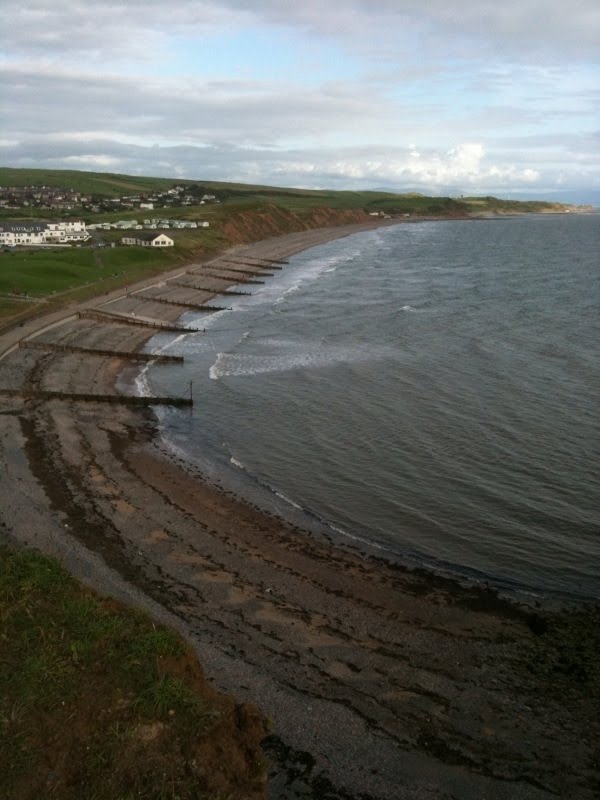
Went to the Lake District recently and on an impulse drove to the Cumbrian coast, to the little village of St.Bees. It was a brief but memorable stop of about two hours. Met two very busy old ladies and also stumbled upon a very moving sight on a promontory on the red sandstone cliffs of St. Bees. Read about it here.

Wednesday, August 11, 2010

Release adivasi leader Lado Sikaka


Sana Sikaka, a leader of the Dongria Kondh indigenous communities who was abducted by gunmen on 9 August, has been released. Another leader is still being held.

Sana Sikaka, one of the Dongria Kondh indigenous community leaders in the eastern Indian state of Orissa who was abducted on the evening on 9 August, was released yesterday evening. 

He has informed journalists that he and Lado Sikaka, (in picture), were stopped at Izrupa at the foothills of Niyamgiri as they were leaving with a group of activists in a van to catch a train to Delhi. About fifteen men in plain clothes, armed with automatic weapons, had parked their two vans nearby and were hiding in a forest. They surrounded Lado and Sana and said they were taking them. They intimidated the other activists, snatching their mobile phones and the van key and forced them to walk towards Lanjigarh, the nearest town. Then the plainclothesmen, along with Lado and Sana, walked to the vans and then made a long drive towards the neighbouring district of Rayagada, stopping at a few places en route. Yesterday evening, when they reached Bijepur town, they pushed Sana Sikaka out of the vehicle, forcing him to commence a long journey back to Niyamgiri. They appear to have taken Lado Sikaka to Rayagada town and detained him there. 

Lado Sikaka and Sana Sikaka are both campaigning against a proposed bauxite mine in the Niyamgiri Hills in the eastern Indian state of Orissa. Research by Amnesty International indicates that the Niyamgiri bauxite mining project, which would be located on the Dongria Kondh's sacred sites, traditional lands and habitats, is likely to result in violations of their rights to water, food, health, work and other rights to protection of their culture and identity. The project is currently awaiting clearance from India's Ministry of Environment and Forests. 

Please write to the Governments of India and Orissa to take all necessary measures to ensure his safe return. Also appeal to them to launch an investigation into the complaint over the abduction of the two Dongria Kondh leaders, in full compliance with the country's obligations under international human rights law. 

You can write to or email the Chief Minister of Orissa - Naveen Patnaik at the following address:

State Secretariat
Sachiyalaya Marg,
Bhubaneshwar,
Orissa 750 001, India
Tel: +91 674 2536682
Fax: +91 674 2390562

Email: cmo@nic.in (or) cmo@ori.nic.in
Salutation: Dear Chief Minister

You can also write to or email the Minister of Home Affairs - P. Chidambaram at the following address:

104, North Block, 
New Delhi 110 001, India
Tel: +91 11 2309 2462
Tel: +91 11 2301 7256
Fax: +91 11 2301 7256

Email: hm@nic.in
Salutation: Dear Home Minister

(Photo and text courtesy Amnesty International)


Thursday, July 15, 2010

Travel blog update from Derbyshire

Hello all! I've just updated the travel blog with a piece on a most haunting story about how a village in Derbyshire lived through the plague. Read about Eyam here.

Monday, June 14, 2010

The thrill of the long-list


Delighted! My piece on police brutality in India made the long-list in the Guardian International Development Journalism Contest. You can read ‘Killing India’s Poor With Impunity’ here.

Thursday, June 10, 2010

Birthday wishes to a blogger in prison


On her 26th birthday, Shiva Nazar Ahari, is in Tehran’s notorious Evin prison. Her birthday celebration happened thousands of miles away in London, outside the Amnesty International headquarters. At 1 pm on June 10th, Amnesty staff came together with cakes and candles to sing her a birthday song. At the end of it they yelled into the camera, with a message meant for the Iranian regime, “Release Shiva, NOW!”

 
Shiva is a journalist and blogger and a member of the Committee of Human Rights Reporters (CHRR). She was first arrested in June last year for three months before being released on bail.

But she was re-arrested in December 2009 and has been in jail ever since. When her family spoke to her on the phone in February 2010 she told them that she had been transferred to a “cage-like” solitary confinement cell where she ‘couldn’t move her arms and legs.’

The charges against her are in keeping with the worst traditions of lunacy and insecurity that this Iranian regime displays. They include, “causing unease in the public mind through writing on the CHRR’s website and other sites” and the more predictable “acting against national security by participating in anti-government demonstrations” on 4th November and 7th December last year. Shiva says she was at work on both those days.

So today, from one female blogger to another – Happy Birthday! And more power to you in this fight.

Tuesday, June 08, 2010

Eavesdropping on marriage counsellors in the Tube


Its rare to overhear an interesting conversation on the tube. Most people either look preoccupied with the days business ahead or glum at the days business behind them. Or, of course, they read.

I wasn’t paying attention to the two women seated opposite me on the tube till they started saying something about marriage and babies. This sounded interesting. With my curiosity thus piqued, I fixed my eyes on the bottom half of page 92 in ‘The Age of Kali’ and began listening really hard.

The woman speaking, did so with tremendous authority; almost as if she was a marriage counsellor, operating a mobile service on the London Underground, dispensing little gems of advise to anyone in distress. The woman listening seemed to hang on to every word.

The marriage counsellor, and we'll just call her that, was a trim older woman in a printed skirt, red blouse and big black beads around her neck. She said, “Too many people live entirely for their children.”

(This was when, I stopped reading and started shamelessly eavesdropping.)

“Yes… yes…..”, said the younger one, a little uncertain but in agreement nonetheless.

“The women start living for the children and ignore their relationship with their husbands. The kids… they grow up and leave home and then the parents find that their relationship has a big gaping hole. Its suffered because they stopped paying attention to each other when in fact that is the most important relationship in your life!”

“Yes!”, said the younger woman, much more certain now.

“Don’t get me wrong. You obviously love your kids, but you actually spend most of your life with your husband.”

“And the kids are watching your relationship. They can see when it is strong and secure…. that you have your own life. And they take it forward into their relationships,” she continued.

“Children are a gift. You bring them into this world but you shouldn’t stop living your life.”

With that, unfortunately, we reached the last stop and the two walked off with the marriage counsellor still going strong.


* * *

Sunday, June 06, 2010

Travel Blog Launched!

Dear Readers,

I've just launched a separate travel blog because I felt this space was getting rather confused. One day I was writing about international affairs, the next day about my fear of birds and on the third about a trip to the Czech Republic. All very muddled. Thats how the idea of a separate travel blog was born.

Besides, I've been wanting to switch to Wordpress for a long time... well ever since I heard it works much better than Blogger. Initial impressions confirm the same. This blog will continue to remain active and everytime I post to the travel blog, I'll be sure to direct you there. For now, hurry on to http://alaphia.wordpress.com!

Friday, June 04, 2010

Guilty

I've been feeling terribly guilty about not updating my blog more often. I will be back.

Monday, May 17, 2010

"For weeks my kids did not talk, they were so scared."


 (Photo Courtesy: AP)

Amnesty International interviewed a survivor of the conflict in Sri Lanka between the LTTE and the Sri Lankan government’s armed forces. Vasuki (name changed) gives us a brief snapshot of what it was like living in the war zone trying to stay alive with 2 small children.

“In December 2008 I was living in Kilinochchi when my home came under aerial attack. We were displaced to Viswamadhu in Mullaitivu. The early days of displacement were not too difficult as Viswamadhu is an agricultural area. It was when we moved to PTK that we started to feel the pinch. We lived in a tent over a bunker. When there was no attack or shelling we could cook outside but when shelling was heavy we had to stay in the bunker for hours cooking and living there. For weeks my kids did not talk, they were so scared. They had to witness people dying from shell attacks and the memory of dead bodies lying all around will probably never vanish.

In March we had to move to Matalan in Mullivaikkal – this was crammed with tens of thousands of people. By now people had finished their supplies and eaten all they had, even their cattle. I had to fast so that I could feed my children and just drank the water I cooked the rice in. Elderly people collapsed around us or slipped into comas. I have to admit I tried to kill myself because I was so depressed but my daughters begged me not to give up. What kept us going was a belief that the UN would intervene to stop the terrible human suffering.

Shelling got steadily worse. Then on 15 May a huge explosion forced us to move towards Vella Mullivaikkal. I can’t describe the horror around us - we had to fight our way across a carpet of dead bodies. We finally made our way to Vatavahal bridge. Along the way the Army fired at us. 

I find it hard to talk about this time.... people were also not happy with the LTTE as they forcibly recruited from families. What I know is that people want to live in peace but we cannot forget all those we left behind. You can’t give us back what we lost but you can give us justice”.

If Vasuki’s story moves you please take action by signing a petition to call on the UN to open an independent investigation into war crimes committed by both sides.


Friday, May 14, 2010

Punishing the Victims Saves Precious Public Resources.

In India we punish the victims of crime. Yeah, I know many countries punish the perpetrator but that approach assumes we don’t have a choice. Of course we do! Besides, its also easier to punish the victim because you often know who they are, unlike the more cumbersome approach of finding perpetrators. It is a waste of public resources.

Also, if victims weren’t so foolishly vulnerable, would people go about victimising them? The answer is a clear negative. For instance, if you didn’t ride a bicycle on the main road, you wouldn’t get run over by a bus. Or if you weren’t old and diabetic, you wouldn’t get overpowered by your burglars. Or if you weren’t a female, you wouldn’t get raped. Its all so obvious and yet people don’t get it! They continue to fall into all sorts of traps instead of just getting under the covers and staying there so that no harm may come to them.

Recently in Orissa, “boyfriends” were caught filming their girlfriends naked and selling the stuff on the market. One girl killed herself when she found her naked images on a CD. Now authorities in Orissa want to warn all girls against rushing into physical relationships. Combining moral science with law is such a superb idea.

But that’s not enough because there may be some rotten wenches who will still disobey despite knowing these dangers. So just to make doubly sure that this campaign is successful, the Orissa State Women’s Commission chairperson, a free thinker by the name of Jyoti Panigrahi, has told parents to ‘monitor the movements of their daughters and keep an eye on their activities.’ It’s a good suggestion but doesn’t go far enough. Locking women up would be so much easier. But sometimes it is hard to make such suggestions without avoiding charges of sexism.

Some lawyers in Kamakshanagar have held a protest rally demanding the immediate arrest of the “boyfriends” involved. This is outrageous. Now every man in Cuttack will be looked at suspiciously. How will the police prove that the guys were in a relationship? Are the police supposed to drop VIP duty to chase after boys in the street now? Is this what its come to? Mad.

Monday, May 10, 2010

Top 10 Things To Know About Post-conflict Situation in Sri Lanka


May 18th, marks the first anniversary of the end of the war in Sri Lanka when the government concluded its campaign against the Liberation Tigers of Tamil Eelam (LTTE).

The LTTE’s dreaded leader V. Prabhakaran is dead, as are all his senior colleagues and for now the banned terrorist group has been destroyed.

But there needs to be a serious and independent investigation into the war crimes said to be committed by both sides during the final months of the war between January and May 2009. The SL government estimates that about 3,000 to 5,000 civilians were killed but unofficial estimates by UN personnel present in SL during that time say that the real figure could be closer to 20,000 if not more.

I know some people argue that war is dirty business; that you can’t have a war where everyone comes out smelling of roses. True. But there are rules even for the conduct of war and if the Sri Lankan government has observed those rules, it should not be afraid of an independent investigation. But it won’t allow one. And countries like China, Russia and India are helping it cover up its crimes.

Even the manner in which the Sri Lankan government has handled the post-conflict situation and the terrible, terrible punishment that the Tamils are being made to pay for this collectively is shameful.

Amnesty International put together this list of ‘Top 10 Things to Know’ about the post-conflict situation in Sri Lanka. The next time you hear the argument, “But war is dirty business…..” remember to quote one of these 10 points.


  1. Despite reports of torture, rape and killings in detention and IDP (Internally Displaced Persons) camps since spring 2009, the SL government has not allowed impartial observers to investigate the validity of the claims and monitor the situation.  
  2. Despite the government’s promise that all would be released from the post-war camps for the displaced in Menik Farm and elsewhere by the end of January 2010, 70,000 people are still in camps.
  3. Atleast 10,000 ppl (incl. appx. 500 children) have been detained because of alleged ties to the Tamil Tigers. We don’t know exactly who, how many or even where they are being held.
  4. Red Cross has been denied access to detention camps for child ex-combatants since July 2009. Even UNICEF has had very limited access.
  5. Despite government promises, a vast majority of the returnees from IDP camps do not have adequate housing, potable water and sewerage.
  6. The UNHCR has had to stop its shelter grant of US$220 to all future returnees from IDP camps due to a lack of funds. The shelter grant is crucial assistance to help people rebuild their homes.
  7. SL has become one of the most dangerous places in the world to freely express an opinion. Attacks against journalists and civil society activists have risen in the last 4 yrs and dozens of journalists have fled.
  8. Sri Lanka has the second largest number of enforced disappearances and extra-judicial killings after Iraq according to the UN.
  9. After the war against the Tamil Tigers ended in May 2009, SL President Rajapakse promised UN Sec. Gen. Ban Ki-Moon that his govt. would look into claims of human rights abuse and possible war crimes committed during the war. There are claims that anywhere from 10,000 to 40,000 people were killed in the final weeks alone. But the govt. has taken no serious action so far.
  10. Despite the tens of thousands of crimes committed over the last 30 yrs only a handful of perpetrators have ever been convicted. There is little hope for victims’ families to find justice inside SL.

Tuesday, May 04, 2010

Britons Well-Read, Even When Not Well-Fed


Bill Bryson writes in ‘Notes From A Small Island’ that the average person in Great Britain is very well-read. Visitors to London also notice that Londoners will board the tube and routinely pull out a book or atleast a newspaper. You could do a little naked jig in your coach for a full 30 seconds but people may not have noticed, absorbed as they are in ‘The Moonstone’ or ‘The Time Traveler’s Wife’ or whatever.

I thought of all this when my husband alerted me to a homeless person sitting on the pavement of the very posh King’s Road in Chelsea, totally engrossed in a book. My caption for the photograph below would be, "Britons well-read, even when not well-fed."