A pair of Sumatran tiger cubs and a set of young orangutans, all abandoned at birth, have become inseparable after sharing a room at an Indonesian zoo.
Thursday, March 01, 2007
SO CUTE!!
A pair of Sumatran tiger cubs and a set of young orangutans, all abandoned at birth, have become inseparable after sharing a room at an Indonesian zoo.

Monday, February 26, 2007
DEATH AT IIT-M
Inside one of the country’s most prestigious institutions of technical education – death is not a very uncommon occurrence. The blackbuck population inside the forests of IIT-Madras has come down to almost 12 and the population of spotted deer hovers around 150.
“The spanking new Himalaya mess has come up on Black buck habitation. There was no real need for that. They could’ve just had smaller messes around the different blocks”, says one concerned insider at IIT. Another lady says, “They came up with this crazy idea of making laws with Korean grass. That’s not what deer eat! Also, there is so much construction debris lying around that the animals are getting injured and dying.”
Feral dogs are another menace inside IIT and they have killed quite a few spotted deer. But the wildlife department officials seem unconcerned about this and are cooking up , what to me sound like excuses. Ashish Shrivastava, one of the wildlife officers says, “If we try to remove the feral dogs some people protest saying the dogs are their pets and we should not remove them.” Pursue the point further by suggesting that they are afterall the wildlife department and can’t be held hostage to peoples pet fancies, he has no answers.
Removing these animals to the neighboring Guindy National Park is not a solution because black bucks have such weak hearts and are so timid that they cannot survive such an upheaval.
Monday, February 19, 2007
AIADMK's SHAME
Kokilavani would have been the first graduate in her family. But this poor girl from Namakkal was burnt alive by a bunch of AIADMK sycophants when her bus carrying 47 students of the Tamil Nadu Agricultural College was waylaid by them. 18 girls suffered burn injuries and three died – Kokilavani, Gayathri and Hemalatha, when goons from the AIADMK went on a rampage on February 2nd 2000 protesting against a court verdict that sentenced Jayalalithaa to one-years imprisonment for her role in illegally waiving building rules to a hotel in Kodaikanal.
I saw the video footage of the flames engulfing the bus and the screams of the poor girls trapped inside. It was like watching death. The AIADMK men doused the bus in kerosene and then prevented the girls from escaping.
Some justice now after seven years. 28 of those goons from the AIADMK have been convicted. Its death for three and seven years and three months imprisonment for the rest of the mob. But will the images of those flames and their childrens suffering in death ever be erased from the minds of the parents? As a society, it should never be erased from ours.
Jayalalithaa took no disciplinary action against her party workers who killed the women whose cause she claims to espouse. Now her stony silence after the verdict is just as shameful.
I saw the video footage of the flames engulfing the bus and the screams of the poor girls trapped inside. It was like watching death. The AIADMK men doused the bus in kerosene and then prevented the girls from escaping.
Some justice now after seven years. 28 of those goons from the AIADMK have been convicted. Its death for three and seven years and three months imprisonment for the rest of the mob. But will the images of those flames and their childrens suffering in death ever be erased from the minds of the parents? As a society, it should never be erased from ours.
Jayalalithaa took no disciplinary action against her party workers who killed the women whose cause she claims to espouse. Now her stony silence after the verdict is just as shameful.
Wednesday, February 14, 2007
WHO ARE WE TO TALK?
On matters of racism and discrimination, India will always speak from a glass house because of this.
Thursday, January 25, 2007
LAWLESS LAWYERS
Why bother with a trial for Moninder Singh Pandher? The media knows hes a killer. The police will ensure hes the killer and the lawyers and general public have of course given their verdict by beating him up outside the court. If Moninder Singh is guilty, show him no mercy for he deserves none. But according to Indian law he is innocent until proven guilty so lets all hang on till then!
We can't blame the police for a security lapse at the court because the police is sometimes helpless in the midst of these maniac mobs. What we can blame them for is a lack of planning and foresight. They should've expected something like this, given that in the past people have stoned Moninder's house and are baying for his blood.
But to me what stands out as truly shameful about this incident is the kind of street justice we are witnessing for a case that should be fought with science and forensics. And for lawyers, lawyers to be jumping into the melee for a few punches is the end of civilisation. This display of vigilante justice by the men who swear by the Constitution of India everyday is shocking. One lawyer appeared on TV justifying their act saying they are "human after all"?! Of course they are. We certainly don't think they are anything more or greater. And although our faith in the system be near zero, and we justify the act as public outrage against a system that failed us, can we stoop to this? Lawyers, of all people, should not.
We can't blame the police for a security lapse at the court because the police is sometimes helpless in the midst of these maniac mobs. What we can blame them for is a lack of planning and foresight. They should've expected something like this, given that in the past people have stoned Moninder's house and are baying for his blood.
But to me what stands out as truly shameful about this incident is the kind of street justice we are witnessing for a case that should be fought with science and forensics. And for lawyers, lawyers to be jumping into the melee for a few punches is the end of civilisation. This display of vigilante justice by the men who swear by the Constitution of India everyday is shocking. One lawyer appeared on TV justifying their act saying they are "human after all"?! Of course they are. We certainly don't think they are anything more or greater. And although our faith in the system be near zero, and we justify the act as public outrage against a system that failed us, can we stoop to this? Lawyers, of all people, should not.
Tuesday, December 05, 2006
FOR NOW....BRUTE ALONE TRIUMPHS
Early on 4th December, 2006, the factory of TilSpices Pvt. Ltd. was razed to the ground. In this convoluted civil dispute, a brutal land mafia has connived with the owner of the property to oust an honest couple who were the tenants on that property.
Husband and wife pair of Sudhir and Aruna were running a successful spice manufacturing unit in Perungudi called TilSpices Pvt. Ltd. (Til for Trust in the Lord). They had entered into an agreement with the owner of the property, a man called Venkatraman who got the power of attorney from his father who is in coma. The agreement signed by him in 2004 says that he will sell the property to them for 60 lakh rupees. However at the time of registration he backed out, given that land prices were going through the roof along the IT corridor.
 Construction activity is on everywhere, with buildings coming up on both sides of this demolished factory. The agreement for this 6 ground property was 10 lakh rupees per ground. But at the time of registration, Venkatraman never showed up.
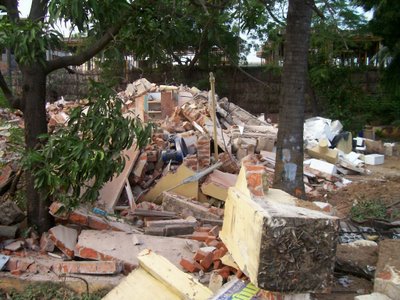 At the site, there are a whole bunch of shady looking characters hanging around. The place is being fenced off and I'm certain construction will begin soon. Aruna's equpment has been stolen and damaged but the police are telling her to get out of there. The Assistant Commissioner from the J1 police station said she had no business there. The goons are even trying to sell the media photographs of her "stealing" Venkatraman's property.
Husband and wife pair of Sudhir and Aruna were running a successful spice manufacturing unit in Perungudi called TilSpices Pvt. Ltd. (Til for Trust in the Lord). They had entered into an agreement with the owner of the property, a man called Venkatraman who got the power of attorney from his father who is in coma. The agreement signed by him in 2004 says that he will sell the property to them for 60 lakh rupees. However at the time of registration he backed out, given that land prices were going through the roof along the IT corridor.
 Construction activity is on everywhere, with buildings coming up on both sides of this demolished factory. The agreement for this 6 ground property was 10 lakh rupees per ground. But at the time of registration, Venkatraman never showed up.
 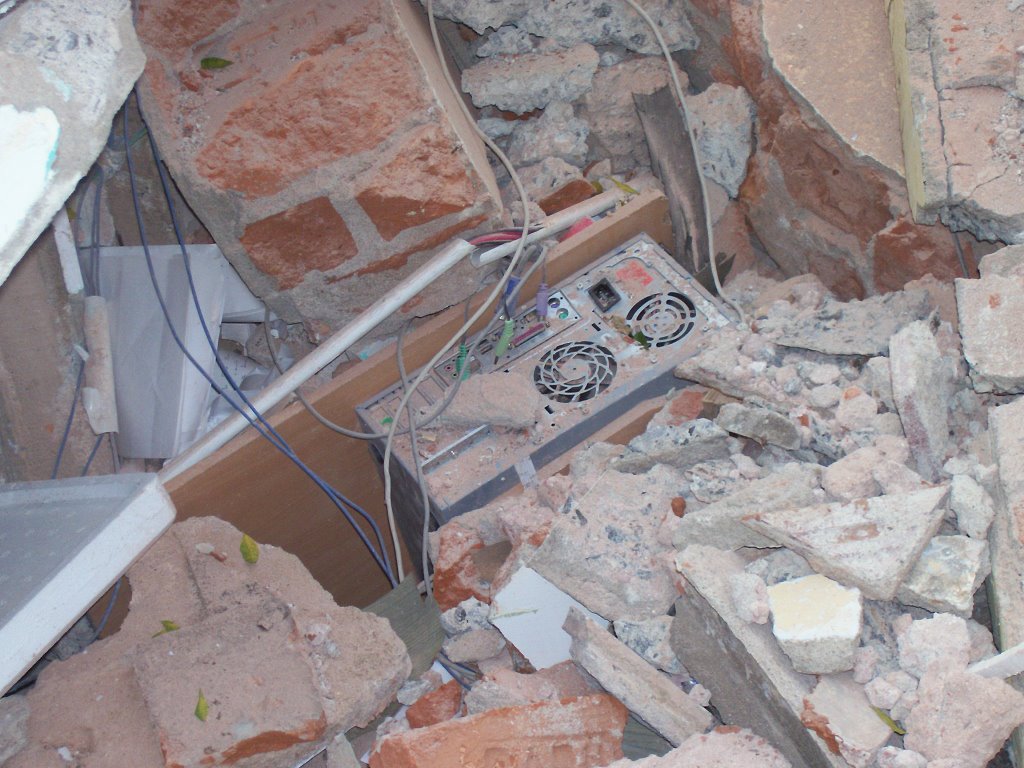 Aruna and Sudhir have suffered damages of nearly 3 crore rupees. Venkatraman and his bunch of hired henchmen have given stolen and destroyed their property. Aruna says, "Venkatraman also has two children like me. He's raising two more monsters for this world."
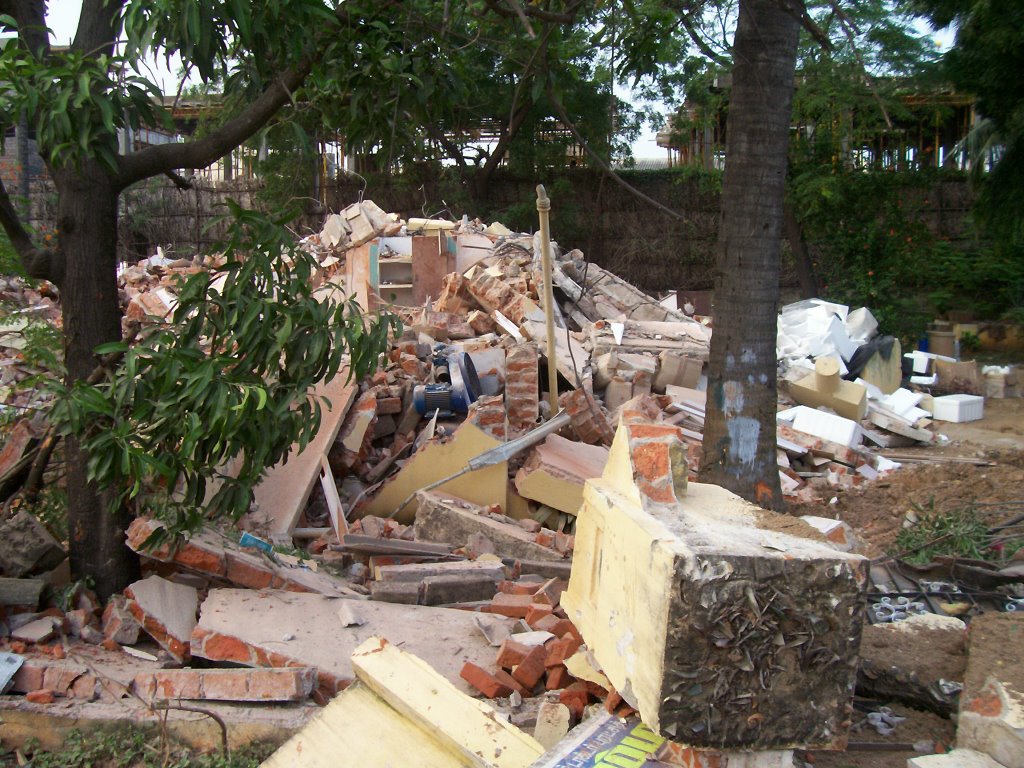 At the site, there are a whole bunch of shady looking characters hanging around. The place is being fenced off and I'm certain construction will begin soon. Aruna's equpment has been stolen and damaged but the police are telling her to get out of there. The Assistant Commissioner from the J1 police station said she had no business there. The goons are even trying to sell the media photographs of her "stealing" Venkatraman's property.
 But he didn’t re-negotiate with Aruna and that forced her to go to court to make him keep his end of the bargain. Venkatraman of course just ignored the court summons.
Now, Aruna says, the factory has been demolished at his behest to get her out of there by hook or by crook. A local land-broker, called Kodandaraman (with some heavy duty connections that include High Court judges) was hired for the job and in three hours 100 men with bulldozers smashed Venkatraman’s factory and Aruna’s business. Venkatraman can now get much, much more for the property with Aruna out of the way.
This brazen illegal act has the blessings of the police. A senior police officer told Aruna that his hands were tied because somebody above him had been bribed. The officer admitted to her that it was a rape of justice and that he was truly ashamed. But alas, honest men can do nothing.
This story has sickened me because the rot of corruption has such deep roots. Not that I didn’t know it, but it sickens me because perfectly decent, honest people are attacked in this manner and their livelihood is destroyed.
The people who should protect us are the ones we need protection from – the police. This entire episode has left Aruna and Sudhir shocked because everywhere they turn they find people have been bought up. Aruna says, “I am strong and I believe in God, so I am able to take this shock. But what if someone had ended their lives because of this?”
The police and Venkatraman would’ve heaved a sigh of relief. That’s how soulless this tribe is. But its got to come back to haunt them and I hope they suffer the consequences of their dirty greed.
Monday, December 04, 2006
KOLDINGHUS
In the centre of the city of Kolding, stands the castle of Koldinghus (pron. Kollinghoos). On this site once stood a fortress built by the Danish King - Erik Glipping in the year 1268 - meant to guard the border between the Kingdom of Denmark and the Duchy of Schleswig (in Germany). The fortress was rebuilt as an unfortfied castle in the mid-16th century at which time the King often stayed at Koldinghus. In the 1720s the castle was again rebuilt but by then the members of the royal court were only infrequent visitors and the castle was allowed to fall into disrepair.
In 1808 some Spanish auxiliary troops, stationed there in the Napoleonic wars stoked the fire in one of the hearths so fiercely that the castle itself burnt down. Reuilding work was not started until as late as 1890.
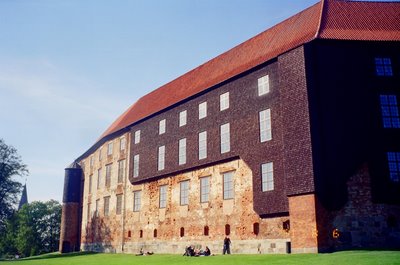
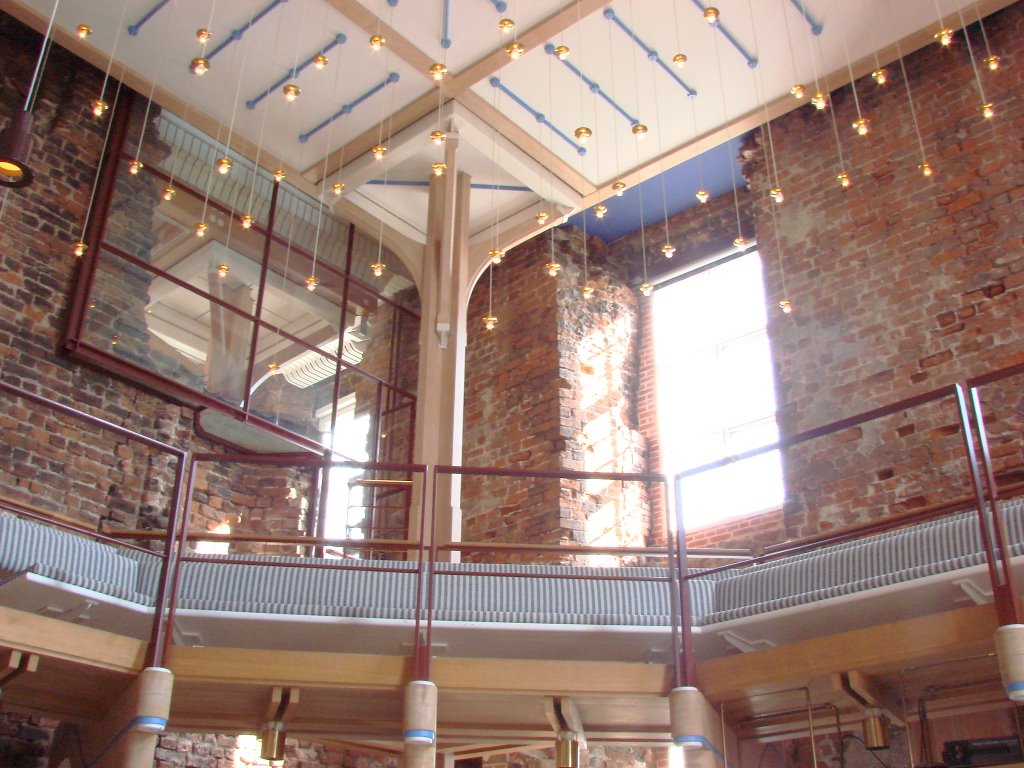
The rebuilt castle (above) today draws plenty of visitors. The architects who restored it are Inger and Johannes Exner. Scandinavian design is truly classic and minimalist, employing material in its natural form to achieve both function and style. The castle has been restored in keeping with that tradition. Indeed, the reconstruction is modern and seems incongruous at times – contrasting sharply with the weathered red brick walls, although, it does not diminish by way of aesthetics.
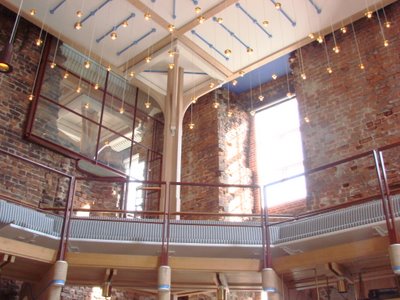
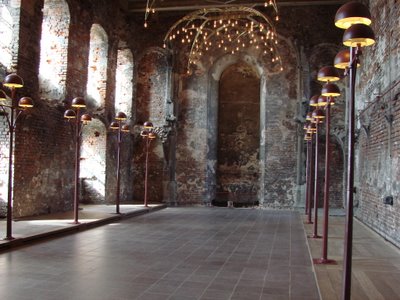
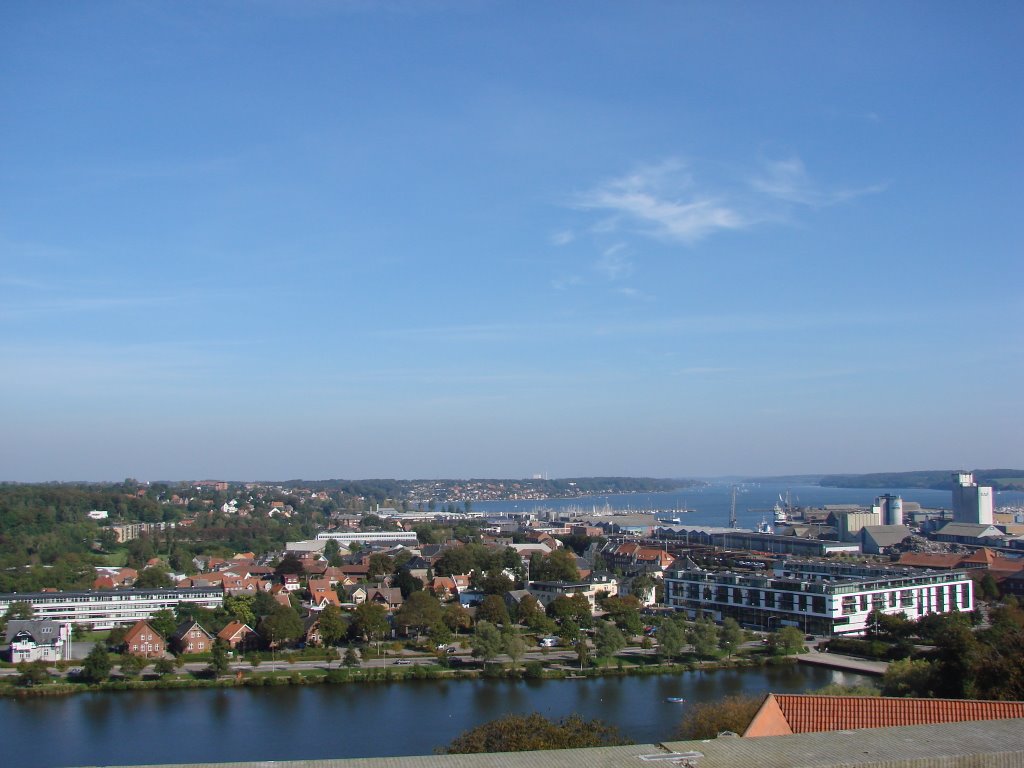
There is a magnificent view (below) from the top of the Great Tower. (Great Tower known as 'Heroes Tower' was added around 1600.)
In 1808 some Spanish auxiliary troops, stationed there in the Napoleonic wars stoked the fire in one of the hearths so fiercely that the castle itself burnt down. Reuilding work was not started until as late as 1890.
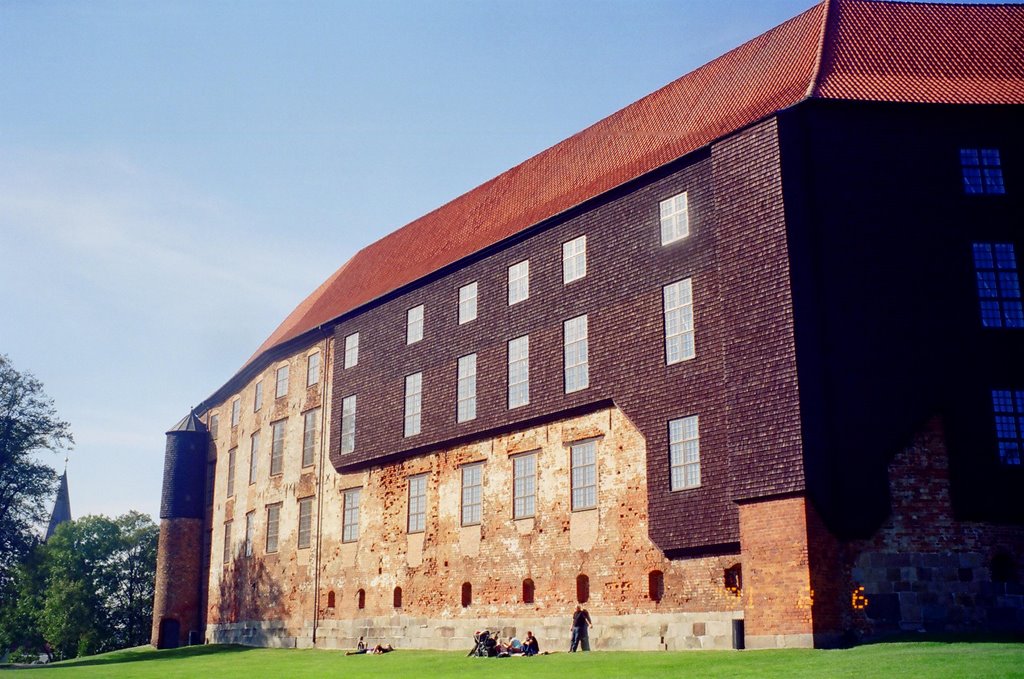
The rebuilt castle (above) today draws plenty of visitors. The architects who restored it are Inger and Johannes Exner. Scandinavian design is truly classic and minimalist, employing material in its natural form to achieve both function and style. The castle has been restored in keeping with that tradition. Indeed, the reconstruction is modern and seems incongruous at times – contrasting sharply with the weathered red brick walls, although, it does not diminish by way of aesthetics.

There is a magnificent view (below) from the top of the Great Tower. (Great Tower known as 'Heroes Tower' was added around 1600.)
 This is where you park your car, where the stables once were.
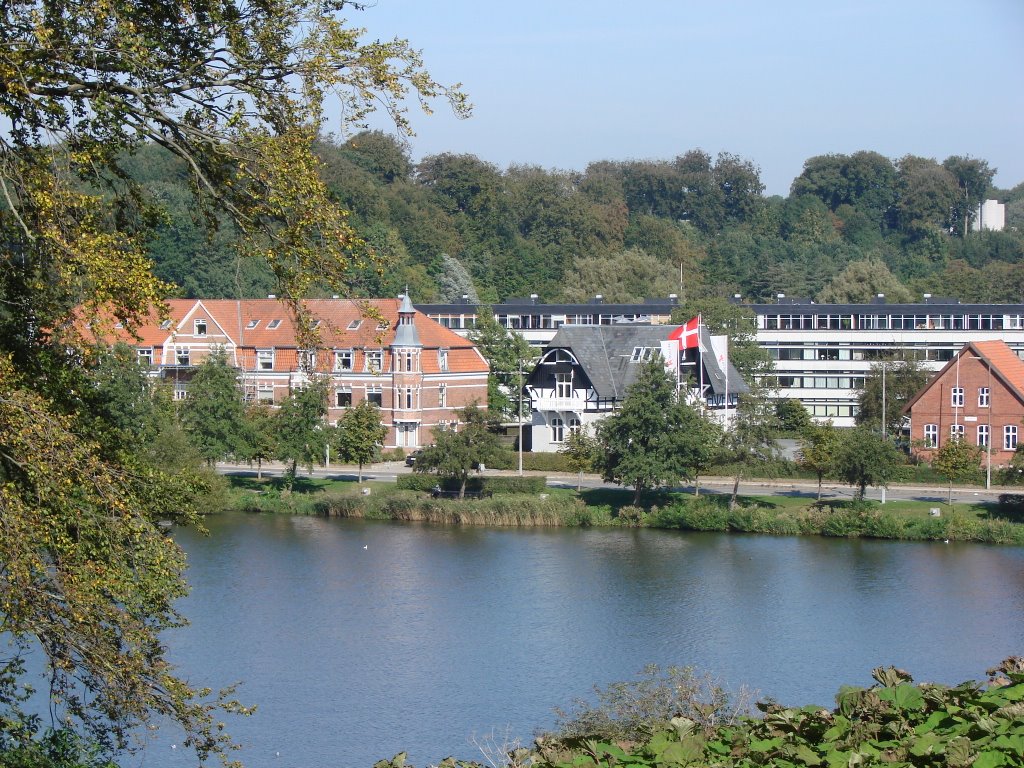
Right next to the castle is a river where you will always find a boat. This particular boat (sorry, no picture) has to be kept ready at all times for the Queen. If the Queen were to arrive at the castle and wanted to cruise down the river, then she should never be disappointed and for that aim to be fulfilled the boat remains docked in this river perennially.
The Danes incidentally are quite crazy about their monarchy, following their lives and loves as closely as any monarcho-phile in, lets say, Britian. I asked an agricultural teacher, Jørgen P. Jensen why they loved their monarchy so much and he said, “I think its because they are quite sensible people.” Down to earth for sure, because when we were in a place called Gråsten (pron. Grosteeng) where the Queen has her summer home, people say, you can actually run into her, shopping for groceries in the neighbourhood supermarket.
Tuesday, November 28, 2006
SSSHHHH.... IT'S A VVIP EAR
 (Photo Courtesy: Pratik Shah)
The VIP tribe of this country is a self-serving, smug one. If you live in Chennai and happen to drop in at 'Coffee' near the Music college, look for this PWD order painted on the wall.
Saturday, November 25, 2006
SHUT UP PLEASE, THANK YOU.
I hate noise. I can't stand it when people talk loudly and constantly interrupt me but I really hit the roof when people use their car horns. And God help me, if a bus or a truck is hooting away. I burst an artery. And when those bloody ambasadors - that symbol of power in India, comes along honking away with impunity, I just want to shed tears - shed tears at his stupidity and his arrogance and my own pathetic helplessness. What can I do to make people shut the F *** up? I feel so helpless.
(Even as I type this, some jackass on a bike has gone tooting down my road. May he run into a pole.Oh god! And now Onyx is here. What their workers do to keep the city clean is negated completely by the noise and air pollution their trucks release.)
There is a vast army of half-witted, insentient noise-polluters who have invaded the roads rendering common sense a rare and priceless commodity in India.
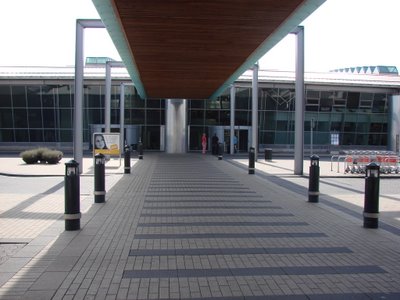
Thats why, when we first landed at the Billund airport (below) in Denmark, we could've easily assumed that the country was in a state of Emergency and all residents had been told to stay indoors and shut up. Everything was so lovely and quiet and empty. (Look at the last snap of the arrival lounge. Not a soul in sight!) Thats how it always is. I had a feeling things were going to go well. They did. I didn't see or hear a rude driver for 40 days and I will need a separate blog to start writing about how I was glowing with good health.


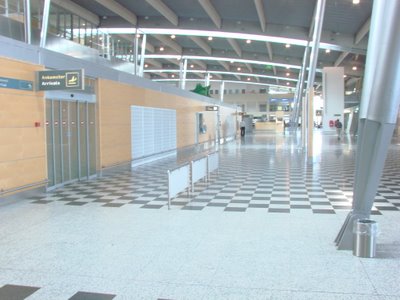
But seriously, what can we do, to make people aware that there is such a thing as noise pollution? That people use their horns ridiculously more than they need to. I have a good track record on the road having avoided dogs, cows, goats, cyclists and pedestrians deftly for nearly 10 years now and all this with only the gentle nudge of the horn in the rarest of rare circumstances. So why can't everybody else shut up??????!!!!!!! Waaaaaaaaah... Waaaah.
(Even as I type this, some jackass on a bike has gone tooting down my road. May he run into a pole.Oh god! And now Onyx is here. What their workers do to keep the city clean is negated completely by the noise and air pollution their trucks release.)
There is a vast army of half-witted, insentient noise-polluters who have invaded the roads rendering common sense a rare and priceless commodity in India.
Thats why, when we first landed at the Billund airport (below) in Denmark, we could've easily assumed that the country was in a state of Emergency and all residents had been told to stay indoors and shut up. Everything was so lovely and quiet and empty. (Look at the last snap of the arrival lounge. Not a soul in sight!) Thats how it always is. I had a feeling things were going to go well. They did. I didn't see or hear a rude driver for 40 days and I will need a separate blog to start writing about how I was glowing with good health.
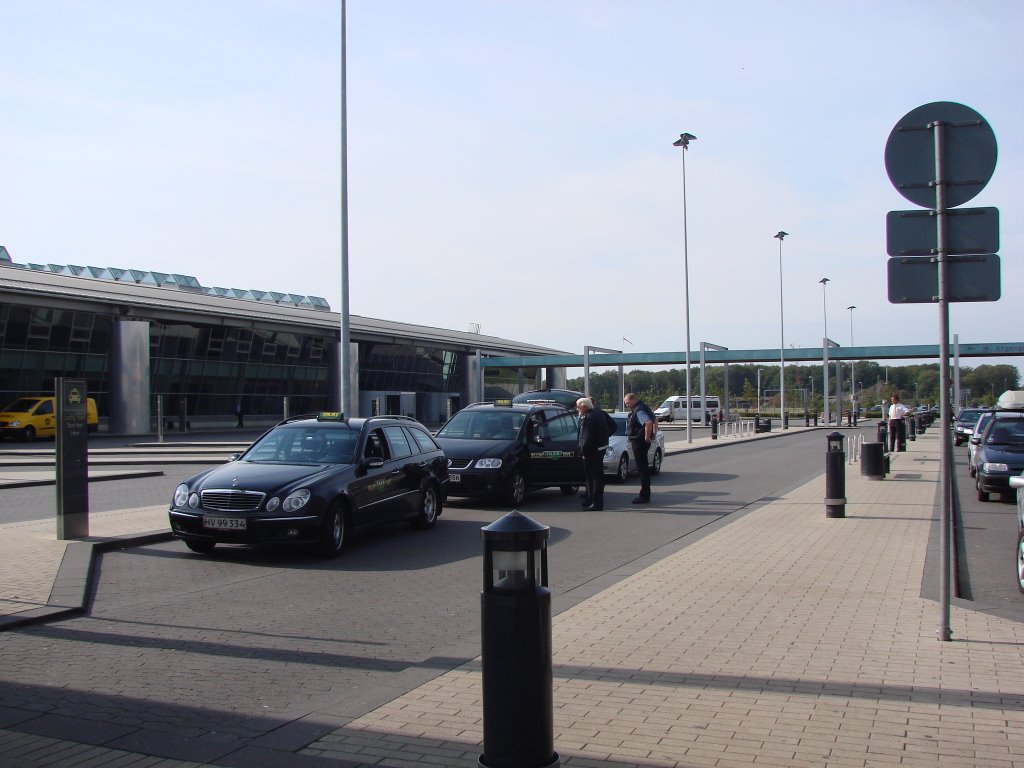
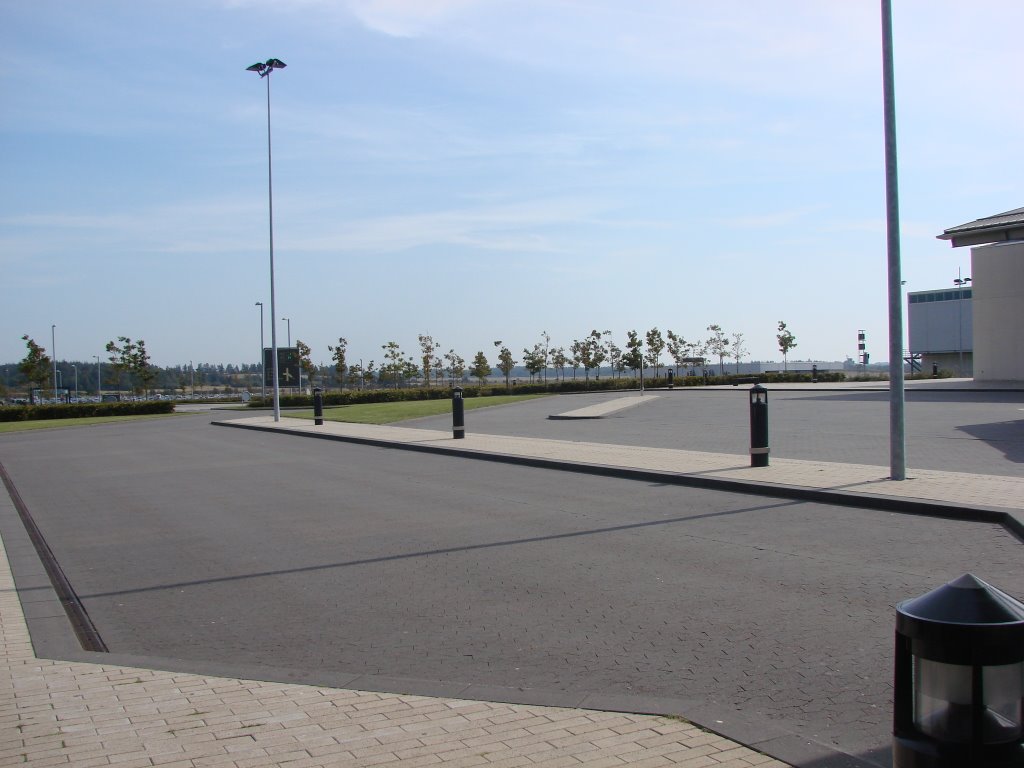
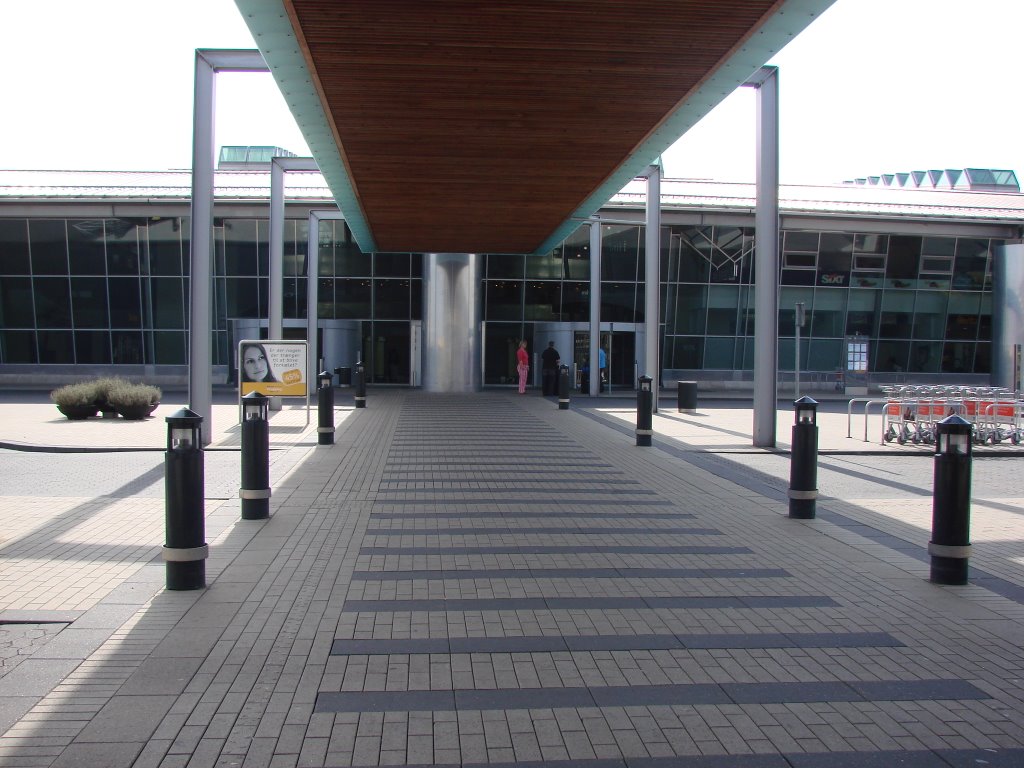
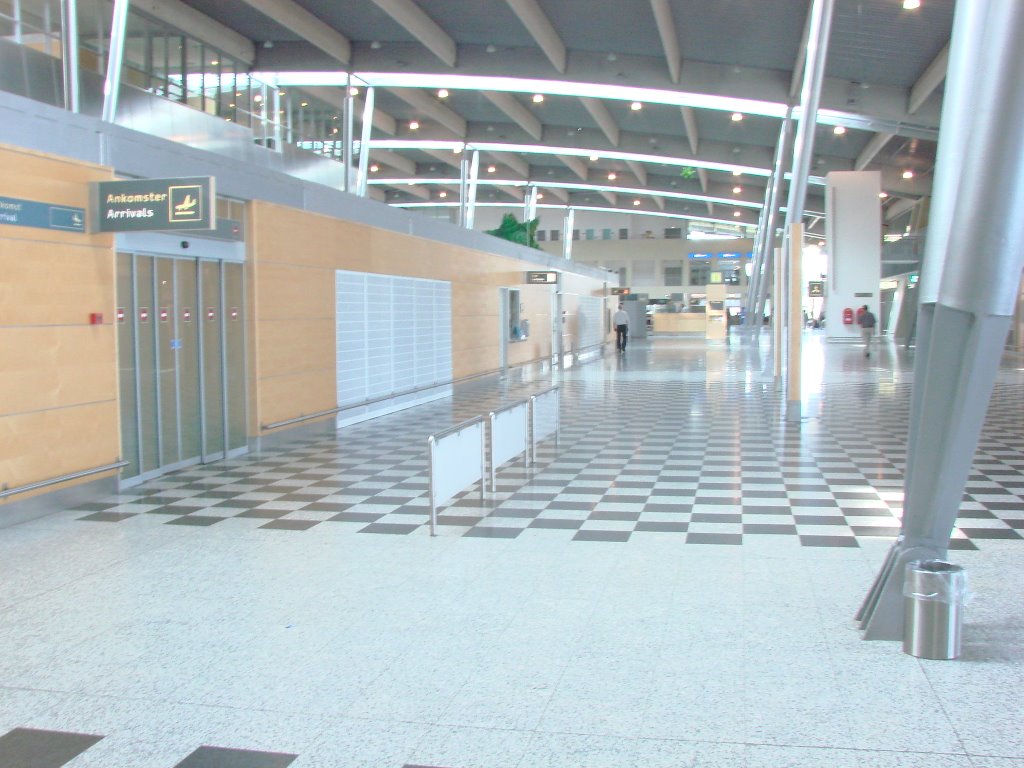
But seriously, what can we do, to make people aware that there is such a thing as noise pollution? That people use their horns ridiculously more than they need to. I have a good track record on the road having avoided dogs, cows, goats, cyclists and pedestrians deftly for nearly 10 years now and all this with only the gentle nudge of the horn in the rarest of rare circumstances. So why can't everybody else shut up??????!!!!!!! Waaaaaaaaah... Waaaah.
Friday, November 24, 2006
Monday, November 20, 2006
SKAMLINGSBANKEN
Denmark is flat country – so flat, that the second highest point – Skamlingsbanken is all of 370 ft high. But it offers a lovely view of southern Denmark and you can spend a quiet, refreshing morning there…. like we did, complete with a picnic basket and soda that topples over a lot.

Right on top of the hill (bank is an old Danish word for hill) stands a tall obelisk – a memorial erected to commemorate the Danish nationality and way of life. It was erected at a time when the Danes were trying to fight off German aggression on the southern front. But in 1864, the Germans led a successful invasion and captured the south of Denmark and one of the first things they did was to blow away the stones of this symbol that their captives took great pride in. But villagers living around the area collected the stones and rebuilt the obelisk. The Germans left southern Denmark in 1920 after a plebiscite and have not staked their claim since. But it left behind a minority of Germans and Danes on both sides of the German-Danish border.

Right on top of the hill (bank is an old Danish word for hill) stands a tall obelisk – a memorial erected to commemorate the Danish nationality and way of life. It was erected at a time when the Danes were trying to fight off German aggression on the southern front. But in 1864, the Germans led a successful invasion and captured the south of Denmark and one of the first things they did was to blow away the stones of this symbol that their captives took great pride in. But villagers living around the area collected the stones and rebuilt the obelisk. The Germans left southern Denmark in 1920 after a plebiscite and have not staked their claim since. But it left behind a minority of Germans and Danes on both sides of the German-Danish border.
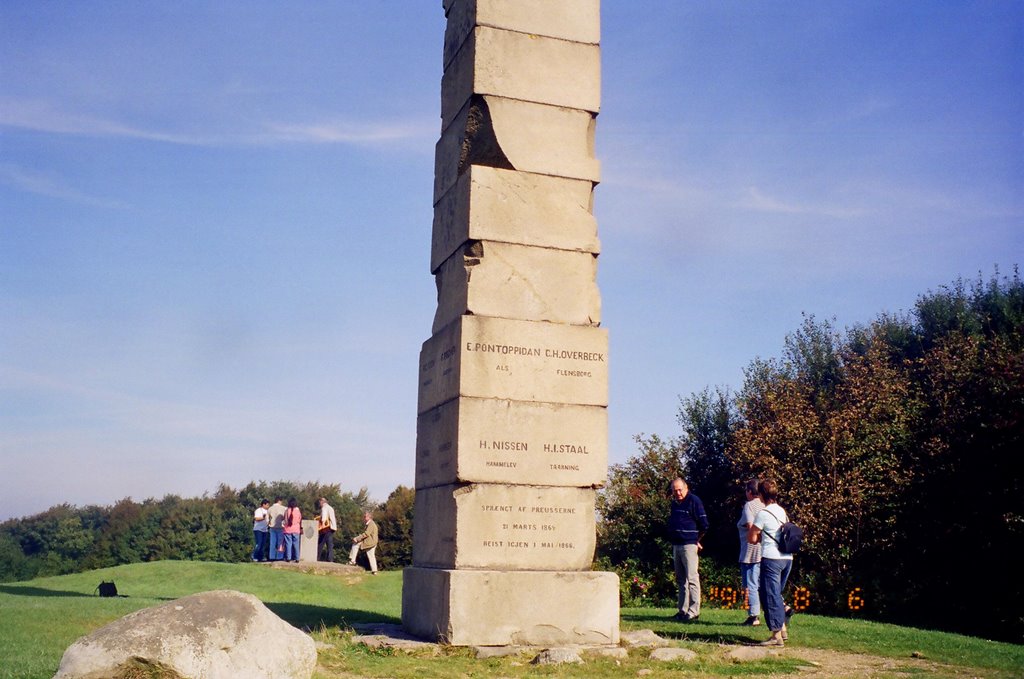
Today of course things are calm but Danish parents will still not send their kids to German schools or German parents to Danish schools for that matter, and, the older generation would still frown upon a German-Danish marriage.
There is a large Danish minority in the north German town of Flensburg where Danes like to drive down to do their shopping. People pay such high taxes in Denmark that its cheaper for them to drive down to Germany and do some monthly shopping there. Especially if they’re buying the famous Flensburger Pilsener also called Flens.
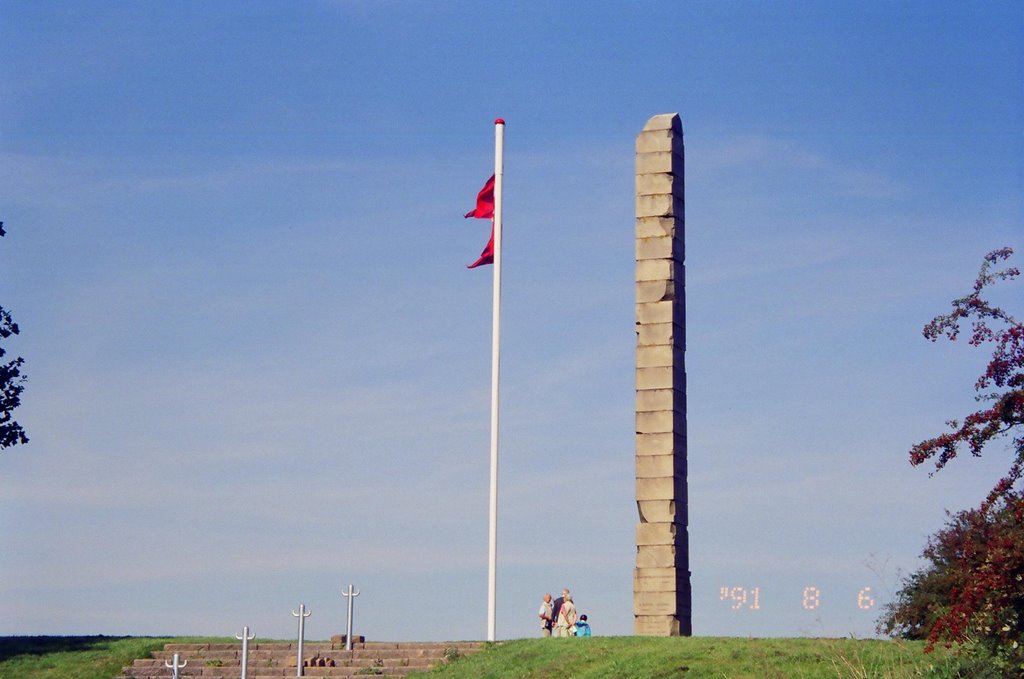
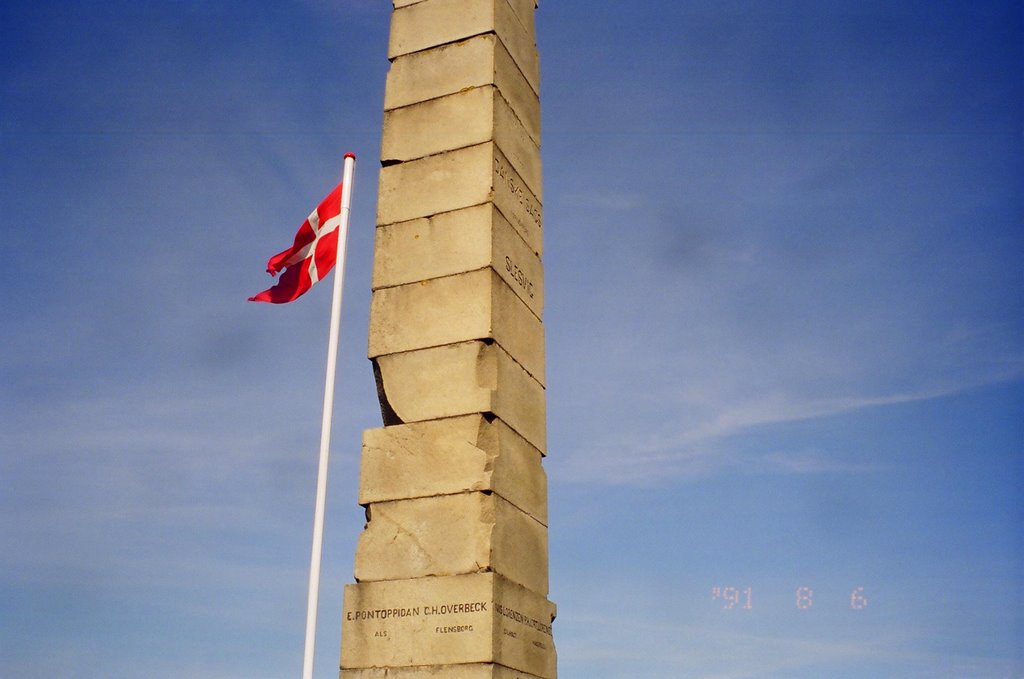
Back to Skamlingsbanken – and the great fluttering red flag next to the obelisk. Denmark’s national flag called the Dannebrog (old Danish for “The Danish cloth”) is red with a white cross that is not exactly in the center but a little to the left.
Its one of the oldest flags in the world. Legend has it, that during the Battle of Lyndanisse, in present day Estonia, it descended from the heavens at a crucial juncture, resulting in a Danish victory and given the Danish reverence for their flag, it goes without saying that the flag should flutter proudly next to the restored obelisk.
A MORAVIAN AFTERNOON
Its great to record a holiday like this. I can’t remember anything of previous holidays and thanks to the blog, I’ll never forget this one. So heres another little something from an afternoon spent at a Moravian Church with priest Lorenz Asmussen (below).

First a grab from Wiki: The Moravian churches form a modern, mainline Protestant denomination with a religious heritage that began in 15th-century Bohemia (now in the Czech Republic). It is sometimes also known as the Unitas Fratrum or Unity of the Brethren, or as the Bohemian Brethren.
Moravians were some of the earliest Protestants, rebelling against the authority of Rome more than a hundred years before Martin Luther.
Christiansfeld – in South Denmark is the only Moravian town in Scandinavia and the youngest town in Denmark. It is named after King Chrstian VIIth who requested the congregation to build the town in 1772. Build it they did, and so well that in 1975 the town received an award for its distinctive style of straight streets and beautiful buildings.
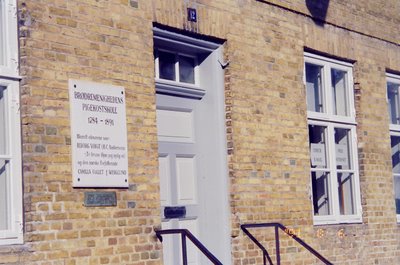
Our walk began at the church square by the well, which is the center of the town. From there the measuring of the town was started, when it was founded.
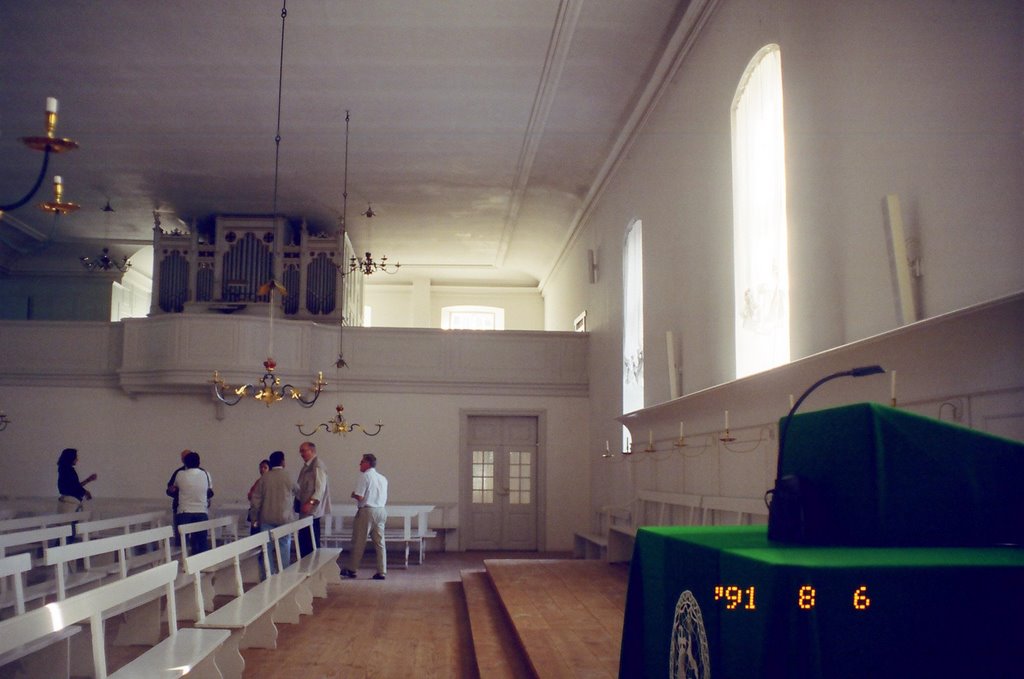
Inside, the church hall is all white, devoid of altar or pictures. The Moravian church has spartan interiors because they believe that elaborate art and décor are only a distraction. Another interesting departure from other churches is that the organist does not have his back to the congregation but faces it.
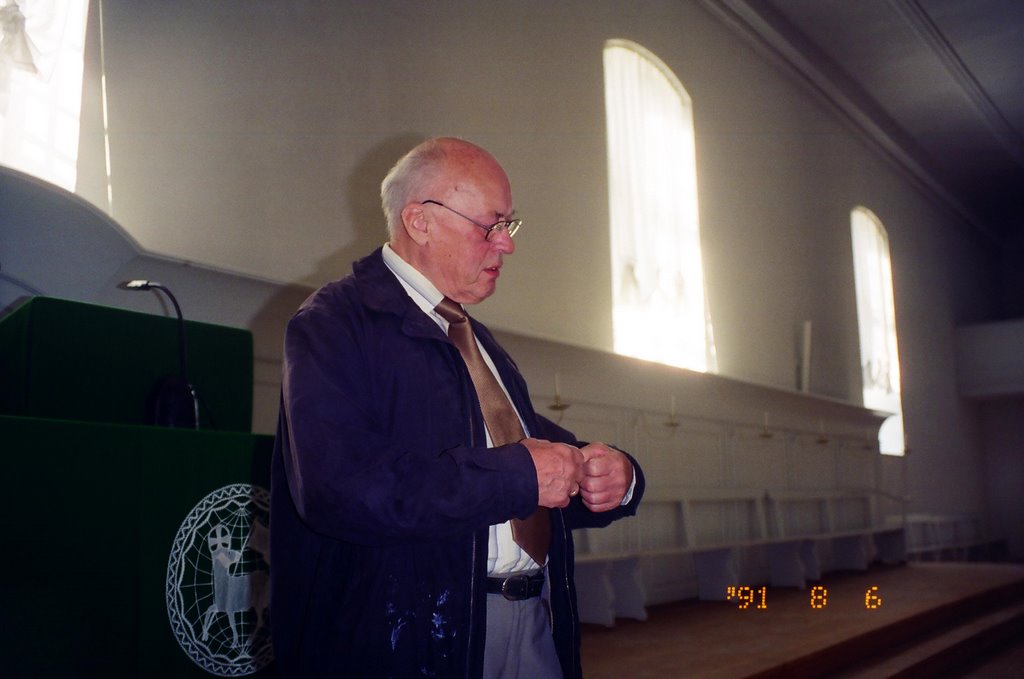
First a grab from Wiki: The Moravian churches form a modern, mainline Protestant denomination with a religious heritage that began in 15th-century Bohemia (now in the Czech Republic). It is sometimes also known as the Unitas Fratrum or Unity of the Brethren, or as the Bohemian Brethren.
Moravians were some of the earliest Protestants, rebelling against the authority of Rome more than a hundred years before Martin Luther.
Christiansfeld – in South Denmark is the only Moravian town in Scandinavia and the youngest town in Denmark. It is named after King Chrstian VIIth who requested the congregation to build the town in 1772. Build it they did, and so well that in 1975 the town received an award for its distinctive style of straight streets and beautiful buildings.
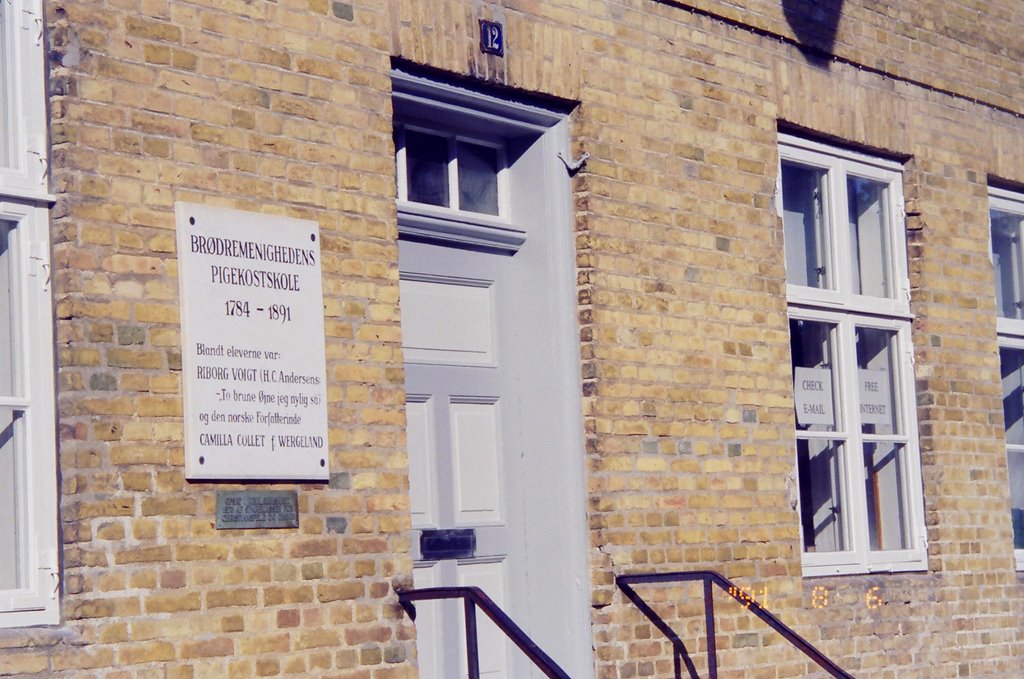
Our walk began at the church square by the well, which is the center of the town. From there the measuring of the town was started, when it was founded.
Inside, the church hall is all white, devoid of altar or pictures. The Moravian church has spartan interiors because they believe that elaborate art and décor are only a distraction. Another interesting departure from other churches is that the organist does not have his back to the congregation but faces it.
 The Moravian graveyard is known as “Gods Acre” or “church of the dead” with the sisters buried to the right and the brothers to the left. All the gravestones are exactly the same as a symbol of all being equal and alike after death. Here the graves have been preserved since 1773. Interestingly, a Moravian funeral will not involve the telling of stories about the deceased by relatives and friends. Instead, as Moravians age, they start to document the story of their lives on their own and they remain a rich treasure for posterity.

Monday, November 13, 2006
EELAM DREAMS IN DENMARK
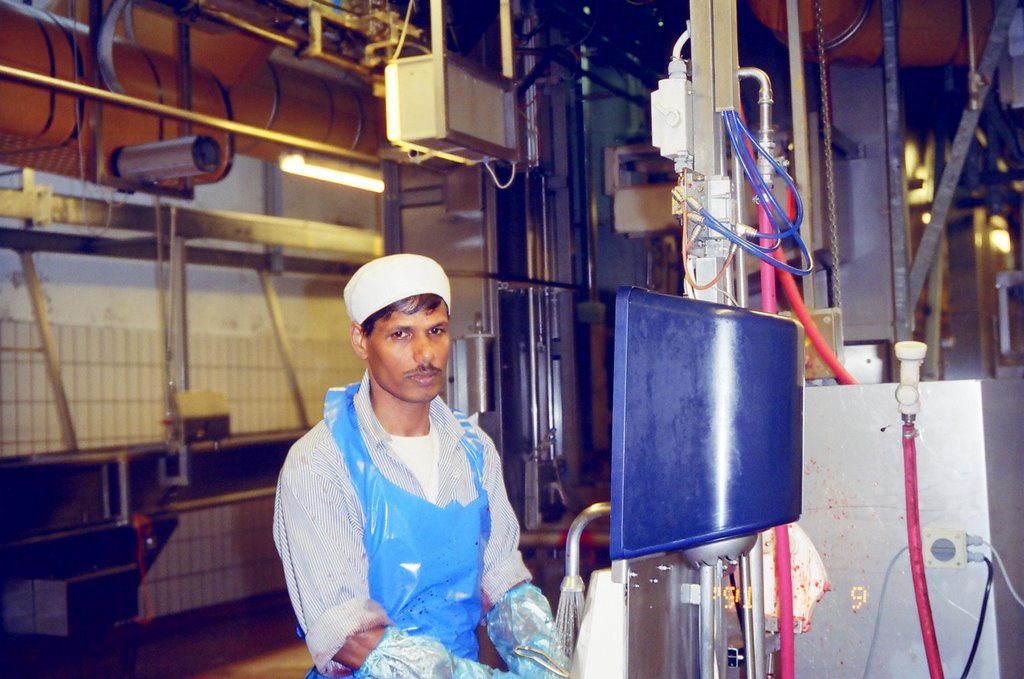 There were nearly 30 foreigners working at the Danish Crown plant in Grindsted. Many from Vietnam and a few from Sri Lanka – like Kandiah Kankanidhi (in picture). Kandiah is from Achchiveli in Jaffna and he fled the war in Sri Lanka in 1985. He landed in Tamil Nadu and lived in Purusuwalkam briefly before seeking asylum in Denmark. He lives in Grindsted with his wife and two boys aged 4 and 10. He still has two brothers back in Achchiveli and is able to send a considerable sum of money back home. He was making nearly 170 Kr. per hour, which is around 1360 Indian rupees. (People work 35 hours a week in Denmark.)
Kandiah is satisfied with his life but dreams of going back home. “I want to go back some day. I want the future generations of my family to remember Tamil. If we get freedom, I will definitely go back.”
I felt sorry for Kandiah - thousands of miles away from his homeland, holding onto the pipedream of a free Eelam.
Kandiah won't have a problem finding another job. Sri Lankan workers are generally valued for their hard work. Besides, Denmark, with a population of around 5.5 million could do with as many hands as possible.
WATCHING MY WORK
 TV Syd serves the southern region of Denmark – called South Jutland. I spent a day at their office observing how they work and that’s how the pig story happened. I was assigned to go with the team of Dorte Vinther (both in picture) and cameraman, Arne Andreasen. Dorte had yawned during the morning meeting and was thereafter referred to as “the sleepy reporter.”
The thing I noticed first about their office was the silence. Nobody was screaming down phone lines, nobody was barking on their cell phones, indeed, cell phones were not even ringing and all was truly quiet on the southern front. For the story we had to drive from Kolding (pron. Kolling) to Grindsted. TV crews there don’t have separate drivers – Arne drove, filmed and edited the pictures.
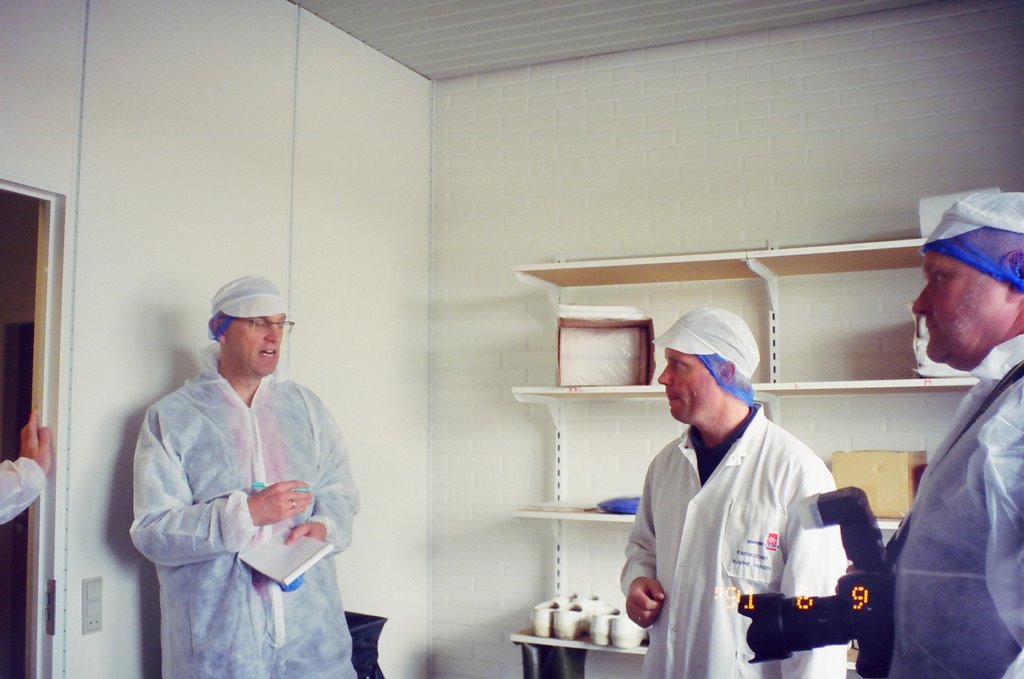 Once there, we had to wear space suits like these before going into the factory where Arne and Dorthe got down to business while I got down to staring.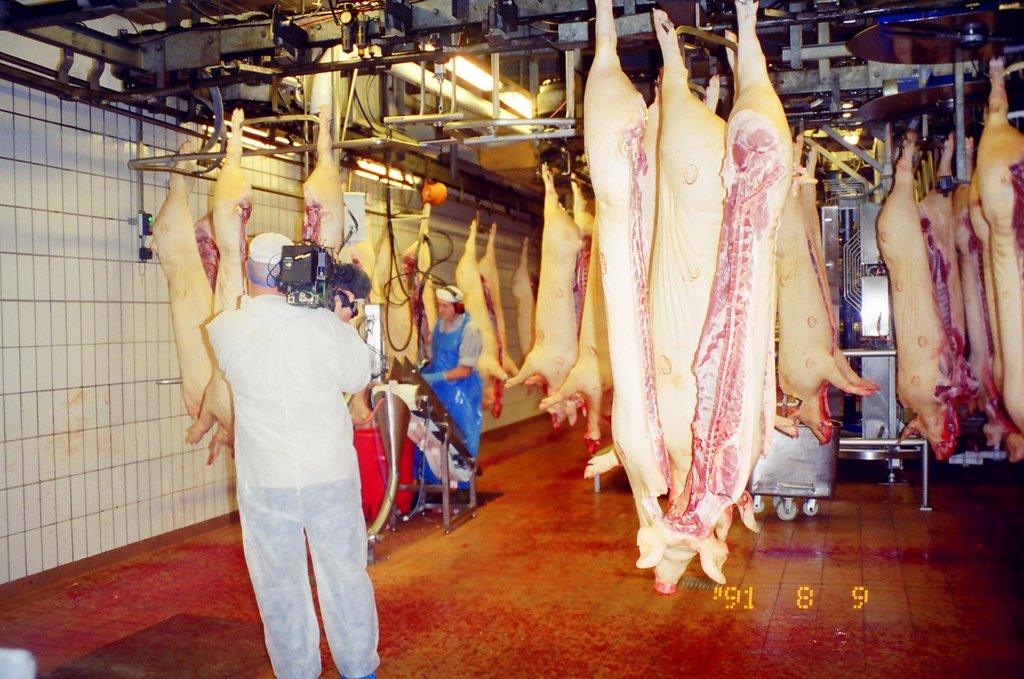


 Arne shot for about 30 minutes and then Dorte began her interviews. The story about the imminent closure of this plant had been done before so she did a soft story on what people were feeling on the day it actually happened.
 The union leader, Kent Kaltoft was interviewed outside the plant. He said, "Of the 700 workers, 500 already have a job. But I'm not going to stop till the last person finds a job."
 Here in India we keep our equipment in the office. But at TV Syd, all the equipment remains in the ENG (electronic news gathering) van. It’s equipped with chargers and monitors and everything else required in handling a breaking news story. Just jump into this thing and hit the spot. Here, Arne puts everything back in place.
 Back in the office Dorte begins to write her story in the newsroom. The picture of Tintin looks down upon the place. Why is it there? Because according to the news head Ernst Moller, “hes the best reporter in the world!” That is true.
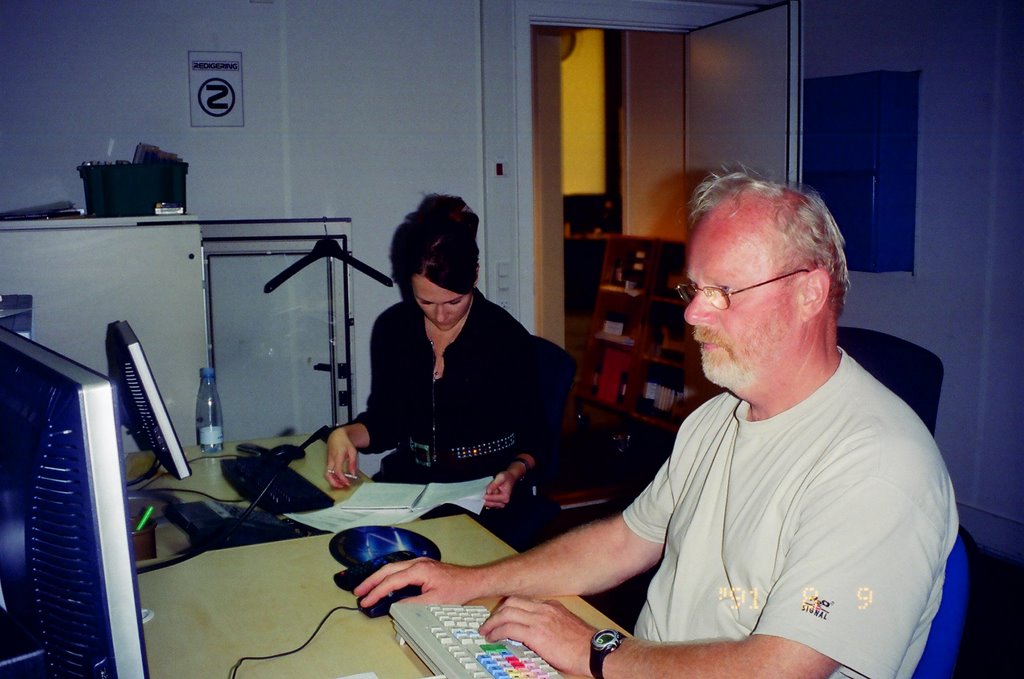 Once the script is done, the edit begins.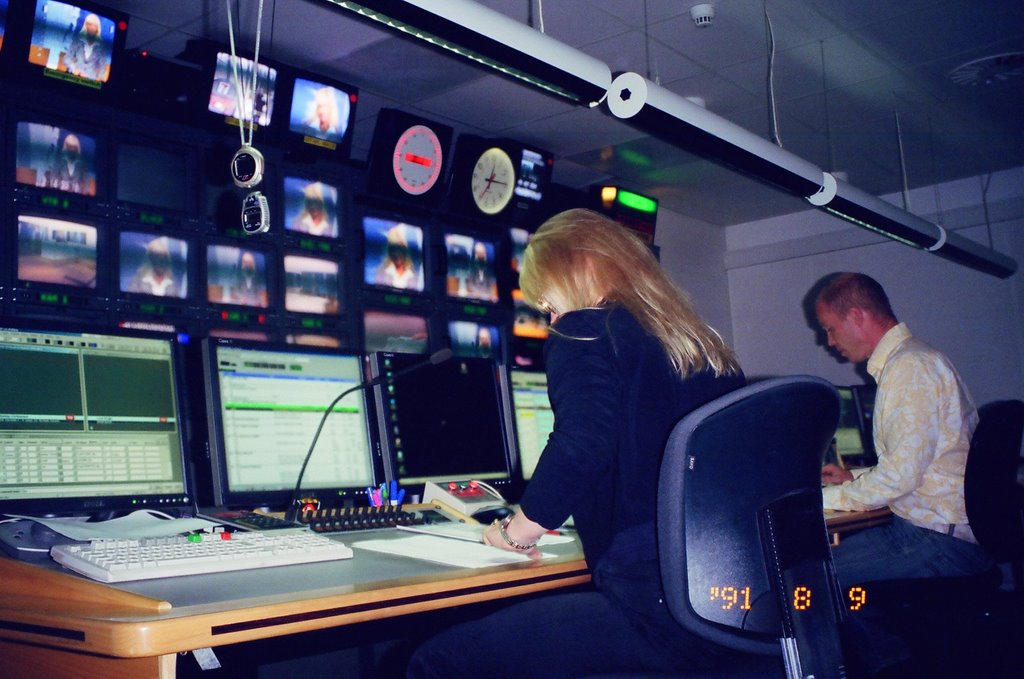
 These are pictures of the production control room. Everything that happens in the studio is controlled from here. The plant's closure became the top story that evening.
And that’s the way it goes.
Monday, November 06, 2006
HOW TO MAKE BACON
Don't think me macabre for taking pictures of pigs being slaughtered. I just happened to be there. The process was fascinating and I must admit I'm not really big on animal rights. The eyes don't moisten. So anyway, here it is - a photo essay. And if you care about pigs and other four-legged friends of man, skip this one.
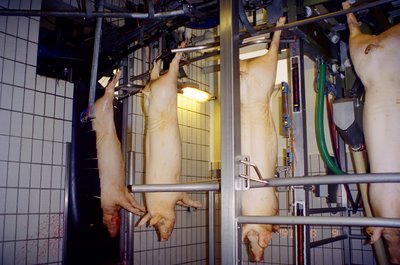 These pictures were taken at the Danish Crown factory in Grindsted, Denmark. The plant was shutting down because it was too small and it was no longer viable to run it. The pigs are gassed in a chamber just ahead of this one. Here they enter the assembly line where man and machine go to work to remove the innards. This is how it ends up as bacon and ham at the breakfast table.
 These pictures were taken at the Danish Crown factory in Grindsted, Denmark. The plant was shutting down because it was too small and it was no longer viable to run it. The pigs are gassed in a chamber just ahead of this one. Here they enter the assembly line where man and machine go to work to remove the innards. This is how it ends up as bacon and ham at the breakfast table.
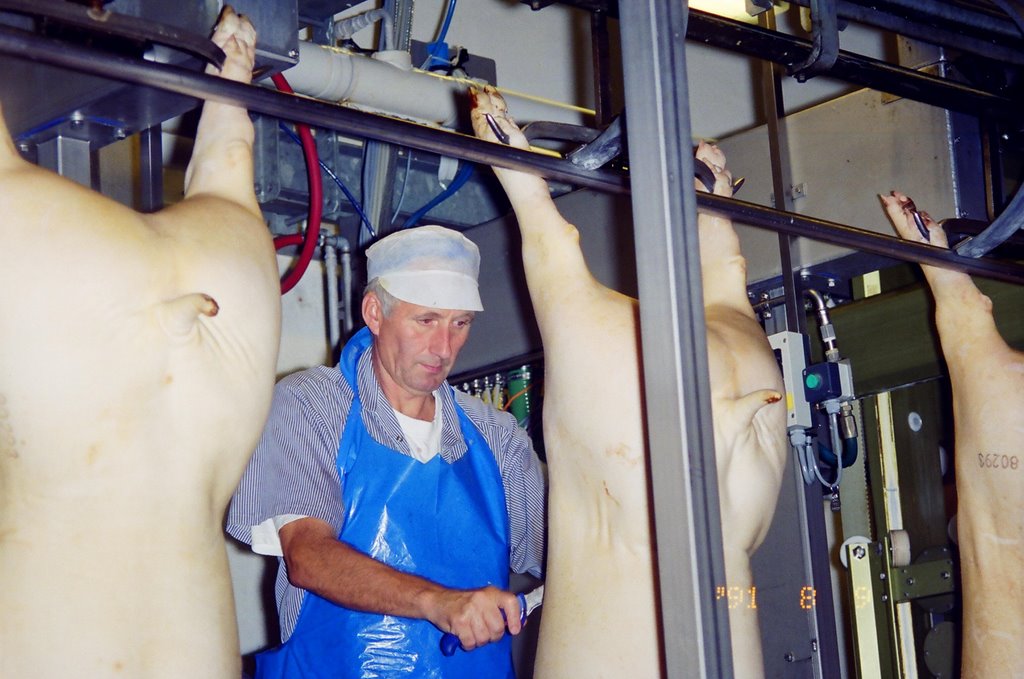 A worker makes the first cut.

 There are quite a few stages and each worker or machine yanks out a specific part from inside the pig. Theres blood all over the floor and thats not the scary part. Instead, its the knives in the workers hands. I kept thinking, what if one of them went berserk one morning? (Like that morning.) But workers in Denmark are not frustrated. More on that later.
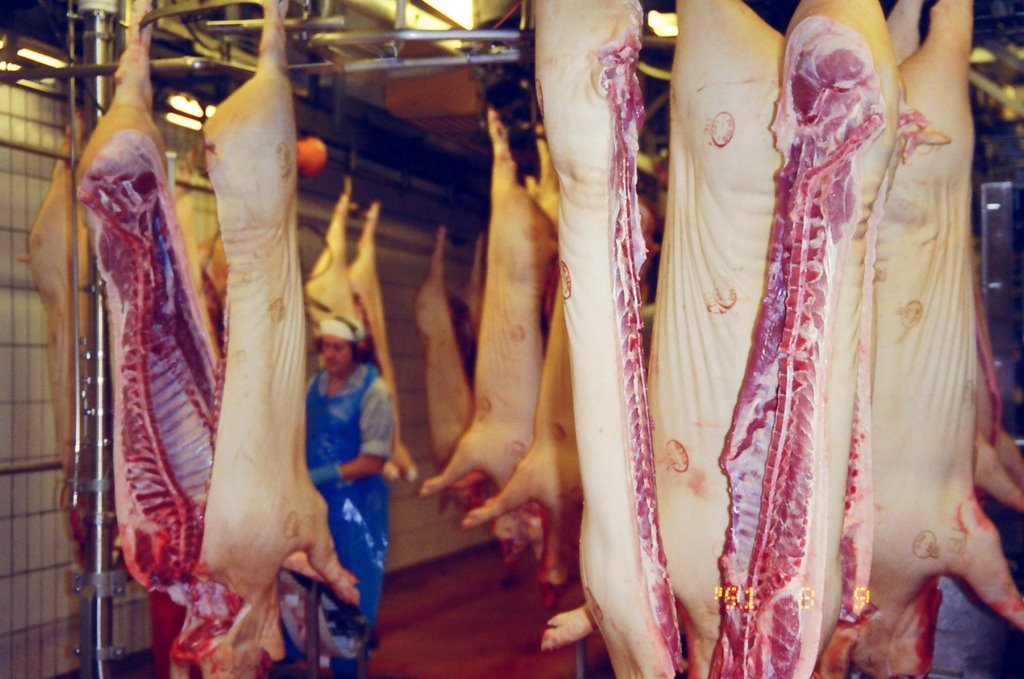 This is pretty much the last stage of the inside-clearing job. As you can see, theres almost nothing there!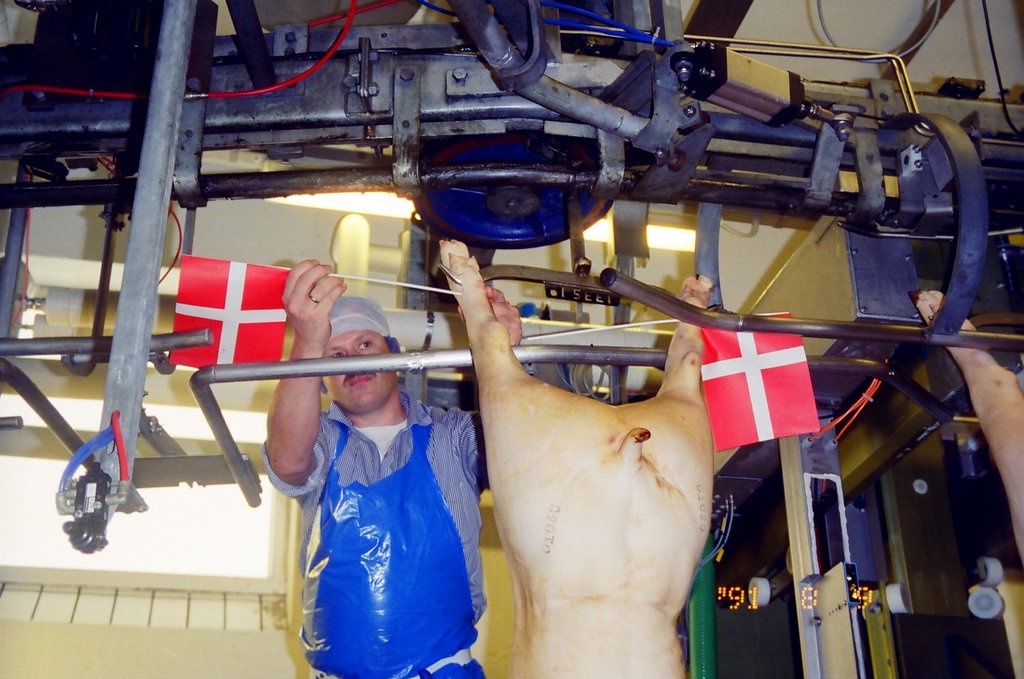
Now, the Danes love using their flag. Everyone has a flagpole in their lawn and if its someones birthday the flag goes up. Little flags even go into the birthday cake and all over stores in Denmark you will find all kinds of everyday things with the flags design, like, notebooks, pens, pencils, postcards and of course flags. So it was only appropriate that the last pig that came out of the assembly line went through proudly with the Danish flag in it.
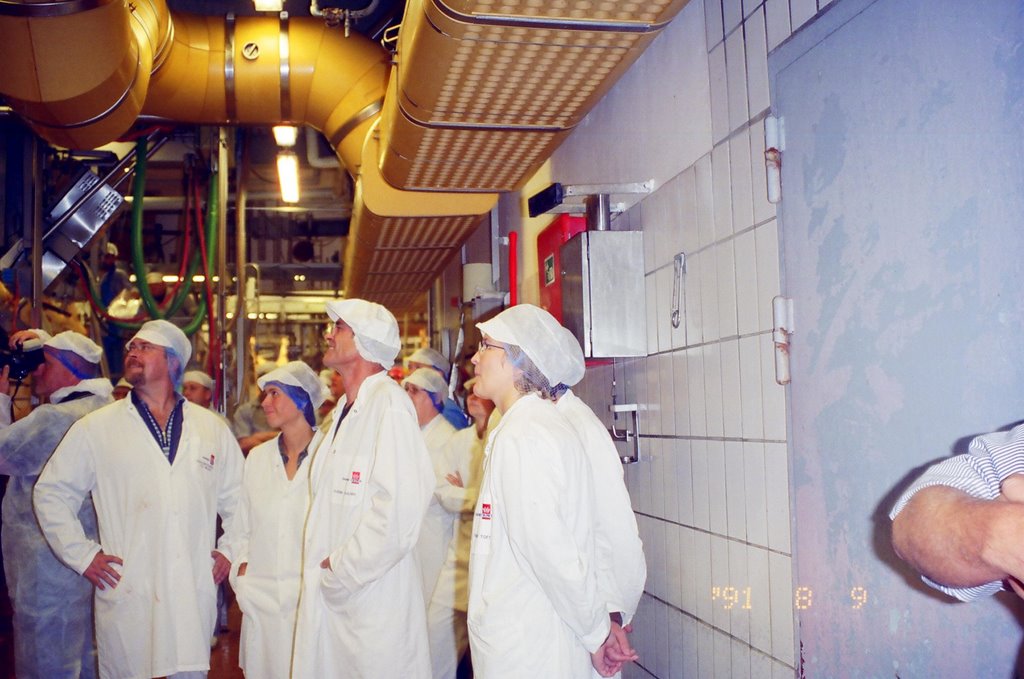
It was an emotional day for the employees at Danish Crown in Grindsted. They had worked side by side for many years and as the last pig rolled out a wave of nostalgia swept over them. But everyone was still smiling. Unemployment is so low in Denmark (about 3%) that only a minority of the nearly 700 workers here had not yet found another job.
Sunday, November 05, 2006
CARTOONS COST MONEY

The tiny country of Denmark has unfortunately been remembered in the last year for the notorious Prophet Mohammed cartoons. The controversy erupted again a year later when the youth wing of a right-of-center party was caught on tape drawing cartoons during a drunken bash. Companies like Robert Damkjaer Ltd. have been badly hit because of these needless doodles. They are exporters of meat and 80% of it went to Muslim countries. But their products were boycotted and almost a year after the controversy only about 60% of their business has revived.
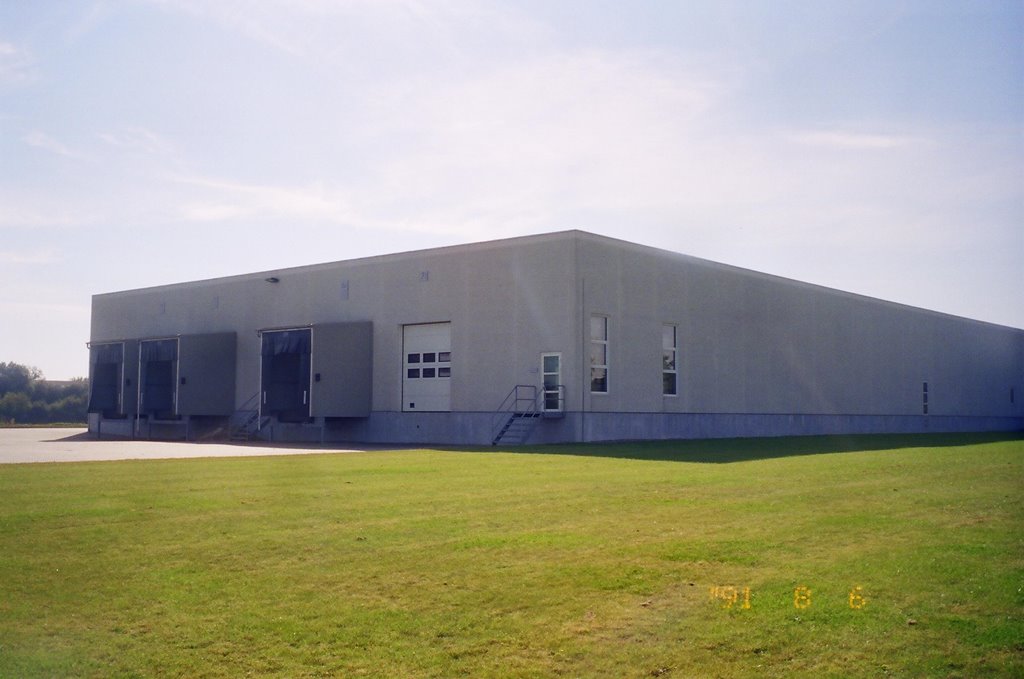

Company owners reportedly still have good relations with their buyers in the middle east but under pressure from local mullahs and imams, people there are unable to carry on business with the Danes.
Wednesday, November 01, 2006
SADNESS
In the three-and-a-half years that I have been working as a journalist, I have never - not once - been able to reach a government officer on the landline. Not once.
This is EXACTLY how it goes.
"Hello, could I speak to Mr. XYZ."
"Yaar pesarade?"
(Whos speaking?)
You are put on hold while your name and designation are told to the person you want to speak to and of course that person does not want to speak to you and never has the grace to come on the line. Then you are informed...
"Saar meeting le irkaar."
(Sir, is in a meeting.)
"Okay, when will the meeting get over?"
"Teriyaade medem"
(Don't know, medem.)
"Okay, give me his mobile number please."
"Teriyaade medem" or "Permission illame kudaka mudiyaade medem" (Without permission I cannot give it to you... Medem)
Okay stupid F &$#*$#&!!!!
"Okay, when should I call back?"
"Naaliki....Inniki, Saar roombu busy."
(Tomorrow... sir is vurrry busy today.)
Then you can call tomorrow and you will be told all these same things again. Then try it the day after and you will find they do not care to even come up with a different lie. This will carry on till you get fed up. Till YOU get fed up because they don't tire of the exercise.
This means, you can't get simple information or cross-check it by speaking to the 'right' people. The only way to gain access to these people is to hob nob with them. I think many journalists see this PR exercise as a part of their job and are happy to build sources this way to acquire contacts and more importantly mobile numbers. It helps to go through with it sometimes because these are the benefits. But I'd rather go home and read a book.
Alas, my holiday has ended.
This is EXACTLY how it goes.
"Hello, could I speak to Mr. XYZ."
"Yaar pesarade?"
(Whos speaking?)
You are put on hold while your name and designation are told to the person you want to speak to and of course that person does not want to speak to you and never has the grace to come on the line. Then you are informed...
"Saar meeting le irkaar."
(Sir, is in a meeting.)
"Okay, when will the meeting get over?"
"Teriyaade medem"
(Don't know, medem.)
"Okay, give me his mobile number please."
"Teriyaade medem" or "Permission illame kudaka mudiyaade medem" (Without permission I cannot give it to you... Medem)
Okay stupid F &$#*$#&!!!!
"Okay, when should I call back?"
"Naaliki....Inniki, Saar roombu busy."
(Tomorrow... sir is vurrry busy today.)
Then you can call tomorrow and you will be told all these same things again. Then try it the day after and you will find they do not care to even come up with a different lie. This will carry on till you get fed up. Till YOU get fed up because they don't tire of the exercise.
This means, you can't get simple information or cross-check it by speaking to the 'right' people. The only way to gain access to these people is to hob nob with them. I think many journalists see this PR exercise as a part of their job and are happy to build sources this way to acquire contacts and more importantly mobile numbers. It helps to go through with it sometimes because these are the benefits. But I'd rather go home and read a book.
Alas, my holiday has ended.
Friday, October 06, 2006
CORNY BUT FUNNY
I went into peels of laughter after dinner today. Just before picking up her plate, my Danish host Esben Ihle asked his wife Helle, "Are you finish?"
Her reply, "No, I'm Danish."
I laughed so hard I knocked my head on the chair next to me. I find many similarities between Danes and Indians and one of them, perhaps the most important one, is that we laugh at the same things.
Her reply, "No, I'm Danish."
I laughed so hard I knocked my head on the chair next to me. I find many similarities between Danes and Indians and one of them, perhaps the most important one, is that we laugh at the same things.
Monday, October 02, 2006
THE DANES ARE NOT SURPRISED
On the first evening in Haderslev in south Denmark, I went to my host Christian Juhl’s mothers home. It was a linguistically-challenged affair. Noone there knew English and I didn’t know a word of Danish. My energy was spent mid-way through the meal after all the animated acting involved in communicating what I was trying to say. I gave up and sat in silence eating Gammeldags hvidkal – a mash of cabbage and cream (quite nice). But the family – Christian Juhl, his sister Rita, her husband Gunnar and their mum Annalise continued to speak in Danish. I thought Christian must have been telling very interesting tales because Rita was drawing in her breath every few minutes.
The following day I met more people making sharp intakes of breath, every few sentences. The Danes must be easily surprised I thought. But its only now at the end of the first week here that I realise its their characteristic way of speaking. Spoken words are followed by a gulp of air.
Now I don’t rush to ask what the matter is when I hear a “whu”. Its just air making its way into a Danish throat.
The following day I met more people making sharp intakes of breath, every few sentences. The Danes must be easily surprised I thought. But its only now at the end of the first week here that I realise its their characteristic way of speaking. Spoken words are followed by a gulp of air.
Now I don’t rush to ask what the matter is when I hear a “whu”. Its just air making its way into a Danish throat.
Subscribe to:
Posts (Atom)